
If you searched for the Death Valley superbloom 2026 hoping to catch the wildflowers today, here’s the answer up front: the 2026 superbloom is over. Low-elevation flowers began appearing in late February, peaked in early to mid-March, and the main superbloom was over by the end of March. Scattered flowers continued afterward, particularly at higher elevations.
But the more useful question now is: when could the next one happen, and how will we know it’s coming?
Death Valley’s 2026 Superbloom Was the First Since 2016
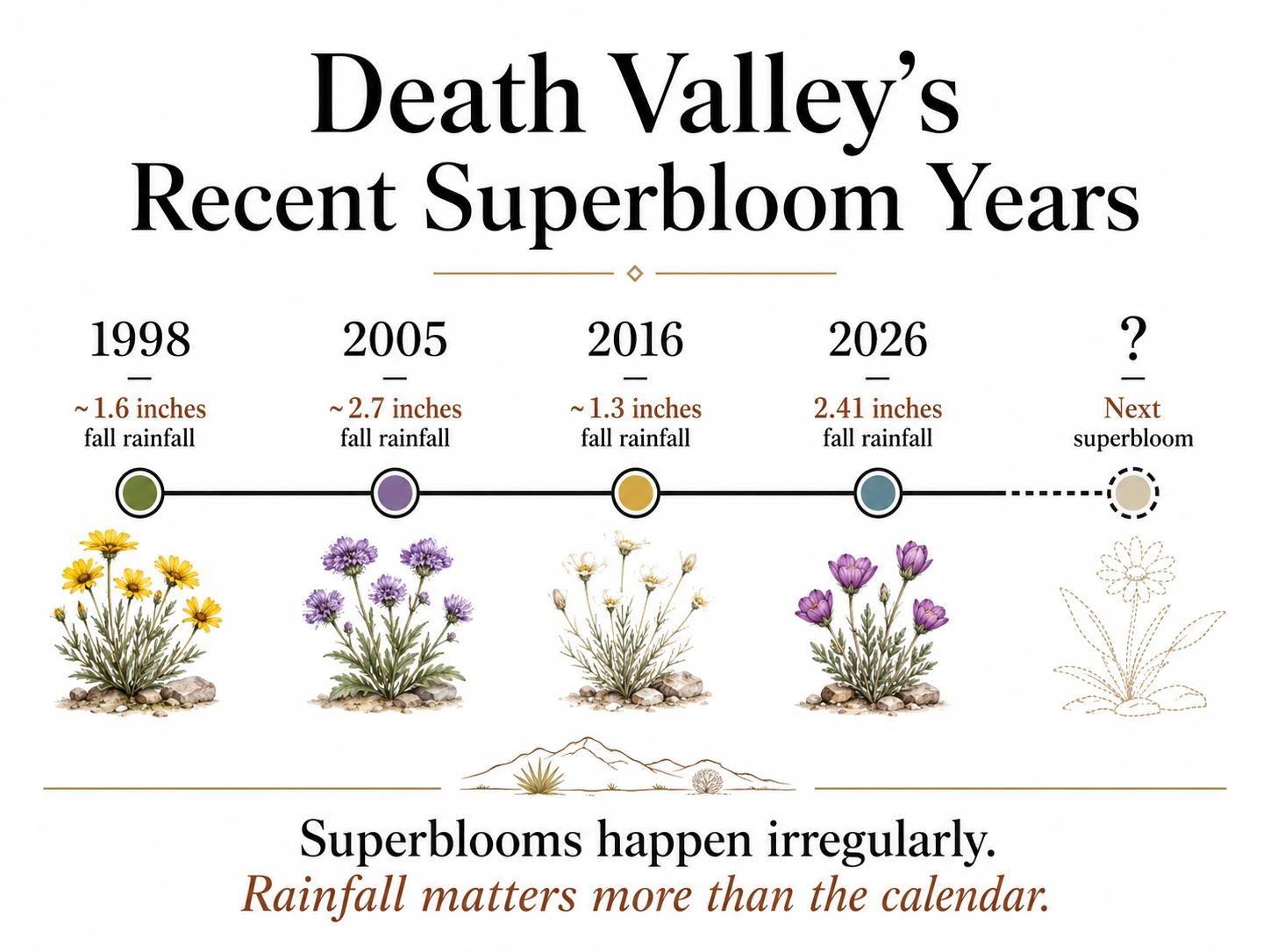
The National Park Service currently lists 1998, 2005, 2016, and 2026 as Death Valley’s most recent superbloom years. In May 2026, the NPS added a fourth year to that record, after fall 2025 rainfall pushed the valley floor into bloom for the first time in a decade.
The scale of it caught even veteran park staff off guard. NBC News reported that the normally barren landscape turned pink, purple, and yellow, with the Death Valley Natural History Association’s executive director describing an extraordinary landscape of color and a noticeable floral scent. The National Park Service called it the most spectacular bloom the park had seen since 2016.
By late March, though, the bloom was fading fast. Death Valley reached 107°F on March 21, 2026, setting a new March temperature record, while hot, drying conditions helped bring the short-lived bloom to an end.
The Real Pattern: Roughly Once a Decade, but Never on a Schedule
Look at the four confirmed superbloom years: 1998, 2005, 2016, 2026, and a rough decade-ish rhythm emerges. But “roughly a decade” is descriptive, not predictive. Death Valley doesn’t work on a calendar; it works on rainfall.
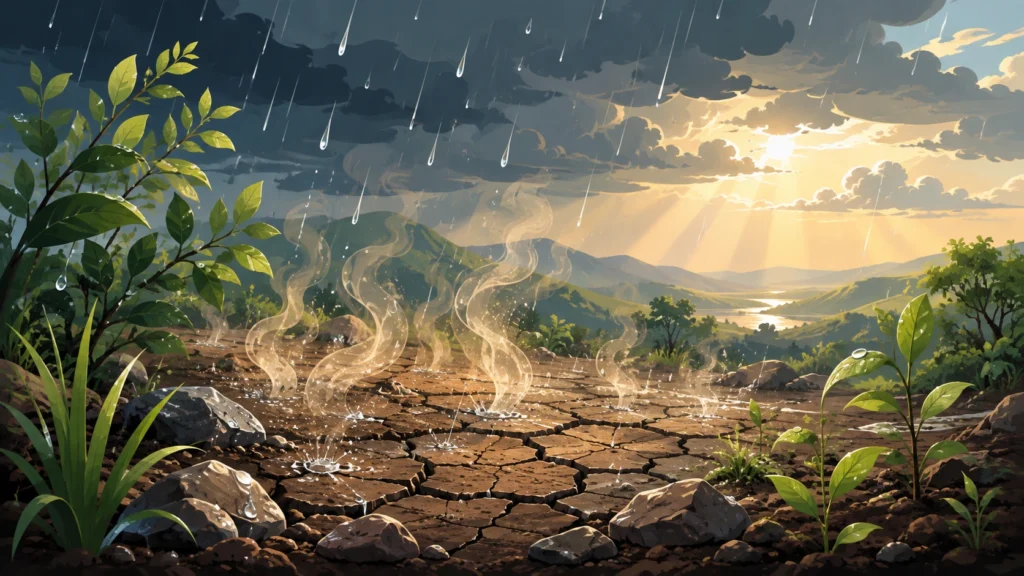
Heavy fall rainfall is the clearest recurring signal. NPS records show that the 1998, 2005, and 2016 superblooms followed fall rainfall totals of about 1.6, 2.7, and 1.3 inches, respectively. Before the 2026 bloom, Death Valley recorded 2.41 inches from September through November 2025, its wettest fall on record.
Notably, above-average rain alone isn’t enough. Death Valley received 1.70 inches of rain in a single day in August 2022, roughly three-quarters of its normal annual rainfall, yet the following spring produced no superbloom.
The Three Ingredients a Superbloom Actually Needs
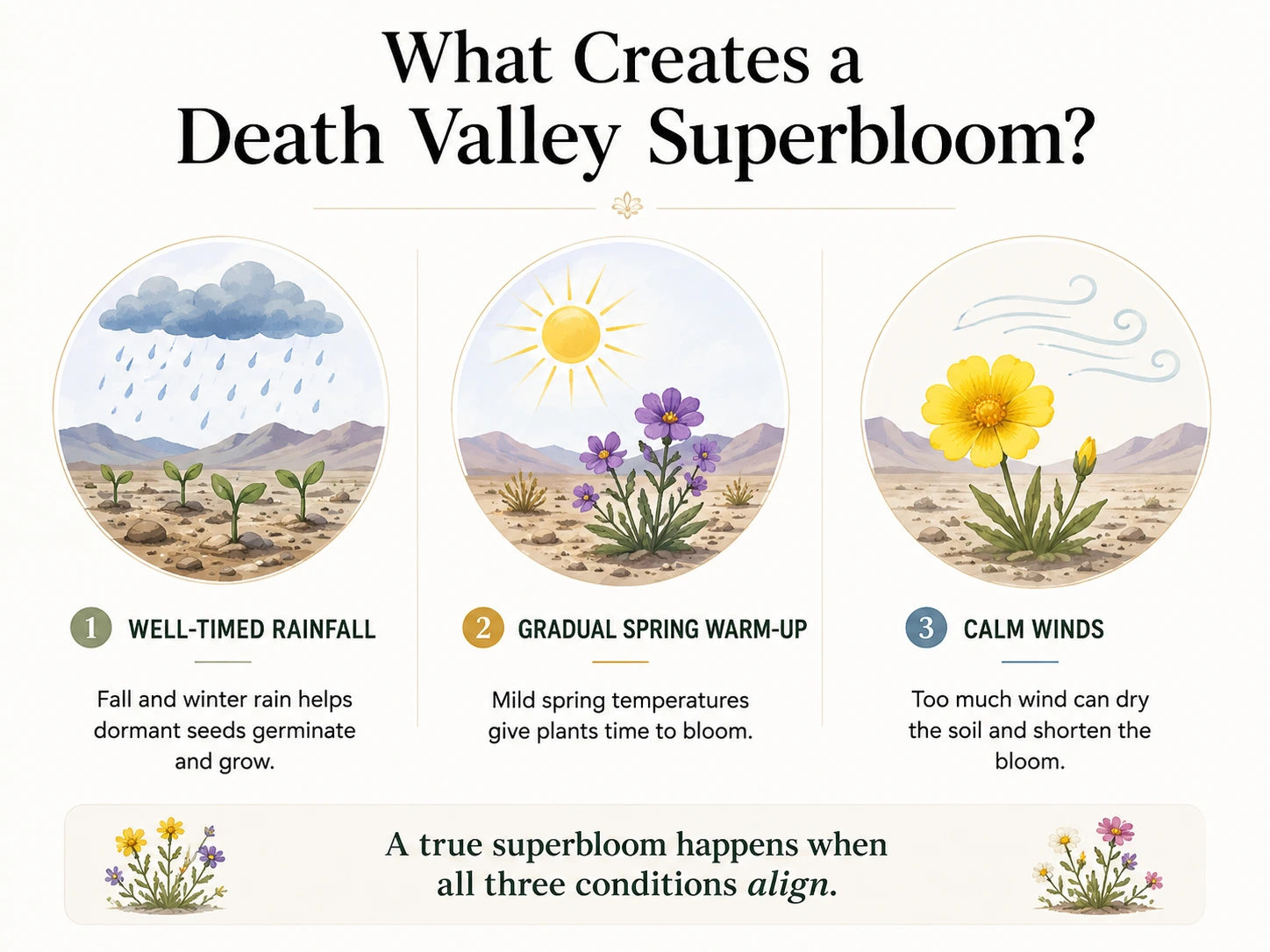
Strip away the year-to-year noise and park scientists point to the same three variables every time:
- Substantial, well-timed rain across fall and winter. The soaking needs to happen in the months before spring, not during it, so dormant seeds have time to germinate and establish roots.
- A gradual spring warm-up. Seedlings need enough warmth to grow and flower, but unusually early extreme heat can shorten the bloom once it begins.
- Calm winds. Desert wind dries out both soil and flowers fast. Even a well-watered spring can underwhelm if it’s a windy one.
El Niño can increase the chances of wetter winter conditions in the Southwest and coincided with the 1998, 2005, and 2016 Death Valley superblooms. But it is not a requirement. The 2026 superbloom developed during a weak La Niña, showing that local rainfall timing and storm patterns may matter more than the ENSO phase alone.
So When’s the Next One?
Nobody can put a date on it, and anyone who tells you otherwise is guessing. What you can do is watch the same signals the park itself watches:
- Fall and winter rainfall. Watch for a substantial early-season soaking, particularly in September or October, followed by additional well-spaced rain through winter. A single huge storm is less useful than repeated rainfall that keeps seedlings growing.
- NPS wildflower updates. The park posts periodic bloom reports once seedlings start appearing at lower elevations, typically starting in late winter.
- El Niño forecasts. El Niño has coincided with several previous Death Valley superblooms, including 1998, 2005, and 2016, but 2026 showed that it is not required. Treat ENSO forecasts as supporting context rather than a reliable superbloom predictor.
- Regional superbloom chatter. Because superblooms in Death Valley tend to coincide with wider Southern California desert blooms, unusually wet forecasts for the broader Mojave are worth watching too.
If the historical spacing happened to repeat, the mid-2030s would be a reasonable reference point. But that is not a forecast. The next Death Valley superbloom could arrive earlier or later depending on rainfall, temperature, and wind. Death Valley has had modest wildflower displays in plenty of non-superbloom years; they’re just far less dramatic than what happened in 2026.
FAQ
No. The 2026 superbloom ended around mid-to-late March 2026, when record heat and drying winds closed it out. Only scattered high-elevation flowers persisted into early summer.
Death Valley superblooms happen roughly once a decade, but there is no fixed schedule. The National Park Service lists 1998, 2005, 2016, and 2026 as the most recent superbloom years.
Three things have to align: well-timed, above-average rainfall across fall and winter; mild spring temperatures; and calm winds. Heavy rain at the wrong time of year, or a hot/windy spring, can prevent a bloom even after a wet fall.
It’s too early to know. Superbloom conditions cannot be reliably predicted that far in advance. A 2027 event would require unusually favorable fall and winter rainfall followed by suitable spring temperatures and winds.
Watch for unusually high fall rainfall, especially repeated soaking events rather than a single storm, follow NPS wildflower update pages once winter ends, and keep an eye on El Niño forecasts heading into the cooler months.
What to Do in the Meantime
Even without a superbloom, Death Valley is worth visiting most of the year; you just need to plan around its extremes. Winters and early spring bring comfortable temperatures and good hiking regardless of whether flowers show up, and the park’s regular (non-superbloom) wildflower displays still happen in most wetter-than-average years, just on a smaller scale.
Even when the flowers are gone, Death Valley’s desert landscape can still reward an overnight visit. If you’re planning to stay after sunset, our Stargazing for Beginners guide explains how to make the most of dark-sky conditions.
If you want a bloom-watching routine of your own: bookmark the park’s wildflower updates, keep an eye on fall El Niño forecasts, and treat any year with a genuinely wet October through December as your cue to start paying close attention come February.