

If you’ve ever stumbled out of your tent at midnight, flicked on a bright white headlamp to find your water bottle, and then spent the next twenty minutes squinting at a night sky that suddenly looks empty, you’ve learned the red light rule the hard way.
It’s one of those small pieces of outdoor knowledge that seems trivial until you understand the science behind it. Once you do, you’ll never pack your camping headlamp or other stargazing gear without a red light headlamp for stargazing again. Let’s break down what the red light rule actually is, why it matters, and how to use it properly.
What Is the Red Light Rule?
The red light rule is simple: when you’re stargazing or camping at night, use red-colored light instead of white light whenever possible.
That’s it. But the reasoning behind this simple habit is where things get interesting, and where most beginners get tripped up.
Why Does Red Light Preserve Night Vision?
Your eyes are incredible pieces of biological engineering. Your retina contains two main types of light-sensitive cells: cones and rods. Cones provide sharp, full-color vision in daylight but become much less effective in dim conditions. Rods, on the other hand, are highly sensitive to low light and are responsible for most of your nighttime vision, although they cannot distinguish colors well.
As darkness falls, your eyes gradually shift from relying on cones to relying more heavily on rods. Rhodopsin, sometimes nicknamed “visual purple,” is a light-sensitive pigment found in rod cells and plays an essential role in this process.
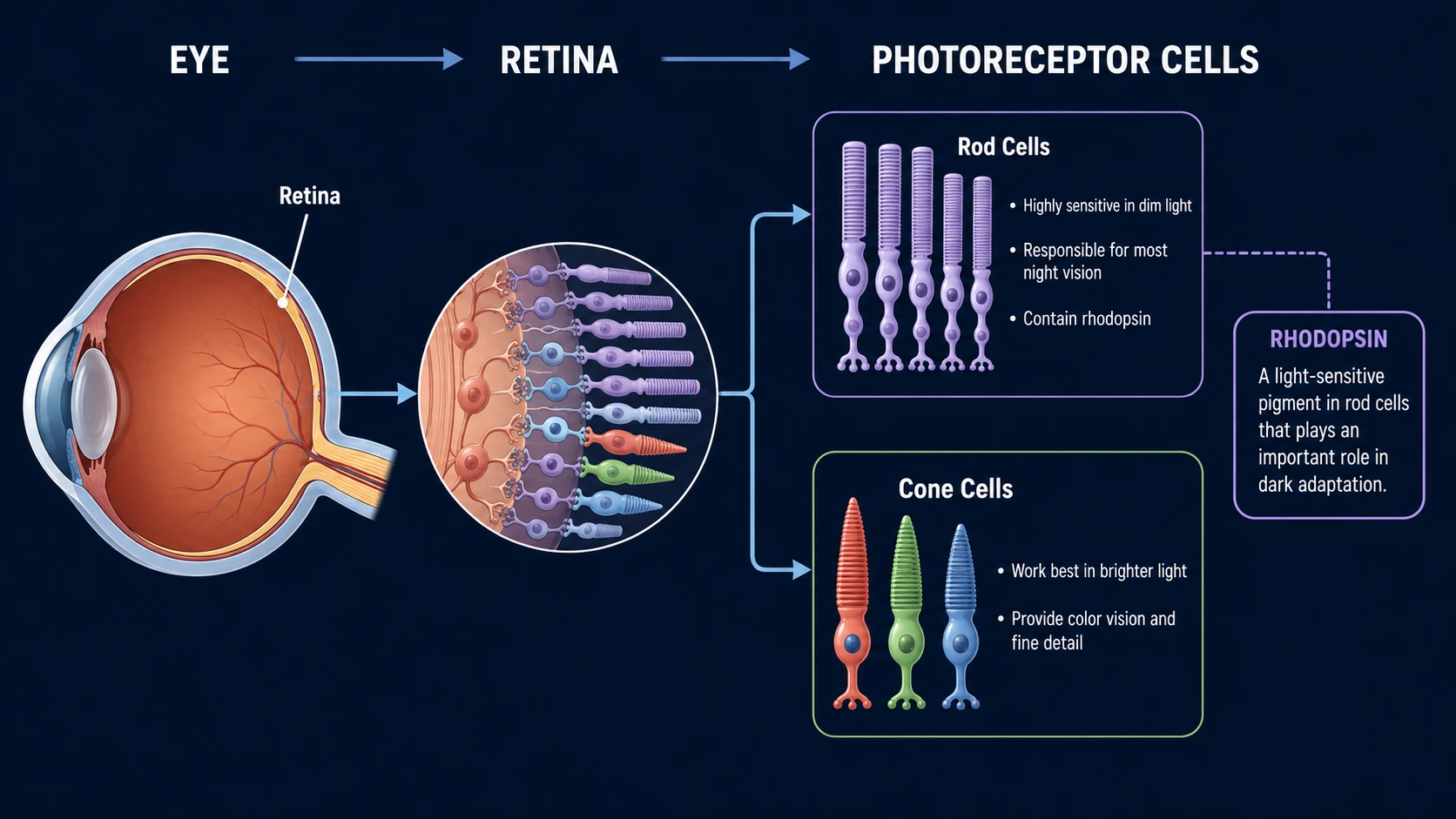
Preserving night vision depends on a remarkable process called dark adaptation. When you step out of a lit room into darkness, your pupils dilate and your retinas gradually become more sensitive to low light. This process relies heavily on rhodopsin.
Here’s the catch: rhodopsin takes time to build up, and it breaks down almost instantly when exposed to bright light, especially white or blue-toned light.
- Full dark adaptation can take 20 to 30 minutes, according to the National Park Service.
- A brief exposure to bright white light can significantly reduce dark adaptation, meaning your eyes may need several minutes to recover.
- Red wavelengths affect rhodopsin far less than white or blue light does
This is why astronomers, sailors, and pilots have used red lighting for decades. It lets you see what you’re doing, reading a star chart, adjusting a tripod, finding a snack in your pack without resetting your eyes’ hard-earned adaptation to darkness.
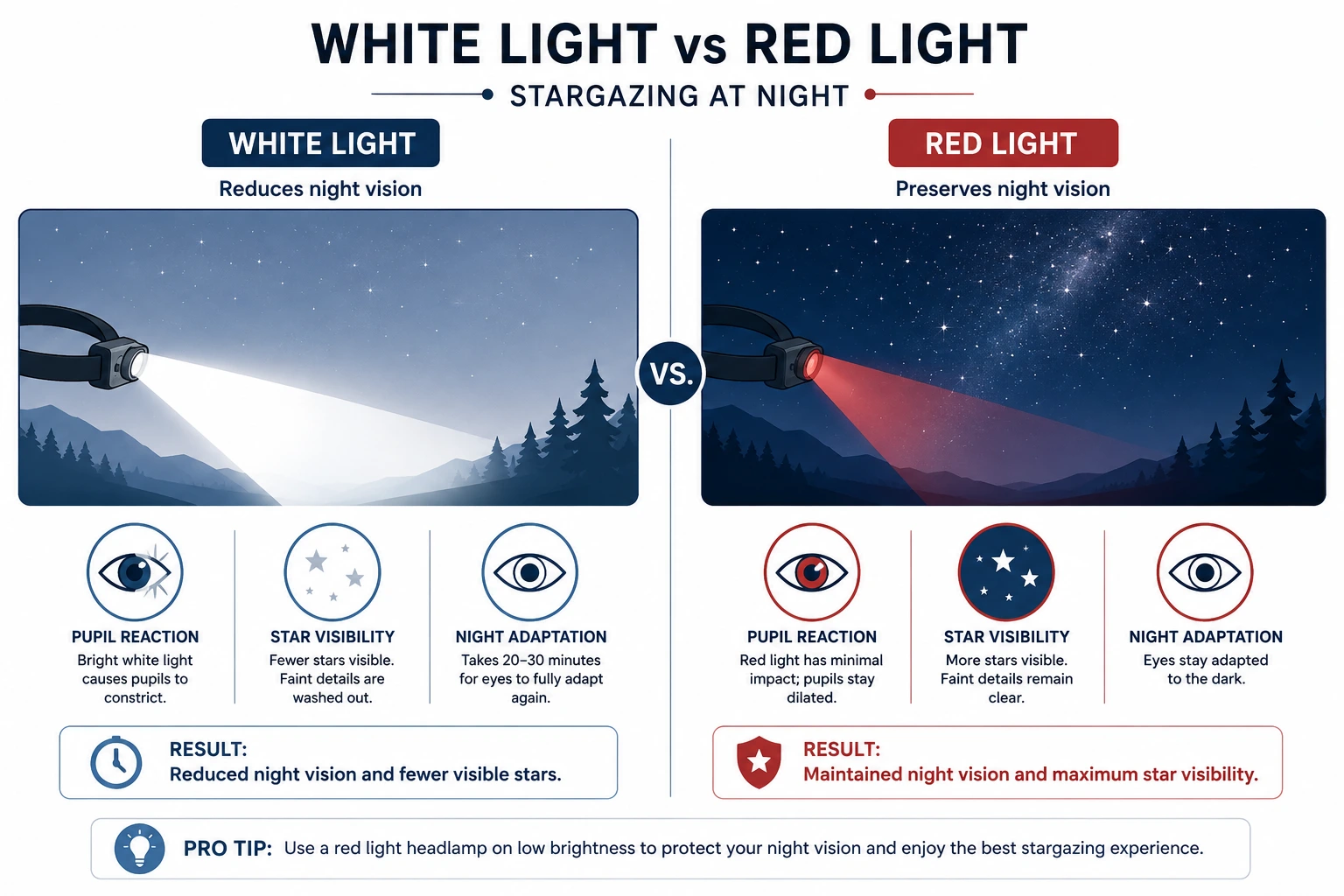
💡 Bottom Line: Dim red light helps you see what you’re doing while preserving much more of your night vision than bright white light.
Why This Matters for Stargazers
If you’re out looking for faint deep-sky objects; a dim nebula, a distant galaxy, or the soft smudge of the Milky Way, your night vision is one of the most important pieces of astronomy equipment you’ll ever have. No telescope or app can compensate for eyes that haven’t adjusted to the dark.
A single glance at a white phone screen or headlamp can cost you:
- The ability to see fainter stars for several minutes
- Your view of subtle details in deep-sky objects
- Time, since you’ll have to wait through the adaptation process all over again
For anyone doing astrophotography, this is even more critical. Checking camera settings with white light can ruin your own session and, if you’re stargazing with others, everyone else’s too.
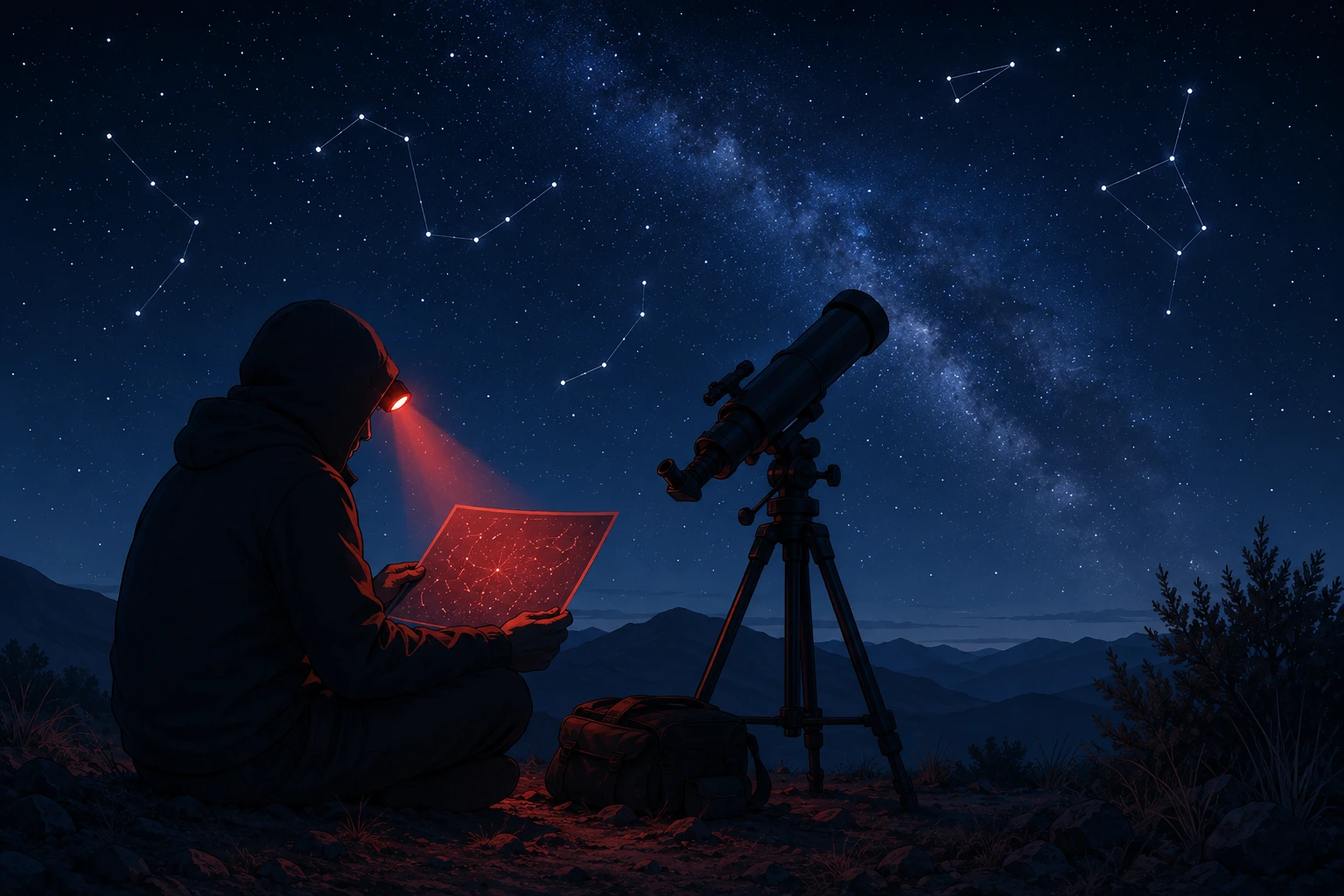
If you’re just getting started, our Beginner’s Guide to Stargazing explains how to find dark skies, identify constellations, and prepare for your first night under the stars.
Why Campers Should Use a Red Light Headlamp
You don’t need a telescope to benefit from the red light rule. Campers get plenty of practical advantages as well.
It keeps wildlife calmer. Many nocturnal animals are more sensitive to bright white light than to dim red light, although responses vary between species, which is both more peaceful for you and more respectful of the environment.
It’s easier on your camp-mates. If you’re sharing a tent or campsite, a sudden blast of white light at 2 a.m. can wake everyone up. Red light is dimmer and less jarring, making late-night bathroom runs far more considerate.
It preserves your own night vision for navigation. Walking back from the fire pit or finding your way to the bathroom is safer when your eyes are already adjusted to the dark, letting you see the natural contours of the trail, rocks, and roots around you.
It conserves battery life. Depending on the headlamp design and brightness setting, red mode may also help conserve battery life.
💡 Bottom Line: Use dim red light for simple nighttime tasks when possible, but never sacrifice visibility or safety just to preserve your night vision.
Choosing the Best Red Light Headlamp for Stargazing and Camping
Not all “red light” headlamps are created equal. Here’s what to look for:
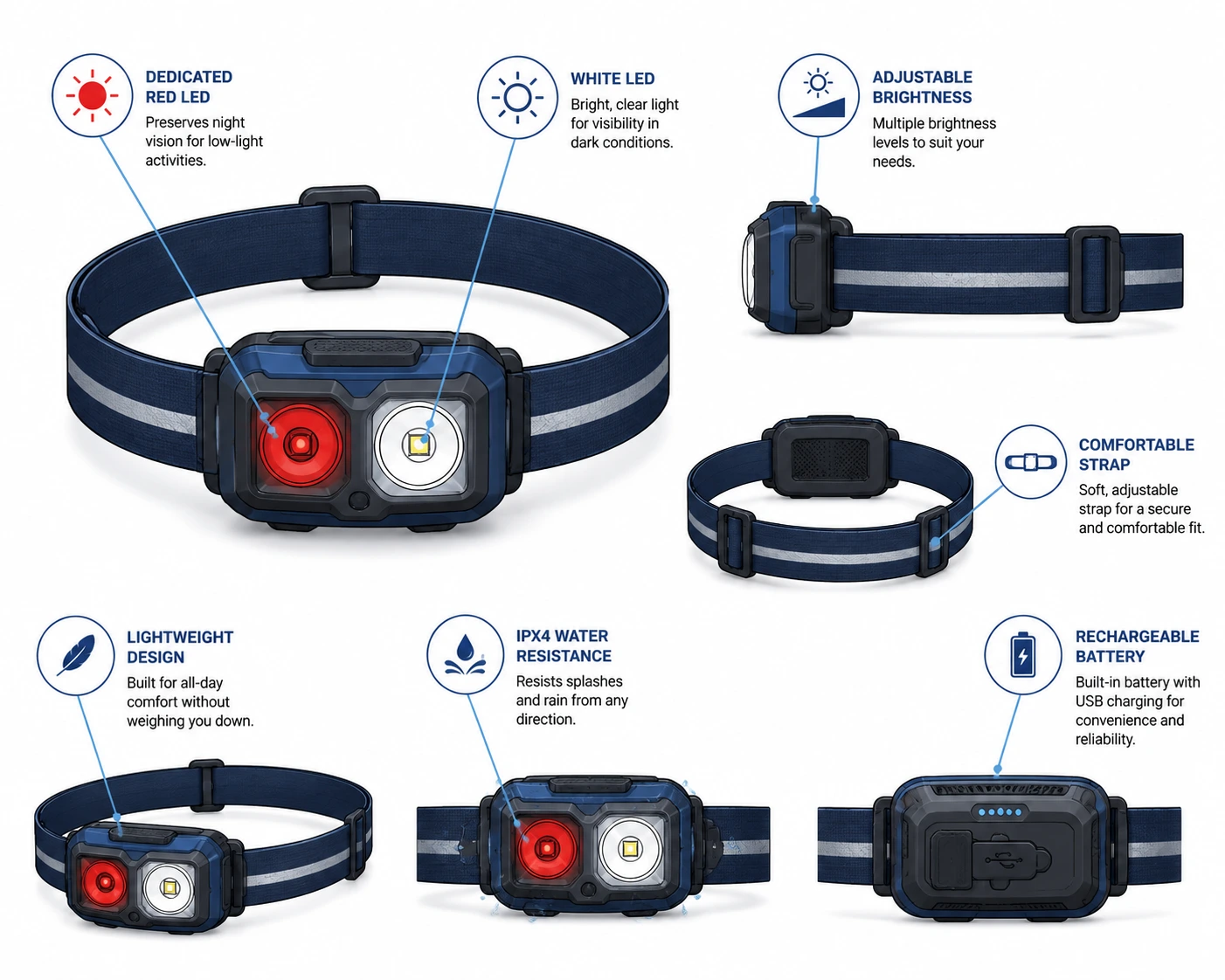
Dedicated Red LED (Not Filtered)
The best headlamps have a true red LED built in, rather than a red plastic filter over a white bulb. Filters dim the light but still let some white wavelengths bleed through, which reduces the night-vision benefit.
Adjustable Brightness
Even red light can be too bright if it’s blasted at full power. Look for a headlamp with multiple brightness settings so you can dial it down to the dimmest usable level.
Separate Red and White Modes
The most versatile headlamps offer both white light (for setting up camp, cooking, or hiking before dark) and red light (for nighttime tasks), with an easy way to switch between them.
Lightweight and Comfortable
Since you’ll likely wear it for hours around camp or during long observation sessions, comfort matters. Look for lamps with adjustable straps and a low center of gravity so it doesn’t bounce or slide.
Water Resistance
An IPX4 rating or higher is a good baseline if you’re camping in unpredictable weather.
Once your night lighting is sorted, you can focus on capturing the sky itself. Our guide to Photographing the Milky Way With a Smartphone covers a simple setup you can use without specialized equipment.
How to Use Red Light the Right Way
Owning a red light headlamp is only half the equation, using it correctly matters too.
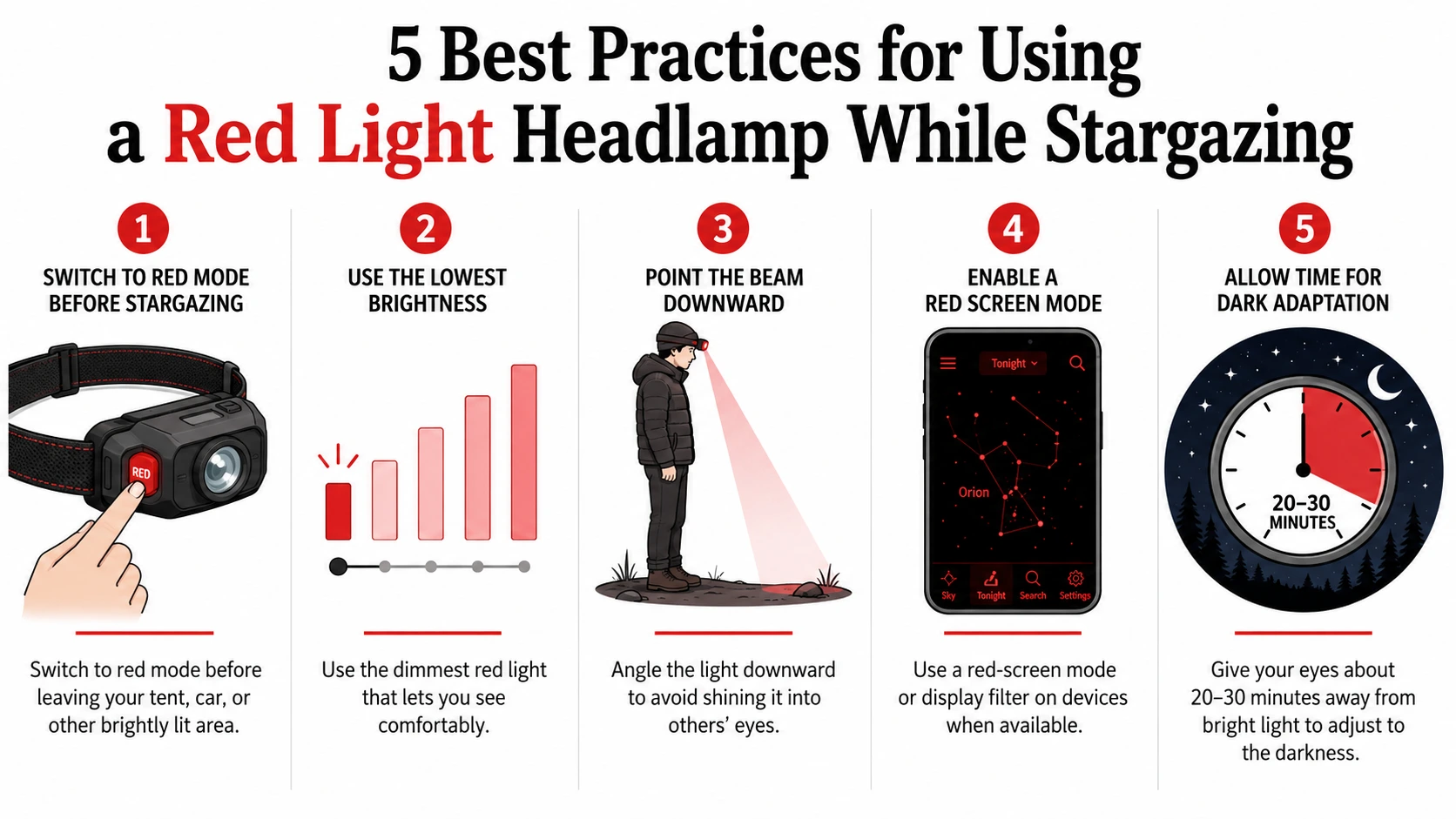
- Switch to red mode before you leave your tent or car. Avoid using white light at all once your eyes have started adjusting to the dark.
- Keep brightness as low as you can manage. Even red light, at high intensity, can interfere with adaptation.
- Point it downward, not at faces. This is basic stargazing etiquette; a red light in someone’s eyes is still disruptive, even if it’s gentler than white.
- Set your phone to night mode or a red screen filter. Many astronomy apps include a dedicated red-screen mode, and some phones also offer accessibility filters that reduce bright blue and white light.
- Give your eyes time. Even with red light, allow at least 20 minutes without exposure to bright white sources before expecting your best night vision.
| And remember: if you need brighter light to walk safely over difficult terrain or deal with a hazard, use it. Preserving night vision should never come before safety. |
FAQ
Astronomers use red light headlamps because red wavelengths interfere less with the eyes’ dark adaptation than bright white or blue-rich light. This helps preserve night vision, making it easier to observe faint stars, galaxies, and other deep-sky objects without waiting for the eyes to readjust.
Yes. A dim red light affects the light-sensitive pigment rhodopsin in the rod cells of the retina far less than bright white light. While very bright red light can still reduce dark adaptation, using a low-brightness red light helps maintain night vision during stargazing and nighttime camping.
Most people need about 20 to 30 minutes to achieve full dark adaptation. Even a brief exposure to bright white light can reduce your eyes’ sensitivity, so using a dim red light helps you avoid restarting the adaptation process.
Choose a headlamp with a dedicated red LED, adjustable brightness levels, separate red and white lighting modes, a comfortable fit, and at least an IPX4 water-resistance rating for reliable outdoor use.
Yes. A red flashlight can work just as well for preserving night vision. A headlamp is simply more convenient when you need both hands free for tasks such as reading a star chart or adjusting camping gear.
Final Thoughts
A red light headlamp is a small piece of gear, but it can make a noticeable difference when you’re spending time outside after dark. By using a dim red beam for simple tasks, you can preserve more of your night vision, avoid disturbing other stargazers, and move around camp without constantly readjusting to bright light.
The rule is simple: use red light when it makes sense, keep it as dim as practical, and switch to brighter illumination whenever safety requires it. That balance will help you get more out of both your campsite and the night sky.
If you’d like to learn more about reducing light pollution and protecting natural darkness, DarkSky International’s resources on responsible outdoor lighting offer practical guidance.