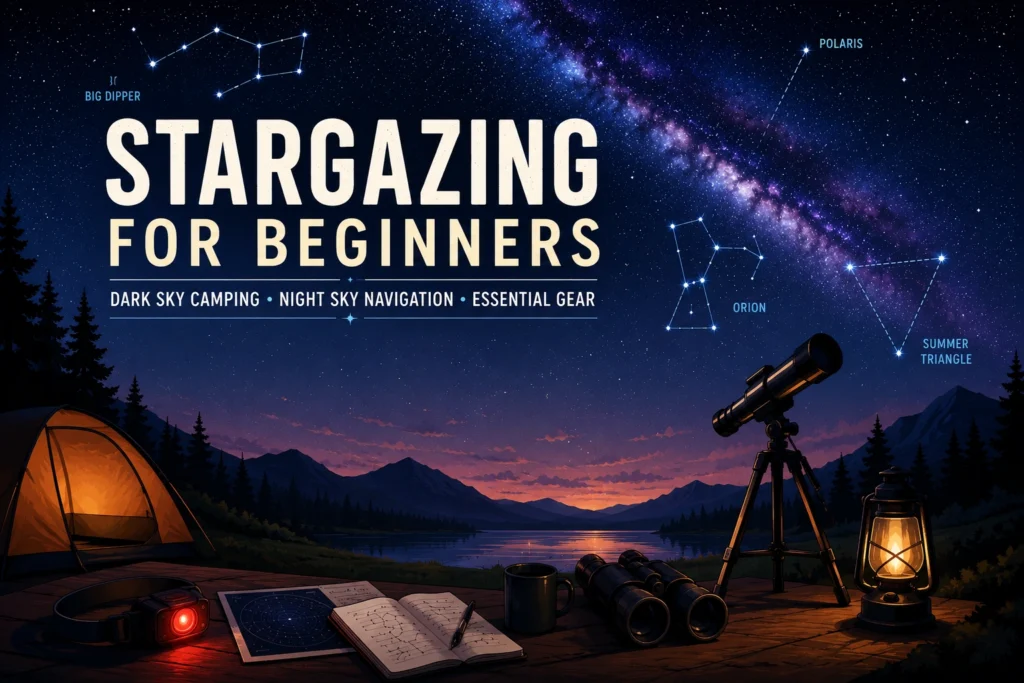


There’s a special kind of magic in leaving city lights behind and stepping beneath a truly dark sky. Far from light pollution, the Milky Way stretches overhead like a river of stars, revealing a universe most people rarely get to see. For stargazers, astrophotographers, and wilderness campers, these remote places offer an unforgettable experience.
But as darkness falls, night camping safety becomes just as important as enjoying the stars. While you’re adjusting your telescope or waiting for a meteor to streak across the sky, many wild animals are just beginning their nightly routines. Bears may search for food, mountain lions become more active, and coyotes roam the landscape.
The good news is that wildlife encounters are uncommon, and most animals prefer to avoid people. By understanding their behaviour and following a few simple campsite safety practices, you can enjoy the night sky with confidence.
This guide covers practical night camping safety tips, predator awareness, campsite safety, and responsible stargazing, so you can focus on the wonders above while respecting the wilderness around you.
Why Nighttime Changes the Equation
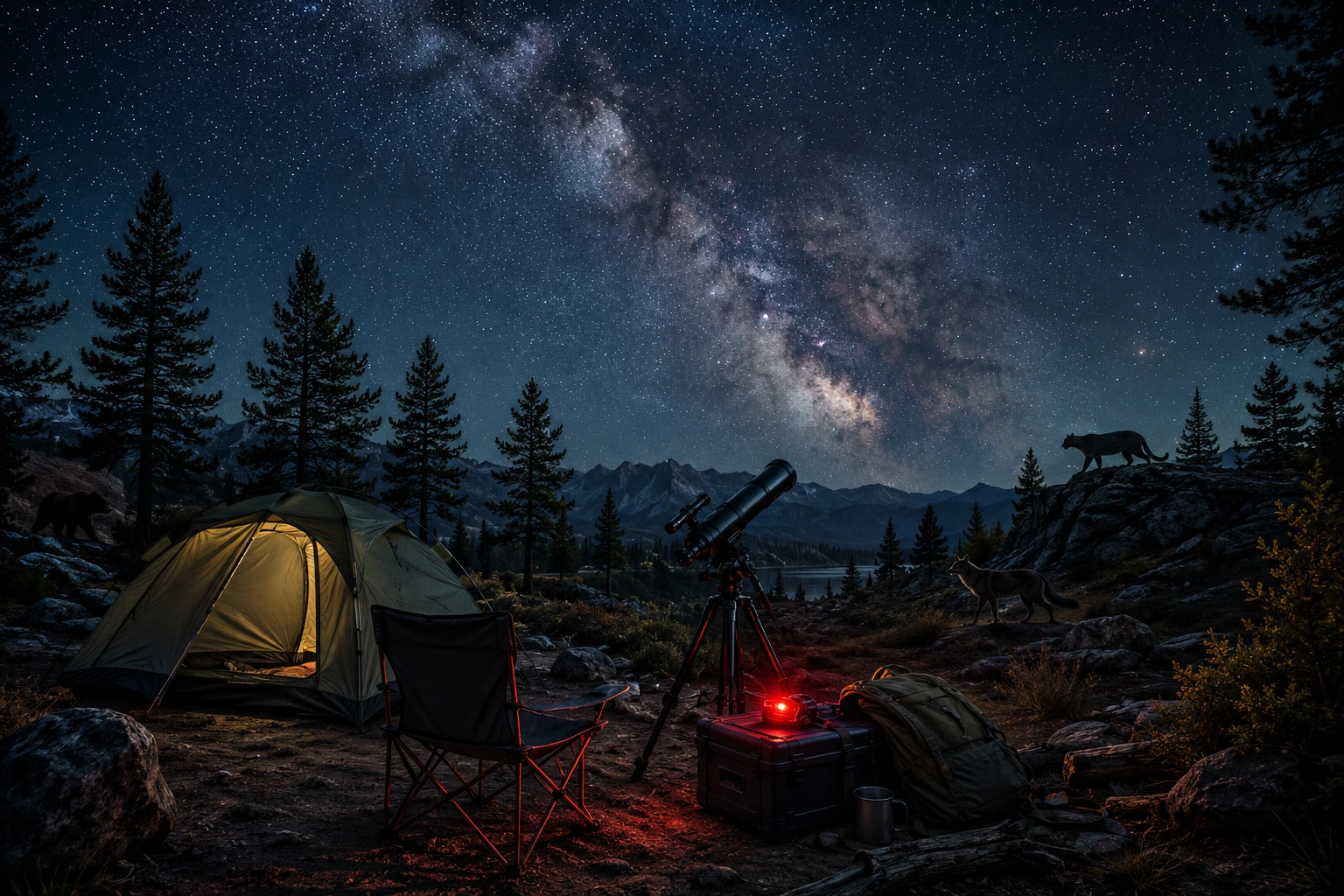
Many camping guides focus on daytime activities, but the wilderness changes after sunset. As temperatures drop and human activity fades, many animals become more active. For anyone visiting a remote dark-sky location, understanding this shift is an important part of staying safe.
Mountain lions are primarily crepuscular, meaning they’re most active around dawn and dusk, though they may also hunt at night. Rather than chasing prey over long distances, they rely on stealth, using vegetation and rocky terrain to launch short, powerful ambushes.
Bears behave differently. Black bears and grizzly bears aren’t strictly nocturnal and may be active at any time, depending on food availability, weather, and the season. However, they’re often seen during the cooler evening, nighttime, and early morning hours. In most cases, bears that enter campsites are attracted by food smells—not people.
While your eyes slowly adapt to the darkness, many nocturnal animals already have exceptional night vision, hearing, and a highly developed sense of smell.
Fortunately, this doesn’t mean the wilderness becomes dangerous after dark. It simply means awareness matters more. By understanding how wildlife behaves and taking a few sensible precautions, you can enjoy the night sky with confidence.
Did You Know?
A black bear’s sense of smell is estimated to be at least seven times stronger than that of a bloodhound and hundreds of times more sensitive than a human’s. That’s why properly storing food and scented items is one of the most effective ways to prevent wildlife from visiting your campsite.
The Golden Rules of Dark-Sky Campcraft
Predator awareness begins long before you hear a rustle in the bushes. The way you choose and organise your campsite plays a major role in preventing unwanted wildlife encounters.
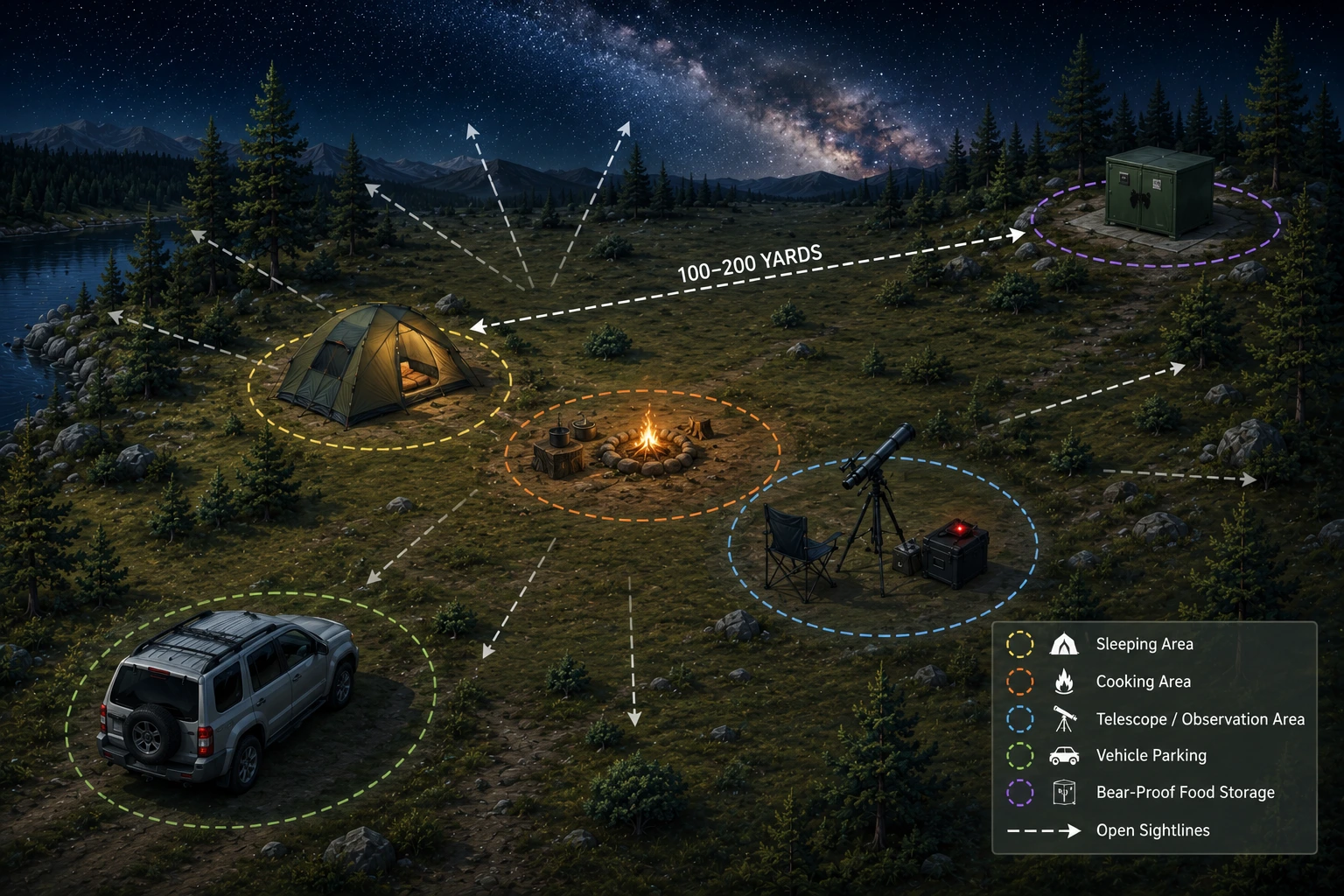
Think of your campsite as a system: where you sleep, cook, store food, and observe the night sky should all work together to keep both you and the wildlife safe.
Set Up Camp with the Night in Mind
A safe campsite starts with choosing the right location. Before setting up your telescope or camera, take a few minutes to assess the area.
Pick an open campsite with clear sightlines instead of camping beside dense shrubs, tall grass, rocky outcrops, or dry creek beds. These features can provide cover for wildlife after dark. An open area also gives animals room to avoid you while making it easier to spot movement around your campsite.
If you’re camping in bear country, keep your sleeping, cooking, and food storage areas separate. Whenever practical, store food 100–200 yards (90–180 metres) from your tent using bear-resistant canisters, bear lockers, or proper food hangs where permitted. If you’re car camping, lock all food, coolers, and scented items inside your vehicle overnight.
Remember, wildlife is attracted to more than just food. Toothpaste, sunscreen, deodorant, lip balm, insect repellent, pet food, dirty dishes, and even empty snack wrappers can all attract curious animals. Store these items with your food—not inside your tent.
One simple but often overlooked habit is changing out of the clothes you wore while cooking. Food odours and grease can linger on fabric, making your sleeping area more appealing to wildlife. Store cooking clothes with your food or in a sealed container before going to bed.
Along with protecting yourself, responsible campers also help protect the places they visit. Following the Leave No Trace principles can minimise your impact on wildlife and preserve natural areas for future visitors.
Pro Tip
Before it gets dark, walk around your campsite and picture how it will look under moonlight or starlight. Remove trip hazards, secure loose gear, and memorise the safest route between your tent, observation area, and vehicle. A few minutes of preparation in daylight can make moving around much safer at night.
Protect Your Night Vision
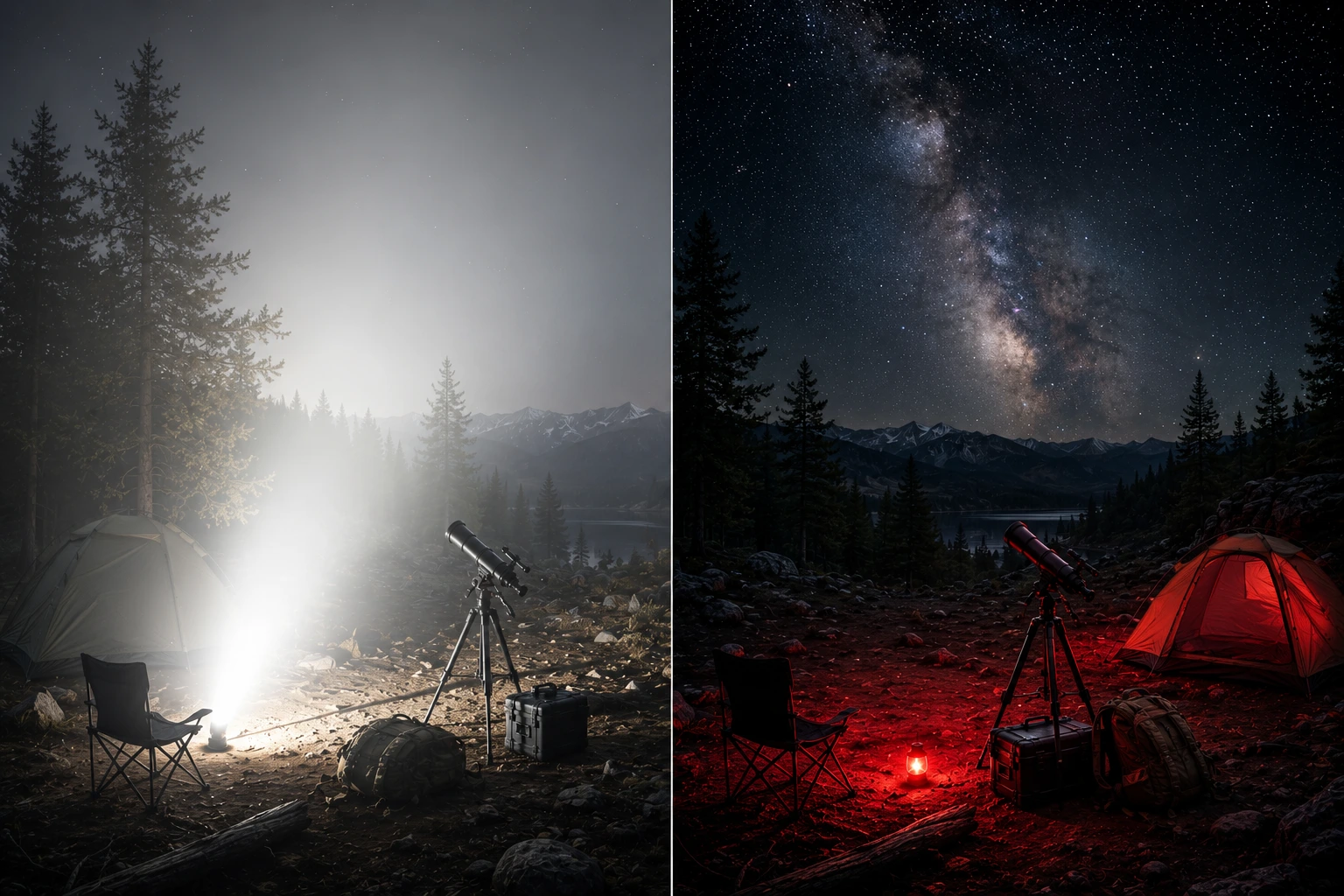
Experienced stargazers use red-light headlamps for a good reason: they help preserve night vision.
Unlike bright white light, red light has much less effect on the rod cells in your eyes, allowing you to check your equipment or star chart without losing your ability to see faint stars. This means less time waiting for your eyes to readjust after every glance at your flashlight.
Red light may also be less disruptive to some wildlife, although responses vary between species. More importantly, it reduces glare, preserves your own visibility, and avoids repeatedly flooding your campsite with bright light.
Choose a headlamp with a built-in red-light mode rather than covering a white flashlight with red plastic. Purpose-built red LEDs provide more consistent illumination and are easier to use in the field.
A reliable headlamp is just one example of how technology has made outdoor adventures safer and more enjoyable. If you’re interested in the science behind modern camping gear, explore our article on NASA in a Van: 5 Space Technologies for Off-Grid Living.
Did You Know?
After exposure to bright white light, it can take 20–30 minutes for your eyes to fully adapt to darkness. Even a quick glance at a bright phone screen can temporarily reduce your night vision.
Weather Matters Too
Before heading out, check the weather forecast for your destination. Rain, fog, and strong winds can reduce visibility and make moving around your campsite more difficult.
Good weather doesn’t just improve stargazing, it also helps you stay aware of your surroundings and navigate the campsite more safely after dark. Check local wildlife alerts before your trip, especially in national parks and protected areas where recent animal activity may have been reported.
Situational Awareness While Stargazing (Night Camping Safety)
One of the greatest joys of stargazing is becoming completely absorbed in the night sky. Whether you’re photographing the Milky Way, tracking a satellite, or waiting for a meteor shower, it’s easy to lose track of what’s happening around you.
Staying aware doesn’t mean spoiling the experience. A few simple habits can help you enjoy the stars while reducing the chance of an unexpected wildlife encounter.
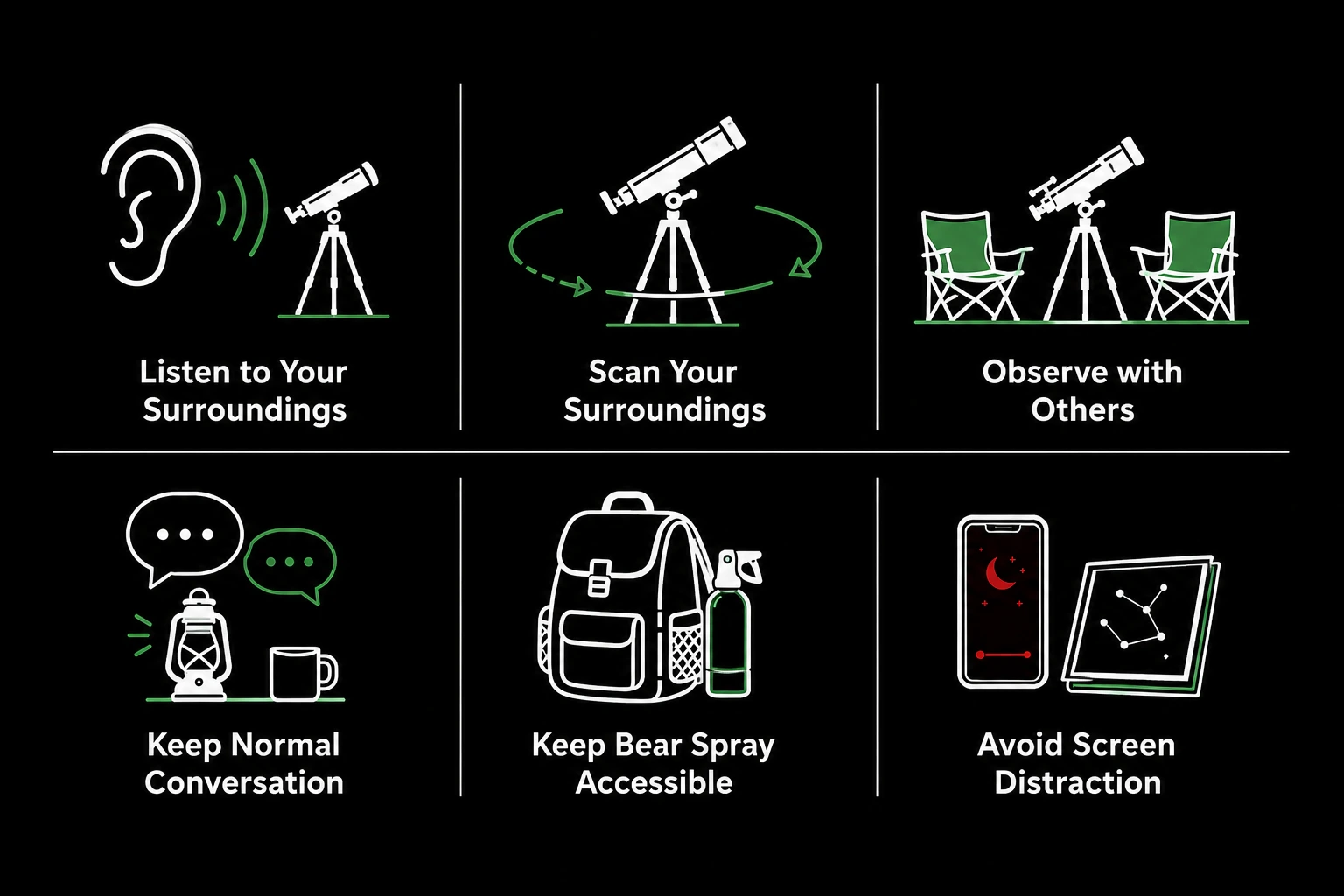
Let Your Ears Work for You
When darkness limits your vision, your hearing becomes one of your best safety tools.
Avoid wearing headphones while stargazing. Music or noise-cancelling earbuds can mask important sounds such as rustling leaves, snapping branches, or approaching footsteps.
Instead, pause every so often and simply listen. Forest sounds like crickets, owls, frogs, or flowing water soon become familiar. A sudden silence or unusual disturbance can sometimes signal that a larger animal is nearby.
Scan Your Surroundings Regularly
It’s natural to spend long periods looking through a telescope or watching the sky. Make it a habit to pause every 10–15 minutes and slowly scan your surroundings.
Check nearby trails, vegetation, and equipment. If you’re using a telescope or camera, occasionally look away from the eyepiece so your peripheral vision can pick up movement.
Observe with Others Whenever Possible
Solo camping can be rewarding, but stargazing with others adds an extra layer of safety.
Small groups naturally create enough movement and conversation to discourage most wildlife. If you’re camping alone, let someone know where you’re going and when you expect to return. In remote areas, carrying a satellite communicator or personal locator beacon is a sensible precaution.
Keep Normal Conversation Going
You don’t need to stay completely silent in the wilderness.
Most wild animals avoid humans when they know people are nearby. Normal conversation and everyday campsite sounds are usually enough to signal your presence without disturbing the peaceful atmosphere. There’s no need to shout or intentionally make excessive noise. Calm, natural sounds are generally sufficient to prevent surprising nearby wildlife.
Keep Bear Spray Within Immediate Reach
If you’re in bear country, keep bear spray where you can reach it immediately—not inside your tent, backpack, or vehicle.
Before your trip, familiarise yourself with how it works and always follow local regulations regarding its use.
Don’t Let Technology Become a Distraction
Smartphones, tablets, and star-tracking equipment are useful, but they can also draw your attention away from your surroundings.
Keep screen brightness low, use red-screen mode when available, and look up from your equipment regularly. The goal is to enjoy both the night sky and the wilderness around you.
What to Do If You Have a Close Wildlife Encounter
Wildlife encounters are rare, and most animals prefer to avoid people. If one does wander into your campsite, staying calm is the most important thing you can do. Panic or sudden movements are more likely to make the situation worse.
Your response depends on the animal, so it’s worth knowing a few basic guidelines before your trip.
If You Encounter a Black Bear
Most black bears will leave once they realise people are nearby. However, bears protecting cubs or those accustomed to finding food at campsites may behave more defensively.
If you see a black bear near your campsite:
- Stay calm and don’t run.
- Face the bear and stand your ground.
- Make yourself appear larger by raising your arms or opening your jacket.
- Speak in a calm, firm voice.
- Slowly back away if the bear isn’t acting aggressively.
- Use bear spray only if the bear approaches aggressively and at close range.
If the bear leaves, don’t follow it or try to photograph it. Give it plenty of space.
If You Encounter a Mountain Lion
Mountain lions are elusive and are rarely seen. Most will leave once they realise you’ve noticed them.
If you do encounter one:
- Don’t run.
- Maintain eye contact.
- Stand tall and make yourself appear larger.
- Speak loudly and firmly.
- Back away slowly without turning your back.
- If attacked, fight back using anything available, aiming for the animal’s face and protecting your head and neck.
Unlike some defensive bear encounters, playing dead is not recommended during a mountain lion attack. Fighting back has been shown to increase the chances of survival.
If You Hear Wildlife but Can’t See It
Not every sound in the forest is a threat. Nocturnal wildlife, insects, frogs, and birds create plenty of unfamiliar noises after dark.
If you hear something nearby:
- Pause and listen.
- Use your red-light headlamp if needed.
- Scan the area calmly.
- Stay close to your campsite or group.
- If you’re uncomfortable, return to your tent or vehicle.
Avoid investigating strange noises alone, especially in unfamiliar terrain.
Respect Wildlife from a Distance
Remember that you’re a visitor in the animals’ home.
Never approach or feed wildlife, and avoid trying to move animals for a better photograph. Use binoculars or a zoom lens to observe from a safe distance.
Respecting wildlife protects both you and the animals while helping preserve their natural behaviour.
Emergency Essentials for Every Stargazer
Before heading to a remote observing site, pack:
- Bear spray (where legal and recommended)
- First-aid kit
- Red-light headlamp with spare batteries
- Fully charged phone or satellite communicator
- Emergency whistle
- Map and compass or GPS
- Extra water and snacks
- Warm clothing or an emergency blanket
Being prepared is just as important as packing your telescope or camera.
Final Thoughts: Enjoy the Stars, Respect the Wilderness
Camping beneath a dark sky is one of the most rewarding outdoor experiences. Following these night camping safety practices allows you to enjoy the stars with confidence while respecting the wildlife around you.
The next time you set up your telescope beneath the Milky Way or wait for a meteor shower, remember that you’re sharing the landscape with wildlife. Respect the wilderness, stay aware, and you’ll create memories that are both unforgettable and safe.
Join the Conversation
Have you ever encountered wildlife while stargazing or camping? Share your experience or favourite safety tip in the comments.
If you enjoyed this guide, explore more articles on Earthshinejournal covering astronomy, camping, astrophotography, and responsible outdoor adventures.
Frequently Asked Questions
The most important night camping safety practices include storing food away from your sleeping area, using a red-light headlamp to preserve night vision, staying aware of your surroundings, avoiding headphones, carrying bear spray where appropriate, and following local wildlife safety guidelines. A little preparation helps you enjoy the night sky while reducing the risk of unexpected wildlife encounters.
Most bears prefer to avoid people. Many campsite encounters happen because bears are attracted to food or scented items, not because they are hunting humans.
A red-light headlamp is a better choice because it preserves your night vision while providing enough light to move around safely.
If you’re in an area where bears are present, bear spray (where legal and recommended) is one of the most important safety items. A red-light headlamp, first-aid kit, and communication device are also essential.
Yes, but solo campers should be extra cautious. Let someone know your itinerary, stay alert, and follow local wildlife safety recommendations.