

This 7-day Japan itinerary covers the Golden Route comfortably: Tokyo, a day in the mountains, Kyoto, and Osaka with a side trip to Nara. The route itself has not changed in decades.
What has changed, sharply, is the money. Three things happened in 2026 that make most Japan itinerary articles actively misleading:
- The Japan Rail Pass now costs ¥50,000 for seven days, up from ¥29,650. That is roughly a 70 percent increase, and it means the automatic “buy the JR Pass” advice in older guides no longer holds.
- Japan’s departure tax rose to ¥3,000 per person from 1 July 2026, up from ¥1,000.
- Kyoto introduced a new accommodation tax from 1 March 2026, charging between ¥1,000 and ¥4,000 per night for mid-range hotels and ¥10,000 or more at the luxury end.
So this guide covers the route, and it covers the arithmetic, because the arithmetic is where first-time planning now goes wrong.
All prices are as published in 2026 and verified in September 2026. Japanese travel costs have moved unusually fast this year. Check current figures before you book.
The costs that older guides get wrong
Four charges to build into your budget before you compare accommodation.
| Cost | 2026 position |
|---|---|
| Japan Rail Pass, 7-day ordinary | ¥50,000, rising to ¥53,000 through overseas sellers from 1 October 2026 |
| Departure tax | ¥3,000 per person, leaving by air or sea |
| Kyoto accommodation tax | ¥1,000 to ¥4,000 per night mid-range, ¥10,000 and above luxury |
| Visa | Still free for most visitors, see below |
On visas: citizens of the United States, United Kingdom, Canada, Australia, most EU countries and around seventy other nations can still enter visa-free for up to 90 days. Visa issuance fees rose fivefold in April 2026, but that affects travellers who need a visa, not most readers of this guide.
You may also see mention of JESTA, Japan’s planned electronic travel authorisation. It is not in force. It is expected in fiscal 2028, with a fee estimated around ¥2,000 to ¥3,000. If a site tells you to apply now, it is wrong.
The JR Pass maths has changed, and you should do it
This is the single most useful thing in this article.
The seven-day pass costs ¥50,000, and it is not valid on Nozomi or Mizuho services without paying a supplement. The rule of thumb the pass now needs is that your planned long-distance JR travel must exceed roughly ¥45,000 to ¥50,000 within the pass window for it to pay for itself. Below that, individual tickets are cheaper.
A standard Tokyo, Kyoto, Osaka loop uses about three Shinkansen legs: Tokyo to Kyoto, a short hop to Osaka, and Osaka back to Tokyo. That combination typically sits below the break-even point, which means for the classic first-timer route the pass may well cost you money rather than save it.
This is not a recommendation against the pass. It is a recommendation to spend ten minutes pricing your actual legs before buying. The pass still wins on itineraries with more long-distance travel: adding Hiroshima, going north to Tohoku, or covering more ground generally.
Two details that catch people out:
The pass does not cover the fastest trains. Nozomi and Mizuho services are excluded from standard JR Pass use; you need a separate supplementary ticket for them. With the pass you take the Hikari instead, which runs the same route with a few more stops and takes modestly longer.
Buy before 1 October if you are buying through an overseas seller, when the overseas price for the seven-day ordinary pass rises from ¥50,000 to ¥53,000.
Days 1 and 2: Tokyo
Give Tokyo two full days and accept that you are sampling it.
Day 1, east side. Start at Senso-ji in Asakusa early, before the approach fills. Walk or take a short river trip toward the centre. Spend the afternoon in Ueno, which packs several major museums and a large park into one area, or in Akihabara if electronics and games are more your thing. Eat in the evening around Ueno or Asakusa, where prices are gentler than in the west of the city.
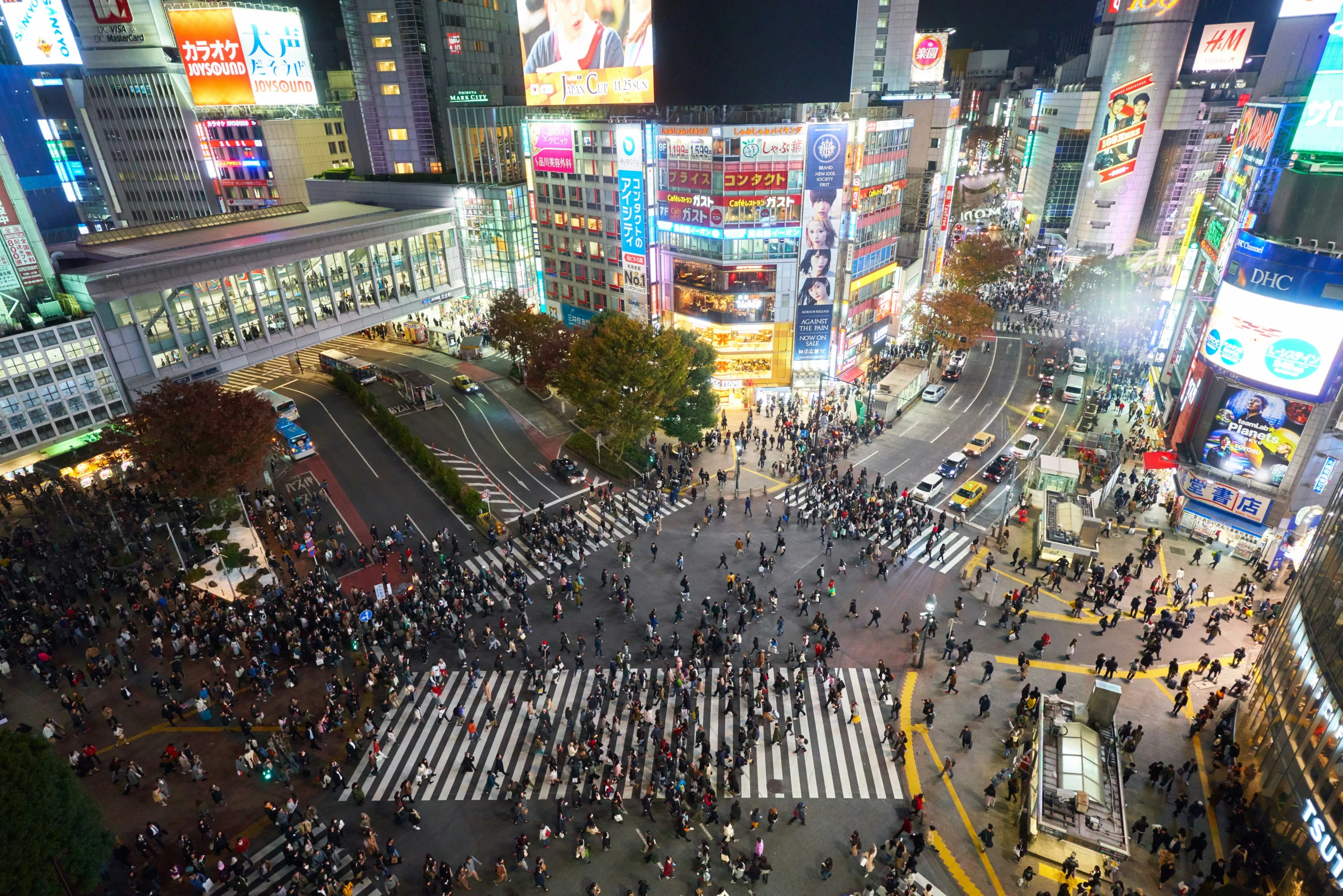
Day 2, west side. Meiji Jingu in the morning, entered through the forested approach, then Harajuku and Omotesando on foot. Shibuya in the late afternoon, with the crossing best seen from an elevated vantage point rather than from the pavement. Finish in Shinjuku after dark, where the density of lit signage is the thing people actually remember.
Practical notes. Tokyo’s stations are enormous and signage is good, but transfers take longer than the app suggests, so add ten minutes to every connection. Jet lag from most western time zones tends to wake you very early for the first few days, which is genuinely useful because Japan’s major sites are transformed by arriving at opening time.
Day 3: Hakone or the Fuji Five Lakes
One day out of the city, and the choice depends on what you want from it.
Hakone is the easier option and works as a loop: mountain railway, cable car, a boat across the lake, hot spring bathing, and views of Fuji when the weather cooperates. It is set up for exactly this day trip and can be done without a car.
The Fuji Five Lakes region, around Kawaguchiko, gives you closer and more dramatic Fuji views, and is the source of most photographs you have seen. It is less of a ready-made circuit.
The honest caveat is the mountain itself. Fuji is frequently hidden by cloud, and it is more often visible in the colder, clearer months than in summer. Plan the day as a day out that may include a view of Fuji, rather than as a trip to see Fuji, and you will not be disappointed.
Days 4 and 5: Kyoto
Kyoto rewards early starts more than any other city on this route.
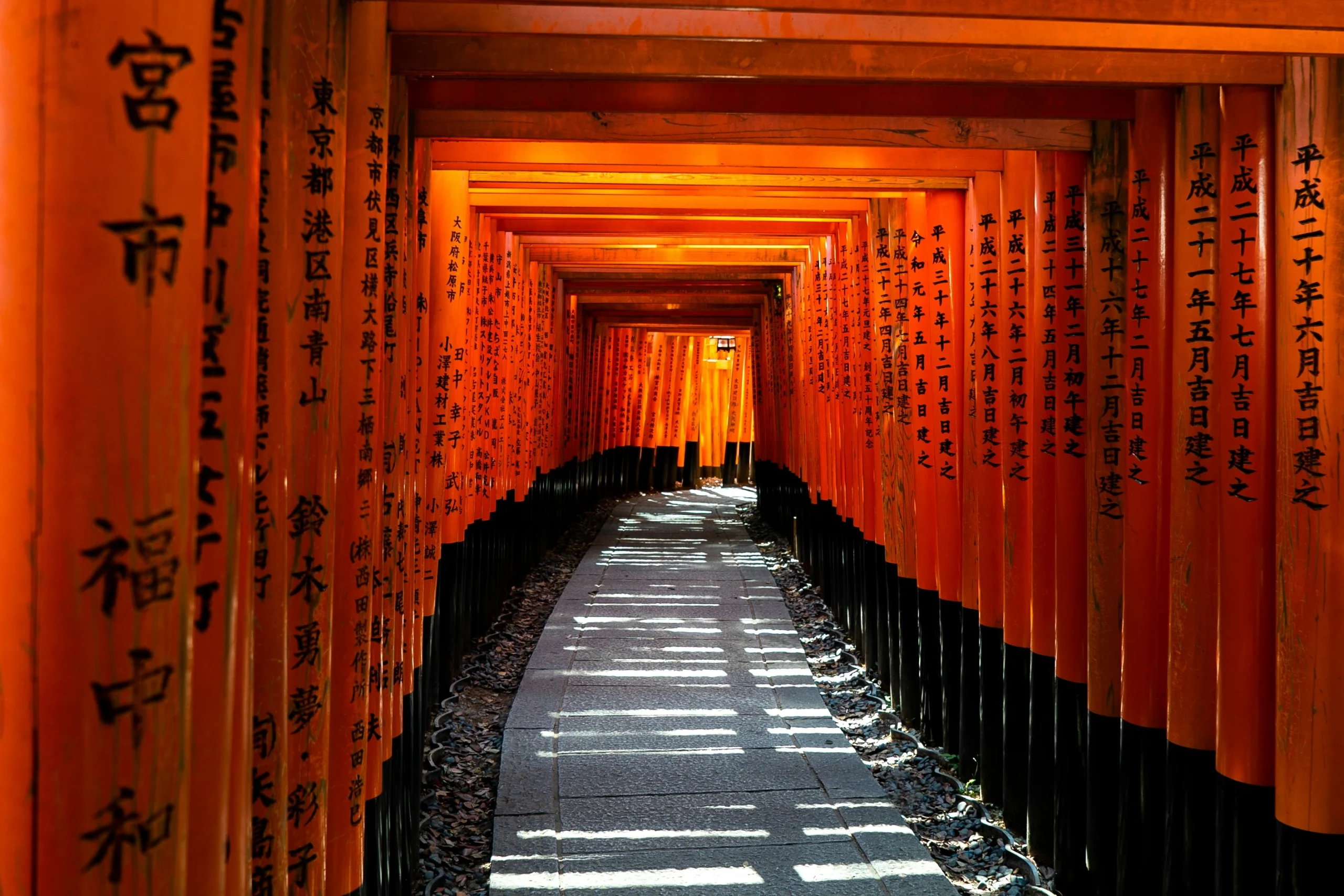
Day 4. Fushimi Inari at dawn, genuinely at dawn. The shrine is open around the clock and the difference between 6 am and 10 am is the difference between a quiet mountain path through vermilion gates and a queue. Then Kiyomizu-dera and the preserved lanes of Higashiyama, and Gion in the early evening.
Day 5. Arashiyama in the morning, for the bamboo grove and the surrounding temples, again early. Kinkaku-ji, the golden pavilion, in the afternoon. Nijo Castle if you still have appetite, or a slower afternoon in the Philosopher’s Path area if you do not.
A word on Gion. It is a working district where people live and work, not an attraction. Photography restrictions apply on some private streets and are enforced with fines. Treat the geiko and maiko you may see as people going to work, because that is what they are.
Kyoto’s buses are comprehensive and often extremely crowded. For many routes the subway plus walking is faster, and Kyoto is a more walkable city than its size suggests.
Days 6 and 7: Osaka, with Nara
Osaka is the easiest city on this route to enjoy and the least demanding to plan.
Day 6, Nara as a day trip. Under an hour from Osaka. Todai-ji houses a monumental bronze Buddha in one of the world’s largest wooden buildings, and the surrounding park is full of deer that are entirely unbothered by people. They are wild animals despite their confidence, and they will headbutt someone holding food. Buy the crackers sold for them or carry none at all.
Day 7, Osaka. Osaka Castle in the morning. Dotonbori in the evening, which is the point of Osaka for most visitors: dense, loud, and built around eating. Takoyaki and okonomiyaki are the local specialities and are best from small places with a queue.
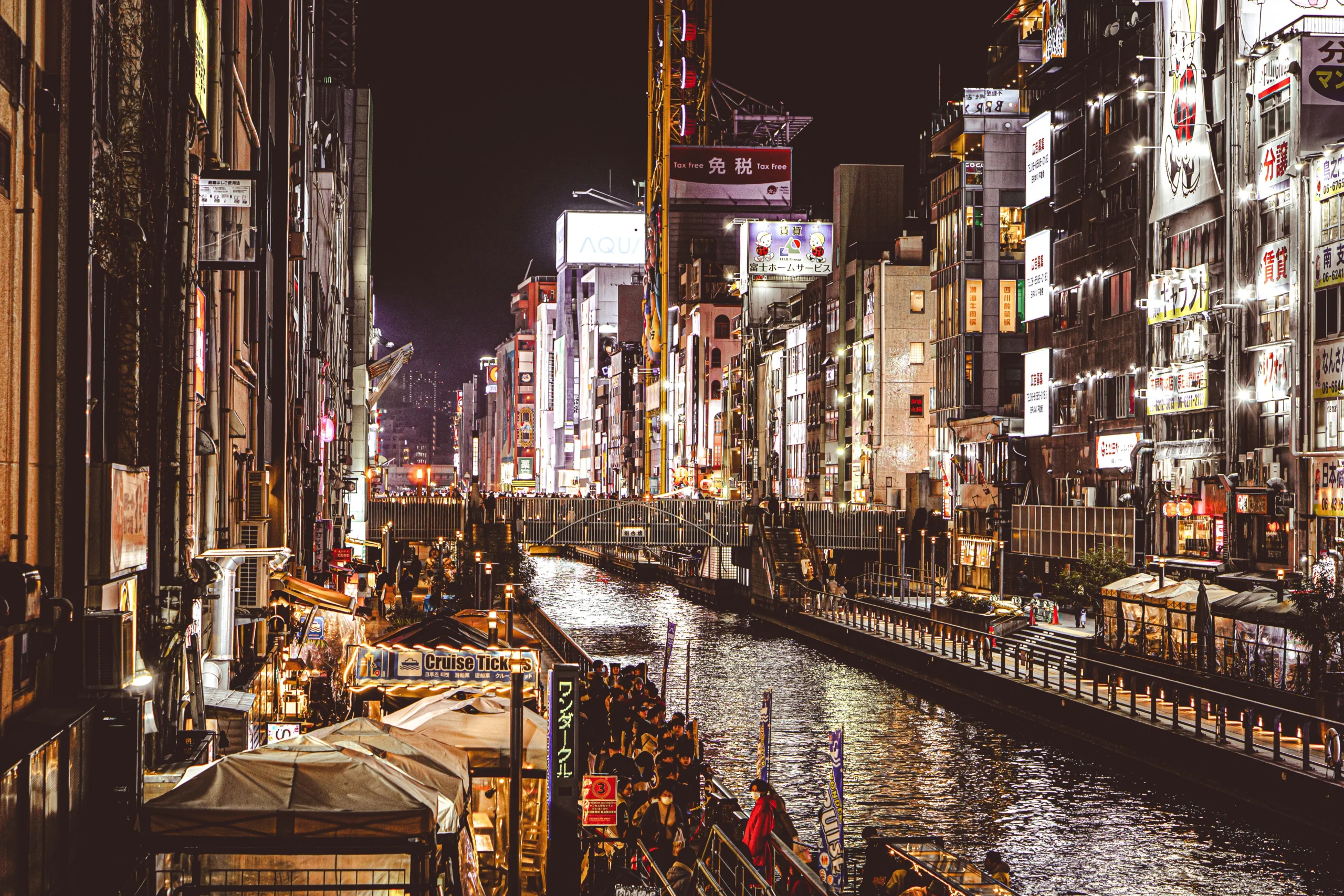
Osaka is the city on this route where the food is the itinerary. Budget accordingly and do not over-plan the evening.
Getting around: what to actually buy
Check the pass’s scope of validity before assuming a line is covered: several of the most useful urban routes are not JR.
Two different things for two different jobs, and most visitors need both.
An IC card (Suica or Pasmo) for local transport: subways, buses and non-JR lines within cities. You top it up and tap in and out. It also works in convenience stores and vending machines. This is the one you will use constantly.
Long-distance tickets for the Shinkansen legs, either individually or covered by a JR Pass if your arithmetic supports one.
Pocket wifi or an eSIM is worth having. Japan is navigable without data if you plan offline, but transit apps are what make a dense rail network usable in real time.
Cash still matters more than in comparable countries. Card acceptance is now good in cities and hotels, and patchier in small restaurants, shrines and rural areas. Convenience store ATMs accept foreign cards reliably.
What this 7-day Japan itinerary costs
Rather than invent daily totals, here is what to actually price for a seven-day trip.
| Item | What to check |
|---|---|
| Flights | Your own route, the largest single variable |
| Accommodation | Plus Kyoto’s new per-night accommodation tax |
| Long-distance rail | Price your three Shinkansen legs against the ¥50,000 pass |
| Local transport | IC card top-ups, modest |
| Food | Wide range; convenience store meals are genuinely good and cheap |
| Departure tax | ¥3,000 per person, usually included in the airfare |
Accommodation and flights dominate. Rail is the one where a decision you make before you travel can swing the total by tens of thousands of yen in either direction.
What to do before you book
Three things, in this order.
Price your Shinkansen legs individually and compare the total against ¥50,000 before buying any rail pass. If you are buying a pass through an overseas seller, do it before 1 October 2026.
Book accommodation in Kyoto early and check whether the quoted rate includes the new accommodation tax, because at the upper end it is a significant addition per night.
Then plan mornings rather than days. On this route, every popular site is pleasant at opening time and crowded by mid-morning, and an itinerary built around early starts is a materially different trip from the same itinerary started at ten. Much like planning a trip to Europe’s most popular national parks, the crowds in Japan are a reality, but starting your day at dawn changes the trip entirely.
Rail pass prices, tax rates and entry requirements in this 7-day Japan itinerary were verified in September 2026 against current published sources, including the official Japan Rail Pass conditions of use. Japanese travel costs changed substantially during 2026 and several figures have scheduled further changes, so confirm current rates before booking. Route timings and site recommendations are compiled from published travel information. Earthshinejournal has not visited these locations and makes no first-hand claim about any of them.