

There’s a moment, and if you’ve ever slept in a van or pitched a tent deep in the backcountry, you know exactly the one – where you’re lying in your sleeping bag, miles from the nearest town, watching a sky so full of stars it feels almost offensive, and you think, How on earth am I surviving out here?
And the answer, as it turns out, might literally be ‘space’.
No, it’s not just a poetic thought. Some of the most essential gear used by modern overlanders and campers – the stuff we genuinely depend on when parked on a remote mountainside or camped beside a dry riverbed, traces its origins not to a commercial outdoor gear lab, but to the engineers at NASA. They were tasked with figuring out how to keep human beings alive in the most hostile environment imaginable: the cold vacuum of space.
The same intellectual heritage that put astronauts on the Moon, kept them warm, and gave them clean water to drink is sitting quietly in your pack, your vehicle, or your emergency kit. You’ve been relying on NASA tech in camper vans and wilderness packs this whole time without even realizing it.
Essential NASA Tech in Camper Vans & Off-Grid Rigs
Here are five real, scientifically documented NASA-origin technologies that modern off-grid travellers and campers rely on every single day:
1. The Space Blanket: NASA’s Ultimate Radiant Heat Shield
You know that impossibly thin, crinkly, silver sheet that folds down to the size of a deck of cards? That’s a direct descendant of NASA technology, and it is a cornerstone of wilderness survival.
In 1964, NASA’s engineers working on the Echo program, a series of balloon satellites designed to reflect radio signals across vast atmospheric distances, developed a process for depositing a microscopically thin layer of aluminium vapour onto a flexible polyester film known as Mylar.
The MLI Physics: The result was a material that was simultaneously lightweight and capable of bouncing back up to 97% of radiant heat. NASA quickly incorporated this “aluminized Mylar” into spacecraft insulation to protect delicate vehicles from wild thermal swings in space, where temperatures plunge to -160°C in shadow and skyrocket to +120°C in direct sunlight.
How it works: The physics behind it is incredibly elegant: you are not actually creating warmth; you are simply refusing to let your body’s radiant heat escape.
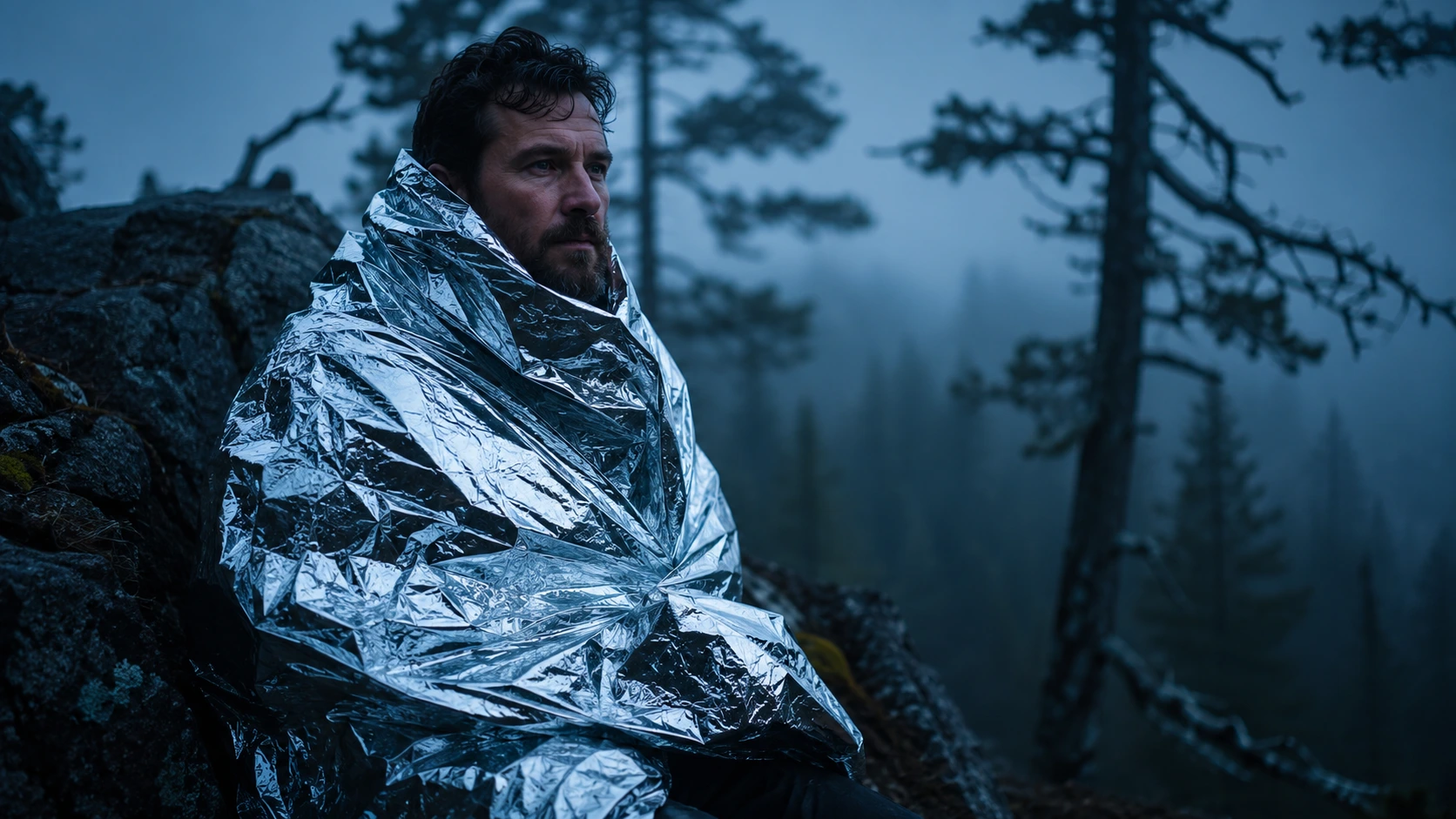
When that material shifted into consumer survival kits in the late 1960s, wilderness medicine was quietly revolutionized. Hypothermia is primarily fought by halting radiant heat loss from the body’s core, which a space blanket handles perfectly. In an off-grid rig, keeping a few of these on hand is mandatory: one in the emergency kit, one tucked into a day pack for unexpected overnights, and even one placed flat under a sleeping pad as an additional reflective barrier during freezing winter camping.
2. Freeze-Dried Food: How a Zero-G Crumb Crisis Revolutionized the Camp Kitchen
Let’s be honest, freeze-dried camping food isn’t exactly fine dining. But eat it on day four of a grueling trek with no resupply point and no active refrigeration for a hundred miles, and it suddenly tastes like a Michelin-starred meal.
While basic freeze-drying (lyophilization) existed prior to the space race, NASA pushed the technology into a reliable, mass-producible food preservation method in the 1960s. They needed lightweight, nutrient-dense food that required no refrigeration. Crucially, they also needed food that wouldn’t produce floating crumbs that could drift into zero-gravity instrument panels and cause an electrical short circuit.
The Gemini Sandwich Incident (1965): During the Gemini 3 mission, astronaut John Young smuggled a contraband corned beef sandwich aboard. The resulting floating crumbs genuinely alarmed mission controllers, drifting dangerously close to sensitive instrument panels where they could cause an electrical short circuit. This close call cemented the absolute safety necessity of crumb-free, space-certified meals.
Through the freeze-drying process, food is frozen, then subjected to a vacuum where the pressure is reduced so severely that ice skips the liquid phase entirely and converts directly to vapor (sublimation). What’s left is a meal that retains 98% of its nutritional content, weighs almost nothing, and can last on a shelf for 25 to 30 years. Modern commercial backpacking meals are direct beneficiaries of this Apollo-era manufacturing leap, offering off-grid travelers a lightweight emergency rations net when fresh food options run dry.
3. Portable Solar Power: The 1958 Satellite Legacy Powering the Modern Rig
The first practical use of photovoltaic solar cells wasn’t on a suburban house or a green vehicle; it was on a satellite.
Vanguard 1, launched on March 17, 1958, was the first spacecraft to use solar cells as its primary power source. While its chemical batteries died in weeks, its solar-powered transmitter kept broadcasting for years. As of 2026, Vanguard 1 has been in orbit for 68 years, making it the oldest human-made object still circling our planet, powered entirely by the Sun.
Early space-grade cells were incredibly expensive. NASA poured immense resources into improving their efficiency and manufacturing processes so satellites could generate power within a highly limited surface area.
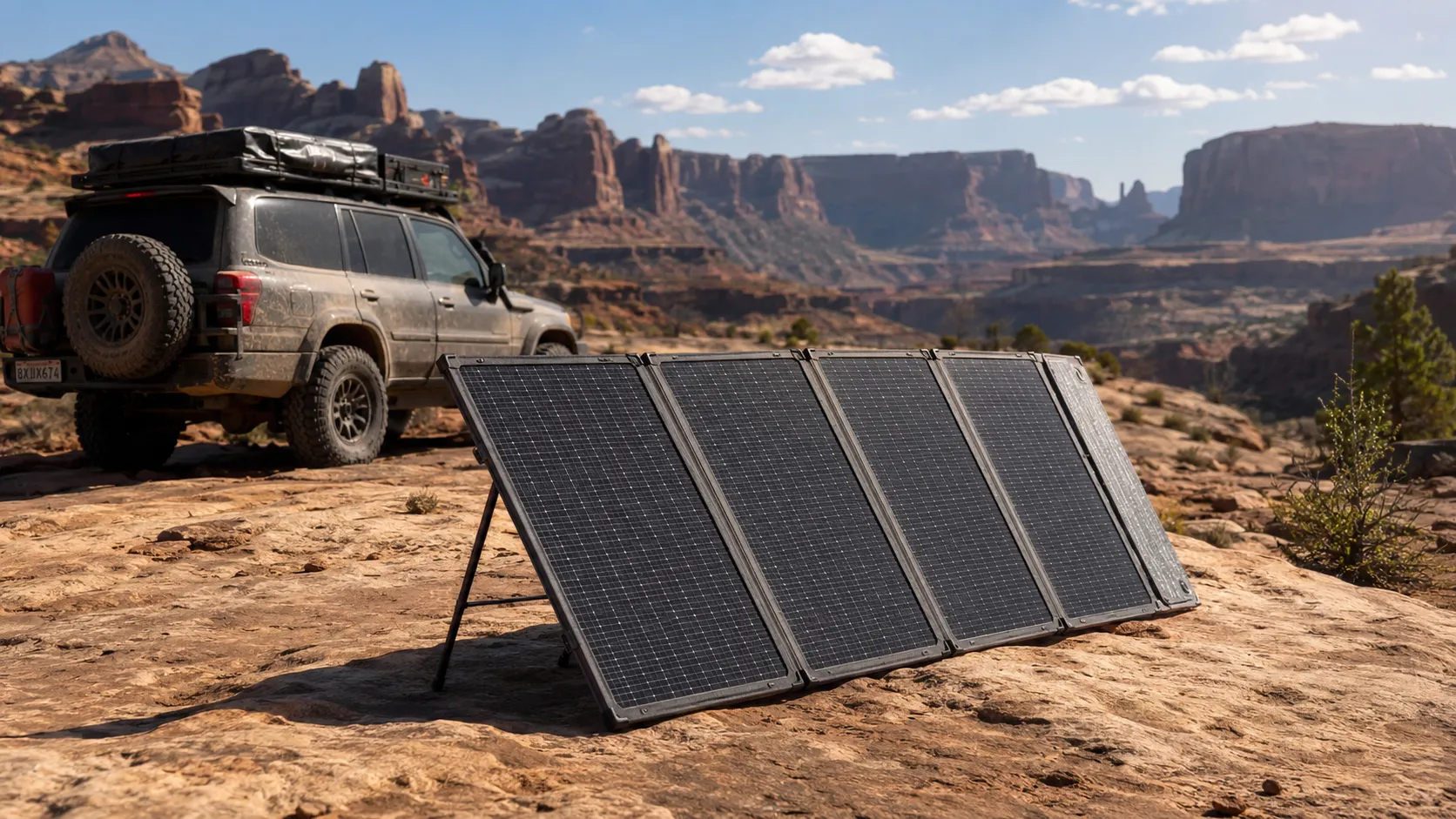
Today, that space-race investment directly enables the off-grid movement. A modern, highly efficient 200-watt portable solar panel can generate enough electricity to run portable fridges, charge laptops, and power LED camp lighting indefinitely. Combined with modern lithium iron phosphate (LiFePO₄) battery banks, remote travelers can achieve absolute, self-sustained energy independence.
4. High-Tech Water Purification: ISS Tech in Your Backpack
Water is incredibly heavy, about a kilogram per litre, making it logistically impossible to launch a multi-month supply into space.
NASA’s solution on the International Space Station is the Water Recovery System (WRS). Thanks to recent breakthroughs with NASA’s Brine Processor Assembly (BPA), the station now achieves an astonishing 98% water recovery rate, reclaiming sweat, exhalation, and even wastewater and purifying it back into drinking water cleaner than what comes out of municipal taps on Earth.
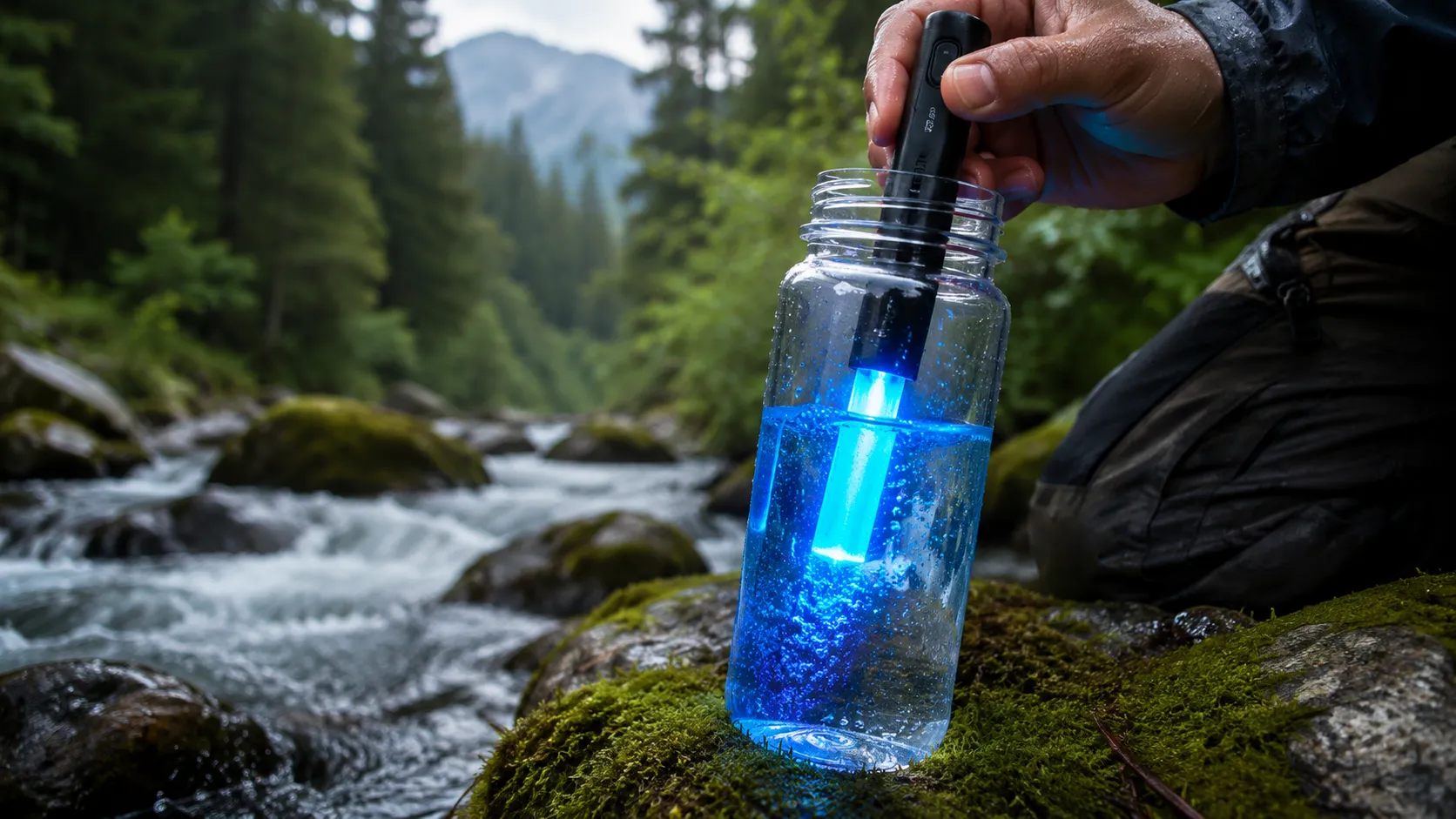
The core technologies behind this space-loop system have completely revolutionized backcountry travel:
- Hollow-Fiber Membrane Filtration: Backpacking staples like the Sawyer Squeeze use membrane filtration technology at the 0.1-micron level, which directly stems from NASA’s research into spacecraft membrane filters.
- UV Sterilization: Portable UV pens like the SteriPen use ultraviolet light at the exact 254 nm range researched by NASA to disrupt the DNA of pathogens, neutralizing 99.9% of waterborne threats in 90 seconds without chemical alteration.
- Iodine Purification: NASA chose iodine over chlorine for the Apollo program because it performs more reliably across wide temperatures. Backpacker iodine tablets have been a survival kit essential ever since.
5. Memory Foam: Viscoelastic Support Engineered for High G-Forces
This one surprises people every time.
In 1966, NASA aeronautical engineer Charles Yost was tasked at the Ames Research Center with making aircraft seats safer and more impact-absorbent during hard landings and intense gravitational forces. Yost’s team developed a viscoelastic polyurethane foam that could absorb sudden shocks, conform closely to a body’s shape under pressure, and then slowly return to its original form. They called it “slow spring back foam”.
NASA eventually licensed the material to the public. While it spent decades in medical wards helping bedridden patients avoid pressure sores, it eventually revolutionized consumer bedding.
For off-grid travelers, sleep isn’t a luxury; it is a critical safety pillar. Navigating tough trails, driving long distances, and making backcountry survival calls require peak cognitive performance. Modern camp mattresses and van sleeping platforms that use memory foam are applying the exact same safety physics NASA did: distributing body weight to ensure restful, restorative sleep.

The Bigger Picture: Space Was Always About Survival
When you are parked deep in the wilderness, miles from cell service or emergency rescue, your mobile shelter stops being a lifestyle choice and starts being what it truly is: a life support system.
And life support systems are exactly what NASA has been perfecting for over sixty years. The scale is different, but the core question is identical: How do you keep a human being healthy, safe, and alive in an environment that wasn’t designed for them?
So the next time you wrap yourself in a space blanket, rehydrate a meal, check your solar charging percentage, filter river water, or lay down on your foam mattress — take a second.
You aren’t just camping. You are using space technology.
Welcome to the wilderness, astronaut.
Did one of these technologies surprise you? Drop a comment below. I’d love to know which one hit different! And if you want me to go deeper on any of these space-tech deep dives, let me know.
Read Next: Planning a high-tech off-grid trip? Check out our Complete Guide to Chasing the 2026 Total Solar Eclipse for top viewing locations and remote setup tips.