

Camping food does not have to mean complicated recipes, heavy coolers, or a pile of dirty dishes. With a little planning, you can eat satisfying meals at camp while keeping your ingredients organized and your cooking setup simple.
The best camping meals tend to have a few things in common: they travel well, require minimal preparation, create little cleanup, and work with the cooking setup you actually have.
Whether you’re car camping with family, spending a weekend at a campground, or planning a longer trip, these 25 easy camping food ideas cover breakfast, lunch, dinner, snacks, and dessert without turning your campsite into a full kitchen.
What Makes a Good Camping Meal?
Before choosing recipes, think beyond taste. A meal that works perfectly at home may be inconvenient beside a tent.
Look for foods that are:
- Easy to prepare: Fewer steps mean less work at camp.
- Light and compact: Especially important when you are carrying your food in a backpack.
- Easy to store: Dry and shelf-stable ingredients can simplify packing.
- Low-mess: Fewer dishes mean faster cleanup.
- Flexible: Meals that work on a stove, grill, or campfire give you more options.
For backcountry trips, the National Park Service recommends lightweight dry foods such as rice, pasta, oats, and powdered meals can save both weight and space. Car campers have more flexibility to bring fresh ingredients, a cooler, and heavier cookware.
💡 Bottom Line
Choose meals that match the way you are camping. The simpler the preparation, storage, and cleanup, the easier camp cooking becomes.
Easy Camping Food Ideas for Breakfast
1. Campfire Breakfast Burritos
Fill tortillas with scrambled eggs, cheese, cooked potatoes, and your favorite vegetables. Wrap them in foil and warm them on a camp stove or over a suitable campfire cooking setup.
Breakfast burritos work especially well when you want a filling meal that can be prepared in batches.
Best for: Family camping | Cooking: Stove or campfire | Prep tip: Cook the potatoes and chop the vegetables at home.
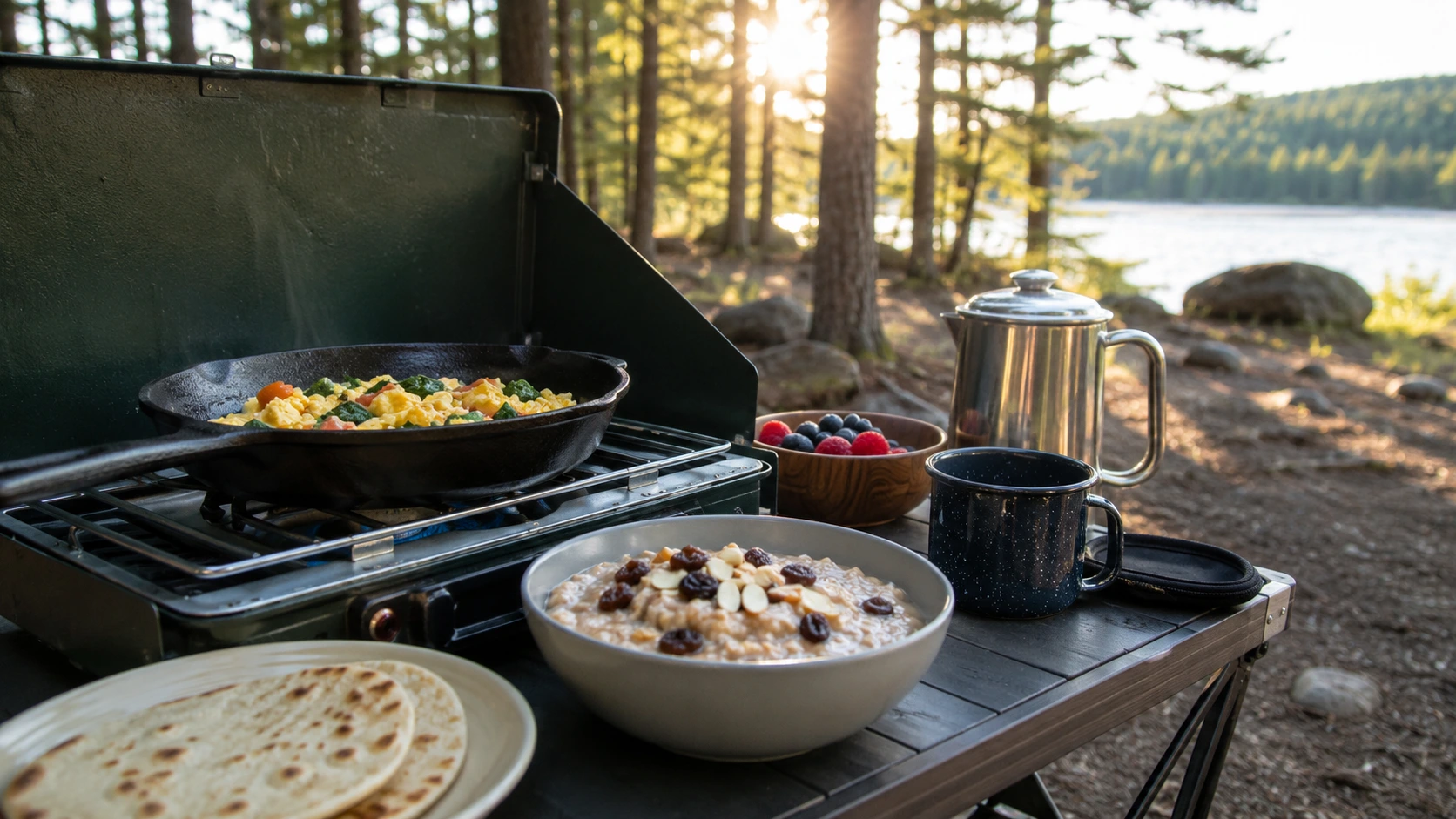
2. Oatmeal With Nuts and Dried Fruit
Oatmeal is one of the simplest camping breakfasts. Combine quick-cooking oats with dried fruit, nuts, cinnamon, or powdered milk. Add hot water, let the oats soften, then add your toppings.
Best for: Backpacking or quick breakfasts | Cooking: Hot water | Cleanup: Very low
3. Camp Pancakes
Pack dry pancake mix and prepare it at camp, or bring premixed batter in a leak-proof container and keep it properly chilled. Cook small pancakes in a lightly greased skillet and add bananas, berries, nuts, or a little maple syrup.
Best for: Car camping or family trips | Cooking: Camp stove or skillet | Prep tip: Pre-measure the dry ingredients at home.
4. Egg and Vegetable Skillet
Cook eggs with chopped peppers, onions, tomatoes, spinach, or other vegetables in a single skillet. It is an easy way to turn a few basic ingredients into a filling breakfast without using several pans.
Best for: Car camping | Cooking: Camp stove or suitable fire setup | Cleanup: One skillet
5. Peanut Butter and Banana Toast
Toast bread in a skillet or on a suitable camping grill, then add peanut butter and sliced banana. For an even simpler no-cook breakfast, skip the toasting.
Best for: Quick breakfasts | Cooking: Optional | Prep time: About 5 minutes
No-Cook Camping Lunch Ideas
Lunch does not always need a stove. On a hiking day or a busy afternoon at camp, a no-cook meal can save fuel, time, and cleanup.
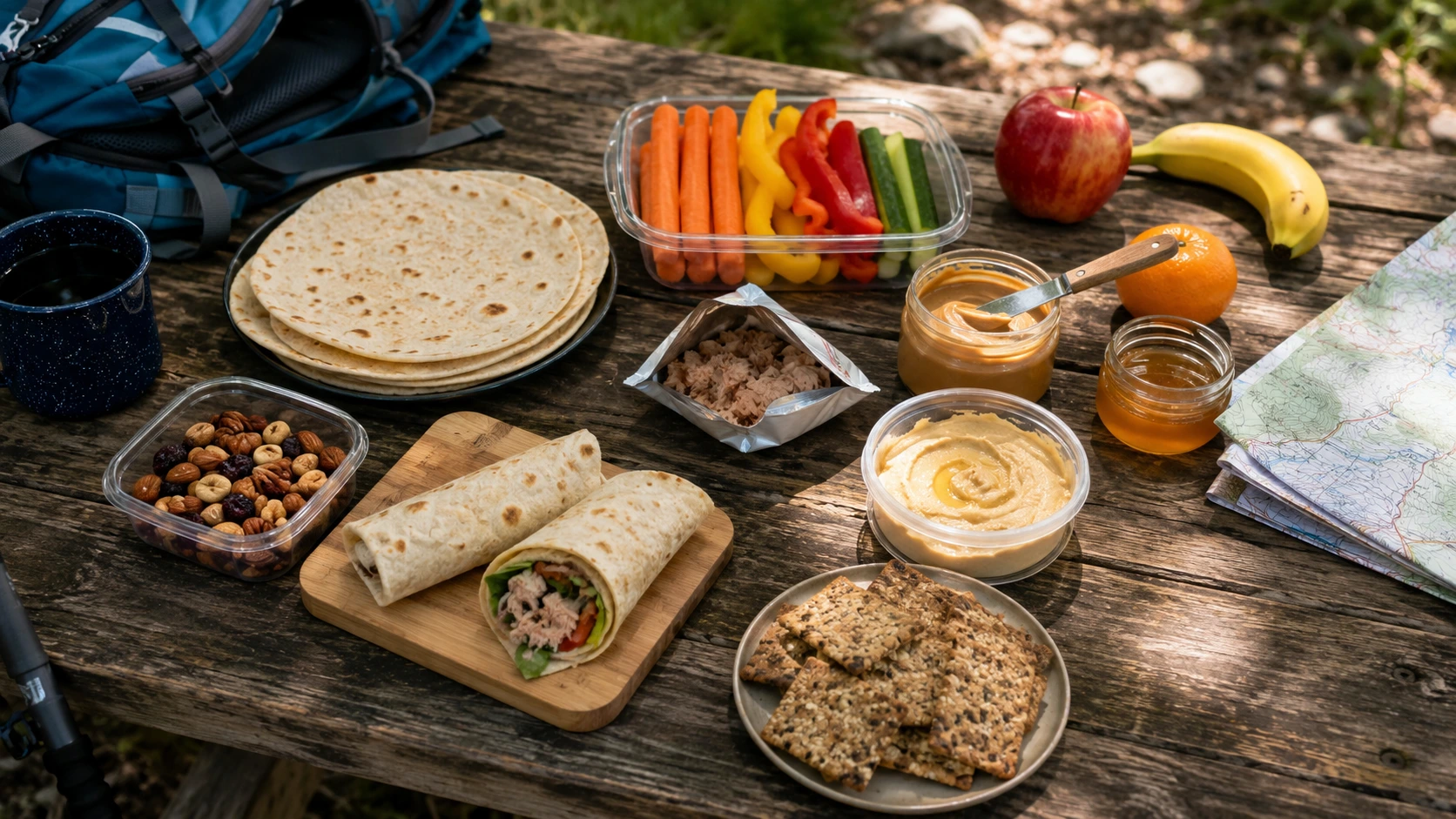
6. Peanut Butter and Honey Wraps
Spread peanut butter and honey over a tortilla, roll it up, and you’re done. Add sliced banana if you plan to eat it soon.
Best for: Hiking days and quick lunches | Cooking: None | Cleanup: None
7. Hummus and Vegetable Wraps
Spread hummus over a tortilla and add vegetables such as cucumber, carrots, peppers, and spinach. If you are using refrigerated hummus or other perishable ingredients, keep them properly chilled until mealtime.
8. Tuna and Cracker Packs
Pair shelf-stable tuna or another ready-to-eat protein with whole-grain crackers. Add a piece of fresh or dried fruit for a simple, filling lunch.
Best for: Minimal-cook trips | Cooking: None | Cleanup: Very low
9. Cheese, Crackers, Nuts and Fruit
Create a simple campsite snack plate using ingredients that fit your storage conditions. Combine crackers with cheese, nuts, dried fruit, and fresh fruit. For perishable foods such as cheese, use an adequately chilled cooler and follow food-safety guidance.
10. Trail Mix Lunch Bowl
For a particularly simple option, combine nuts, seeds, dried fruit, cereal, and other shelf-stable ingredients. It is lightweight and requires no cooking, although it may not be enough by itself for a demanding hiking day.
Easy Camping Dinner Ideas
Dinner is where one-pot and foil-packet meals really shine. Fewer cooking vessels mean less equipment to carry and less washing afterward. The National Park Service specifically recommends consolidating meals, when possible, to reduce both carrying and cleanup.
11. Foil-Packet Chicken and Vegetables
Combine chicken, vegetables, and seasonings in a foil packet and cook until the chicken reaches an internal temperature of 165°F / 74°C, measured with a food thermometer.
Try combinations such as:
- Chicken + potatoes + carrots
- Chicken + peppers + onions
- Chicken + zucchini + herbs
Best for: Car camping | Cooking: Grill or suitable campfire setup | Cleanup: Very low
Important: Raw poultry requires proper refrigeration and careful handling. Keep it separate from ready-to-eat foods and cook it thoroughly.
12. One-Pot Pasta
Combine pasta with sauce, vegetables, and your preferred protein in one pot. It is filling, customizable, and creates less washing than a multi-pan dinner.
Camping advantage: One pot means fewer dishes to pack and clean.
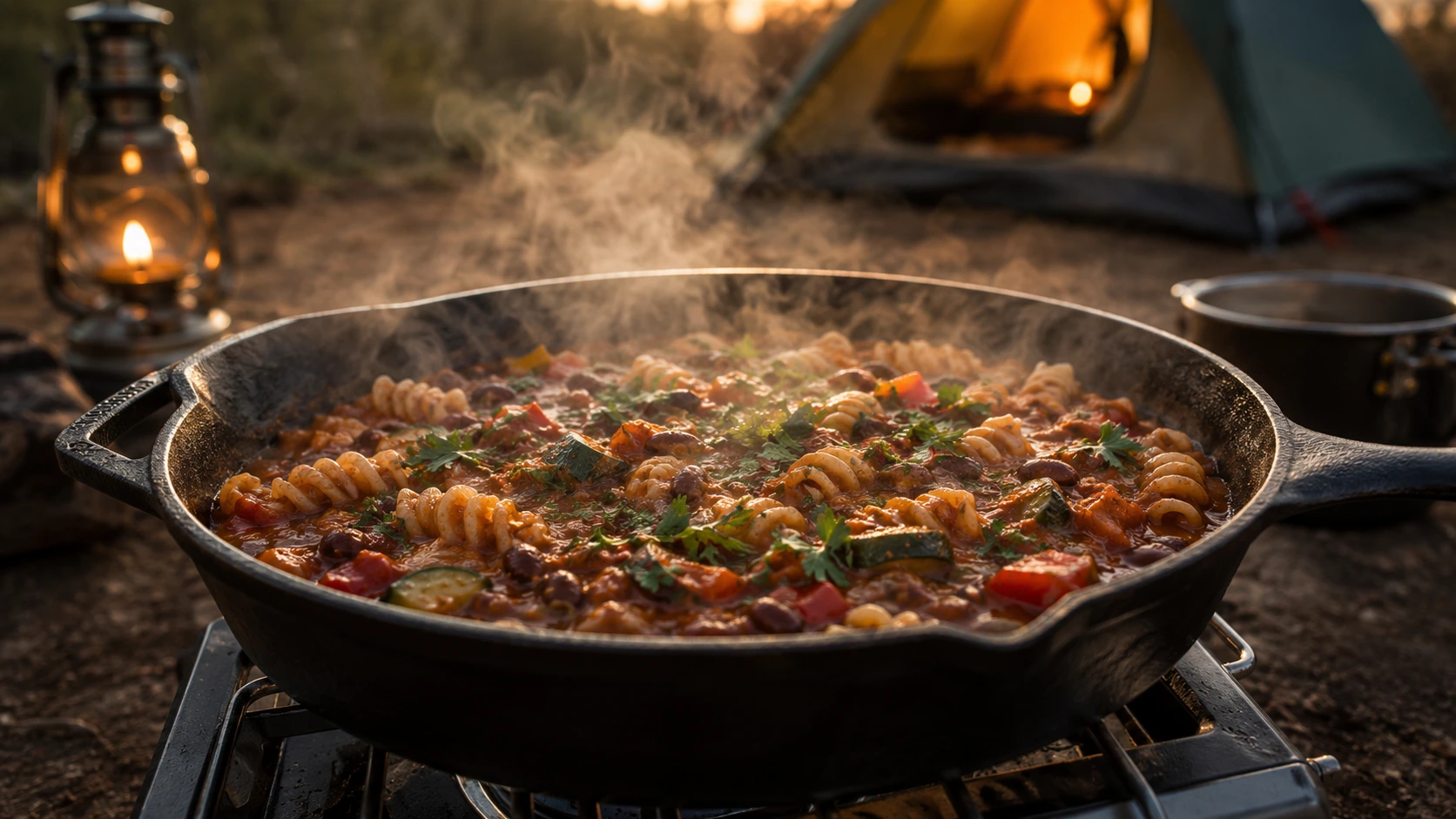
13. Campfire Chili
Prepare chili at home or cook a simple version at camp using beans, tomatoes, vegetables, and suitable seasonings. If prepared ahead, chill it properly before transporting it.
Best for: Cool evenings | Cooking: Pot over stove or appropriate fire | Prep tip: Make it at home for an even easier dinner
14. Camp Tacos
Prepare seasoned beans, meat, or vegetables and serve them in tortillas with cheese, salsa, and other toppings. Keep toppings simple to reduce the number of containers you need.
15. Loaded Baked Potatoes
Bake potatoes using an appropriate camping method, then add toppings such as cheese, beans, vegetables, or leftover chili. For faster cooking, partially cook the potatoes at home and finish them at camp.
16. Sausage and Vegetable Skillet
Slice suitable sausage and combine it with peppers, onions, potatoes, or other vegetables in a skillet. This is one of those flexible meals where you can use whatever vegetables you already packed.
Best for: Car camping | Cleanup: One skillet
17. Campfire Quesadillas
Fill tortillas with cheese, beans, cooked vegetables, or appropriately prepared meat. Cook them in a skillet until the tortillas are crisp and the filling is hot. Cut into wedges and serve with salsa.
18. Simple Rice and Bean Bowl
Use pre-cooked or quick-cooking rice with beans, corn, salsa, and seasonings. For backpacking, consider dehydrated or shelf-stable ingredients where appropriate.
Best for: Budget-friendly camping
19. Camp Mac and Cheese
Use a simple boxed or pre-portioned version and add vegetables, beans, or another suitable ingredient. It’s especially useful when you want comfort food without complicated preparation.
20. Breakfast-for-Dinner Skillet
No rule says eggs are only for breakfast. Combine eggs, potatoes, vegetables, and cheese in a skillet for an easy evening meal.
Camping Snacks and Desserts
Not every camping food idea needs to become a full meal. A few simple snacks and desserts can make the campsite feel a little more enjoyable without adding much extra work.
21. Classic S’mores
Graham crackers, chocolate, and marshmallows are a classic campfire combination. Just remember that campfires may be restricted depending on local conditions, season, or campground regulations. Always check the rules before starting a fire.
22. Campfire Popcorn
Pop popcorn in a suitable covered pan over a stable, controlled heat source. Keep the cookware secure and avoid placing it where it can tip or spill near the fire.
23. Foil-Wrapped Banana
Slice a banana lengthwise, add a small amount of chocolate or another topping, wrap it securely in foil, and warm it using an appropriate heat source until soft. It’s an easy dessert with minimal cleanup.
24. Roasted Corn
Place corn on an appropriate grill or cooking grate and turn it regularly while it cooks. Add butter and seasoning afterward.
25. Apple and Cinnamon Packets
Slice apples, add cinnamon, and wrap them in foil. Warm them until tender. For a richer dessert, you can add a small amount of oats or another suitable topping.
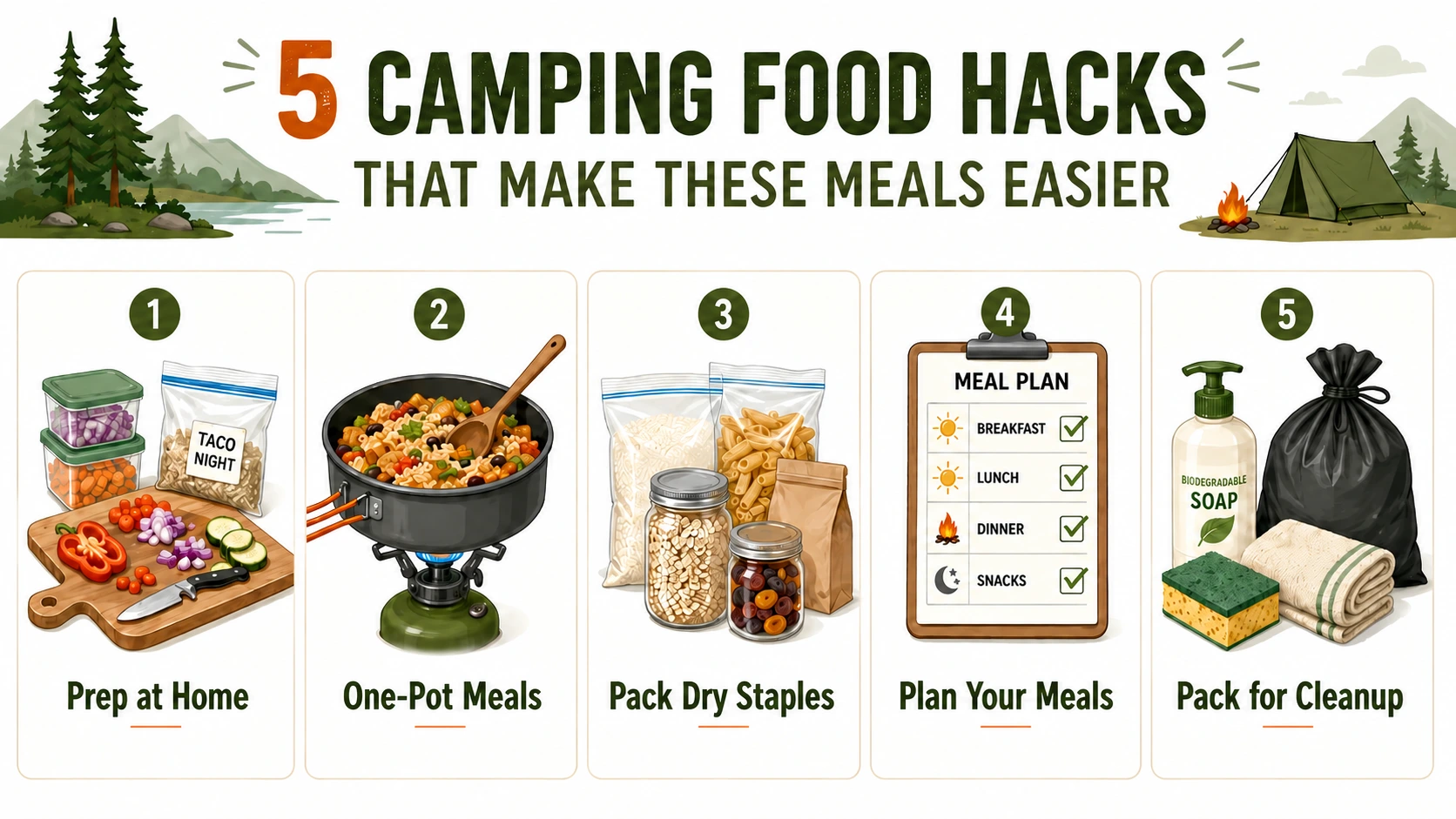
5 Camping Food Hacks That Make These Meals Easier
The recipes are only half the battle. A few preparation tricks can make campsite cooking much easier.
1. Prep Ingredients at Home
Chop vegetables, portion spices, and organize ingredients before leaving. This reduces knife work and preparation time at camp. For longer trips, label meal portions so you don’t have to search through every food bag when you’re hungry.
2. Plan Around One-Pot Meals
If two meals taste equally good but one requires three pans, choose the one-pot version. Less cookware means less weight, less washing, and less time cleaning, a theme that shows up throughout the NPS’s own camp cooking guidance.
3. Pack Dry Ingredients Separately
Rice, pasta, oats, powdered soup, dried fruit, and similar ingredients can be practical camping staples. For backpacking, choosing lightweight dry foods can reduce the weight and bulk of your food supply.
4. Build a Simple Meal Schedule
Instead of bringing random ingredients, decide what you will eat before leaving. For example:
Day 1:
Breakfast → pancakes, Lunch → wraps, Dinner → foil packets
Day 2:
Breakfast → oatmeal, Lunch → tuna and crackers, Dinner → one-pot pasta
This makes shopping and packing much easier.
5. Pack for Cleanup, Not Just Cooking
Bring the equipment needed to clean your cookware and keep food waste contained. A meal that takes 10 minutes to cook but 30 minutes to clean isn’t necessarily a convenient camping meal. Cleaning cooking equipment promptly also helps keep food scraps and odors from attracting wildlife.
💡 Bottom Line
Do as much preparation as you can at home, keep meals simple, and plan cleanup before you leave. A little organization can save a lot of time at camp.
Camping Food Safety: What to Remember
Outdoor meals should be convenient, but food safety still matters.
Keep perishable foods cold
Meat, dairy, eggs, hummus, and other foods that require refrigeration should be kept properly chilled. Keep perishables at 40°F / 4°C or colder, according to the USDA’s outdoor food-safety guidance. Discard them if they have been above 40°F for more than two hours, or more than one hour when the outdoor temperature is above 90°F / 32°C.
If you’re traveling into the backcountry, consider choosing shelf-stable alternatives rather than carrying foods that need constant refrigeration.
Separate raw and ready-to-eat foods
Keep raw meat and poultry away from foods that will be eaten without cooking, and clean utensils and preparation surfaces after handling raw ingredients.
Keep your campsite clean
Food scraps, dirty cookware, packaging, and strong food odors can attract wildlife. Never assume that a tent is a safe food-storage area. Some parks prohibit food and scented items in tents, and food-storage requirements vary by location.
Check local regulations
Food-storage and campfire rules can vary considerably between parks and campgrounds. Before your trip, check the regulations for the specific place you’re visiting – the NPS camping page is a good place to start.
💡 Bottom Line
Keep perishable food cold, prevent cross-contamination, clean up promptly, and follow the food-storage rules for your specific campsite.
Best Camping Foods by Trip Type
The best camping meals depend on how you are traveling, how much gear you can carry, and whether you have access to a cooler or cooking equipment.
| Camping style | Good food choices |
| Day trip | Wraps, fruit, trail mix, crackers |
| Car camping | Skillets, foil packets, pancakes, chili |
| Family camping | Breakfast burritos, tacos, pasta, s’mores |
| Backpacking | Oatmeal, dry meals, lightweight shelf-stable foods |
| Minimal-cook trip | No-cook wraps, tuna packs, nuts, dried fruit |
The right food depends as much on how you’re camping as what you enjoy eating. A car camper can bring a cooler and skillet. A backpacker has to think about every ounce. A family may prioritize familiar foods and quick preparation. Choosing meals around your trip style makes the whole experience easier.
Final Thoughts
Good camping food isn’t about recreating your home kitchen beside a tent. It’s about finding the sweet spot between good flavor, simple preparation, easy storage, and minimal cleanup. Pick a few meals to prepare ahead of time, favor one-pot dishes, and store everything according to local regulations so it stays safe and doesn’t attract wildlife.
Once dinner is packed away and the dishes are clean, there is only one thing left to do: sit back, enjoy some stargazing, and remember why you went camping in the first place.
If you are new to observing the night sky, our Stargazing for Beginners guide can help you make the most of a clear night at camp.
Frequently Asked Questions
The best camping foods are easy to prepare, travel well, require little cleanup, and suit your camping style. Oatmeal, wraps, pasta, rice, beans, foil-packet meals, skillet dishes, nuts, dried fruit, and other shelf-stable foods can all work well depending on the trip.
No-cook options include peanut butter wraps, hummus and vegetable wraps, tuna with crackers, trail mix, nuts, dried fruit, and some ready-to-eat shelf-stable foods.
Keep perishable foods properly chilled, separate raw foods from ready-to-eat foods, wash hands and utensils, clean up food scraps promptly, and store food according to local campground or park regulations.
Lightweight, compact, shelf-stable foods are generally more practical for backpacking. Dry foods such as oatmeal, rice, pasta, dehydrated meals, nuts, and dried fruit can reduce weight and storage requirements.
Chop vegetables, portion spices, pre-mix batters, and organize each meal into its own bag or container before you leave home — it saves real time and mess at the campsite.