


Choosing the best portable heater for a camper van becomes complicated when your access to power changes from one campsite to the next. Friday night, you are parked at a state park with a 30-amp pedestal beside the van. Saturday night, you are up a forest road at 9,000 feet with no hookup and temperatures dropping into the twenties. Same van, but two completely different heating problems.
The right choice depends mainly on your access to electricity, how long you camp off-grid, and whether you need temporary warmth or sustained heat.
- Electric resistance heaters are inexpensive and simple, but their 1,500W demand makes them practical mainly with shore power.
- Portable diesel air heaters use relatively little electricity while running and keep combustion separate from cabin air. Portable all-in-one units must be positioned and ducted exactly as their manuals require; some are intended to operate outdoors with only warm air directed inside.
- Unvented propane heaters need no electricity, but they burn fuel in the occupied space, add moisture, and require ventilation and close supervision.
This guide focuses on choosing among seven current products. Our separate guide to using portable heaters safely in camper vans covers carbon monoxide, ventilation, clearances, and cold-weather practice in greater depth.
| How we chose these heaters. These recommendations come from a research review completed August 29, 2026. We compared current manufacturer specifications and manuals, U.S. prices and availability, published safety guidance, warranty terms, and recurring owner feedback. Earthshinejournal did not conduct hands-on or laboratory testing, so output, fuel consumption, noise, and electrical figures are manufacturer ratings unless stated otherwise. Prices change frequently. |
Quick Answer: Which Type Should You Choose?
- Camping with shore power: Choose the DREO Ceramic Heater 316 for value and useful controls, or the Vornado MVH (2025) for its longer warranty and whole-room circulation. Use either only while attended and within the electrical limits of your van.
- Multi-night off-grid camping: A portable diesel heater is the strongest option here. The VEVOR 5kW is the budget choice, the Yotto Combusto Mini 2kW offers a more refined compact package, and the AUTOTERM Travel Box 2.0 is the fully integrated premium model.
- Short, attended warm-ups without electricity: The Mr. Heater Portable Buddy is the more versatile propane choice. The Little Buddy saves space but has only one heat setting.
| Bottom Line Choose by camping style, not the largest output number. Electric suits powered sites, an externally operated portable diesel system suits sustained off-grid heat, and unvented propane is best reserved for short, attended use. |
Best Portable Heaters for Camper Vans Compared
| Product | Type — Best For | Rated Output | Power or Fuel | Approx. Price — Main Limitation |
| DREO Ceramic Heater 316 | Electric — Powered sites | 1,500W (≈5,118 BTU/h) | 120V AC, 12.5A | ~$40 — Shore power and attended use only |
| Vornado MVH (2025) | Electric — Warranty and circulation | Up to 1,500W | 120V/60Hz AC | ~$75 — Basic mechanical controls |
| VEVOR 5kW All-in-One | Diesel — Budget off-grid heat | Mfr.-rated 5kW (≈17,060 BTU/h) | 0.16–0.52 L/h; ≥15A start-up supply recommended | ~$115 — Variable quality and oversized for many vans |
| Yotto Combusto Mini 2kW | Diesel — Compact off-grid use | 2kW (≈6,824 BTU/h) | ~0.2 L/h; 8–15A start, 1–3A running | ~$679 — Six-month parts warranty |
| AUTOTERM Travel Box 2.0 | Diesel — Integrated premium system | 1.0–2.0kW (≈3,400–6,800 BTU/h) | 0.14–0.24 L/h; built-in 22Ah battery | ~$1,585 — Price and nearly 50 lb full weight |
| Mr. Heater Portable Buddy MH9BX | Propane — Attended temporary heat | 4,000/9,000 BTU/h | 1 lb cylinder; no electricity | ~$155 — Unvented combustion and moisture |
| Mr. Heater Little Buddy MH4B | Propane — Minimal storage space | 3,800 BTU/h | 1 lb cylinder; no electricity | ~$117 — One fixed output setting |
Prices were checked on August 29, 2026 and may change. Diesel kW-to-BTU figures are mathematical conversions of manufacturer ratings, not independently measured output.
Best Electric Heater for Camper Vans With Shore Power
DREO Ceramic Heater 316 — Best Electric Value
On a standard U.S. 120V circuit, most full-size portable electric heaters top out at 1,500W, or about 12.5A. At that power, they produce approximately the same maximum amount of heat. The meaningful differences are controls, air movement, safety features, noise, size, and warranty.
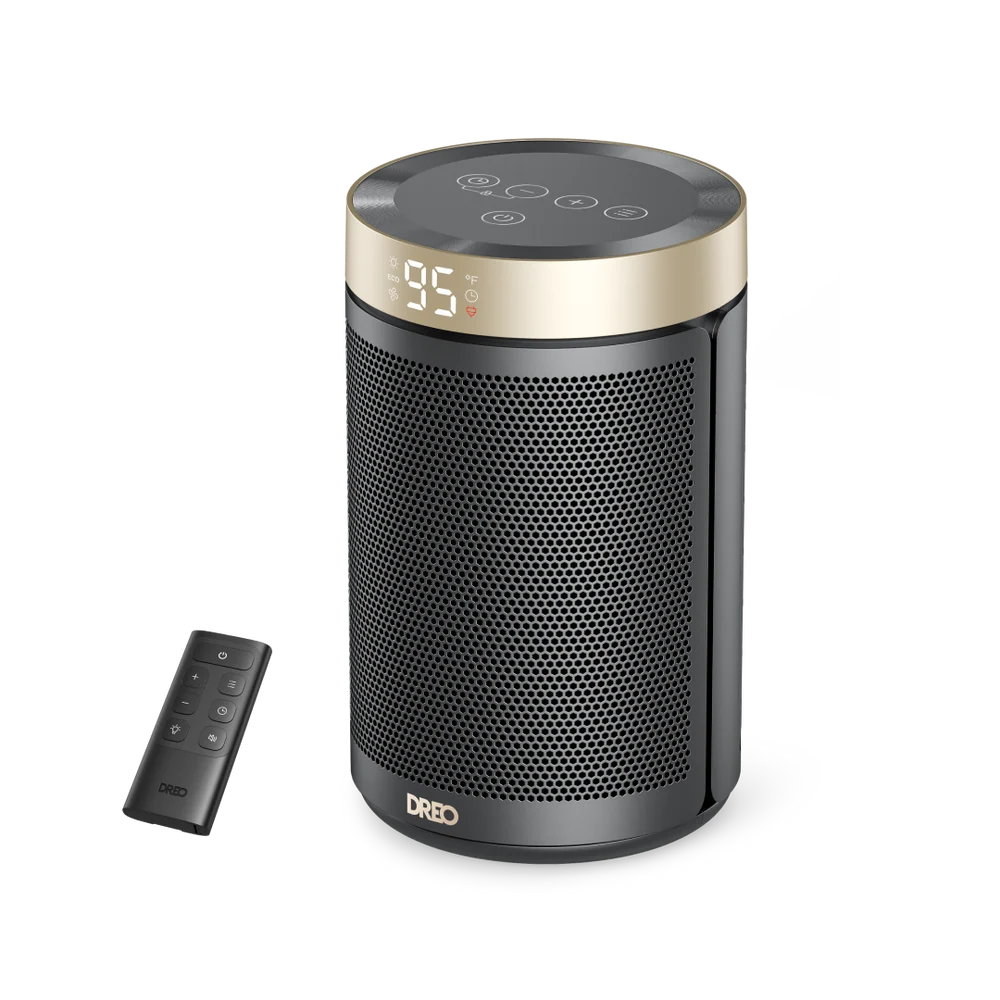
The DREO 316 costs around $40 and combines a 1,500W PTC ceramic element with a 41–95°F thermostat range, remote control, timer, multiple modes, tip-over protection, overheat protection, flame-resistant construction, and a child lock. The manufacturer rates it for spaces up to 200 square feet, although coverage figures are estimates rather than guarantees for an uninsulated van in winter.
Recent owner feedback commonly describes the heater as compact, quiet, and quick to warm a small room. The most relevant criticism is limited airflow beyond the area directly in front of it. Its standard warranty is 12 months, although registration may extend coverage depending on the seller and current terms.
Vornado MVH (2025) — Best Electric Warranty
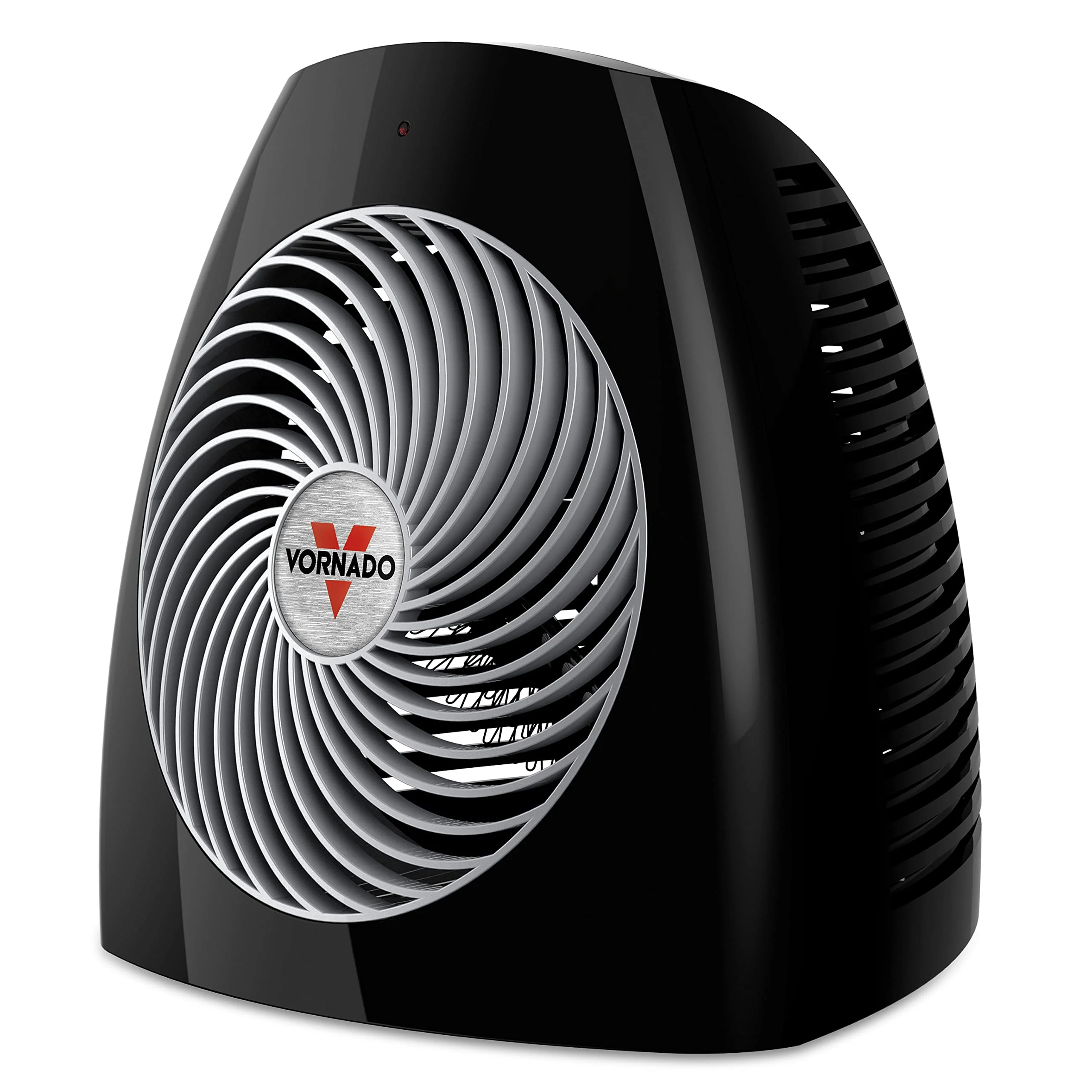
The current MVH should not be confused with the discontinued earlier model. The 2025 version provides three heat settings, mechanical thermostatic control, 1,500/750W published power figures, and Vornado’s whole-room circulation. It weighs 4.06 lb, measures 9.2 × 10.4 × 10.6 inches, and includes a six-foot cord.
Its safety features include automatic tip-over protection, a cool-touch cabinet, a tight grille, and two-stage automatic shut-off protection. The main reason to pay approximately $75 is its five-year warranty and more even air circulation. Exact-model owner evidence is still limited, so this recommendation rests primarily on its specifications, safety design, and warranty.
The Electrical Reality
A 1,500W heater consumes 1.5 kWh during each hour at full output. That is manageable on a suitable campground hookup, but it can drain a typical van battery bank quickly and requires a properly sized inverter. It also uses most of the capacity of a 15A branch circuit, so avoid running other heavy loads on the same circuit.
Portable electric heaters should be plugged directly into a suitable grounded outlet—not an extension cord or power strip—and kept at least three feet from bedding and other combustibles. CPSC and manufacturer guidance also says to turn portable heaters off before sleeping or leaving the space.
| Bottom Line The DREO offers the stronger combination of price and controls; the Vornado justifies its premium through circulation and warranty. Both are attended shore-power appliances, not battery-powered overnight heating systems. |
Best Budget Portable Diesel Heater
VEVOR 5kW All-in-One Bluetooth — Around $115
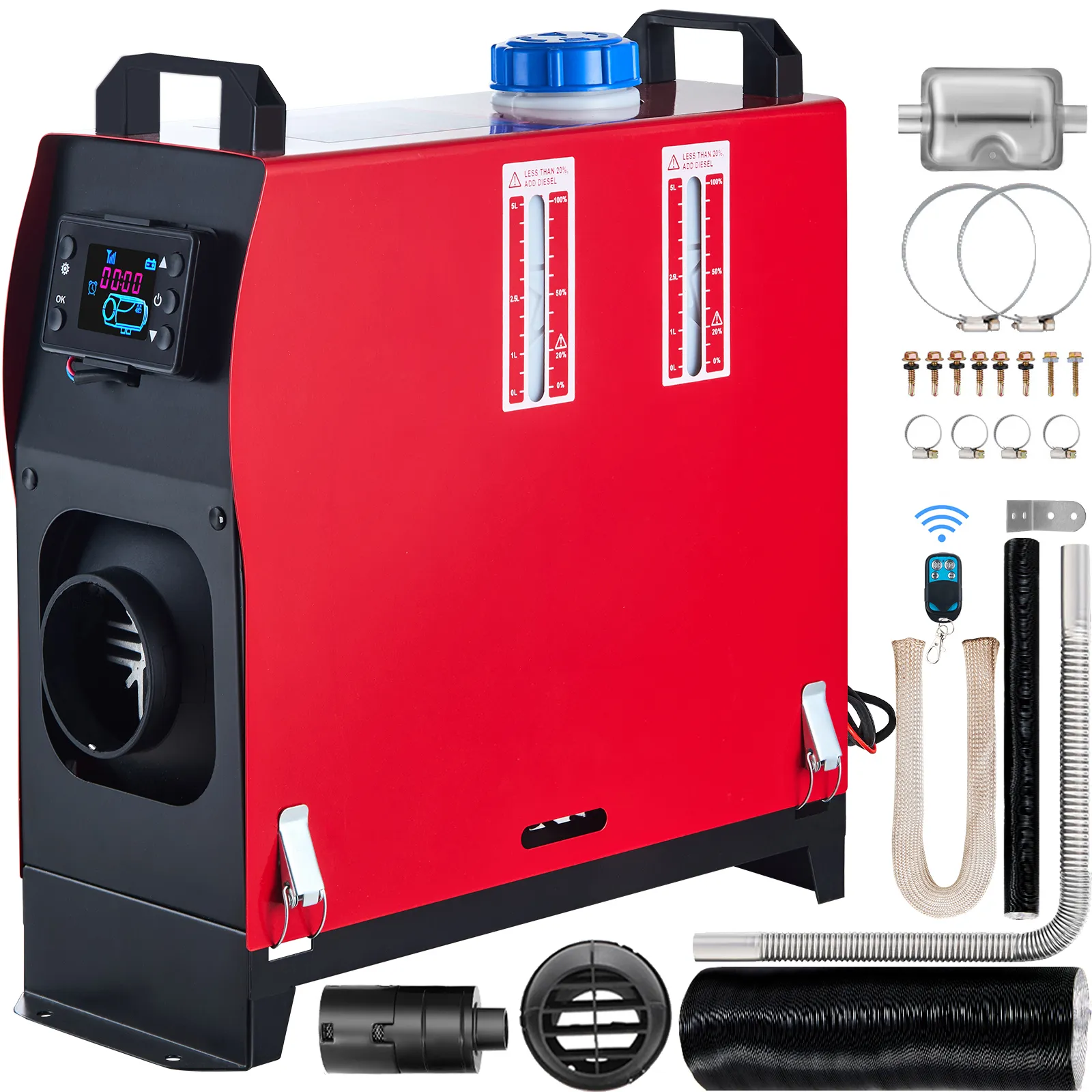
VEVOR’s low price makes portable diesel heating accessible, but its specifications need careful interpretation. The current listing advertises 5kW output, a 5L tank, 0.16–0.52 L/h fuel consumption, Bluetooth control, remote and LCD controls, and automatic altitude compensation up to a claimed 5,500m (18,045 ft). It weighs approximately 18.3 lb.
The advertised 5kW figure is a manufacturer rating, not an independent thermal measurement. VEVOR also sells several similar-looking revisions with different output, altitude, consumption, and weight figures, so buyers should match every specification and manual to the exact model number being ordered.
The electrical requirement is another common source of confusion. The listing gives an operating figure of 12V/3A, while VEVOR guidance recommends a 12V source capable of at least 15A during start-up. The glow plug needs considerably more current than the heater uses after ignition, which can prevent it from starting on a small power station or lightly wired accessory socket.
At the published fuel-consumption range, a 5L tank can support up to roughly ten hours under some conditions. Actual runtime depends on output, altitude, fuel quality, and temperature. A 5kW unit is also likely to spend much of the night at its lowest setting in a small insulated camper. More rated power may warm a cold interior quickly, but it is not automatically better for maintaining a steady temperature.
Owner feedback supports the value proposition while revealing the trade-off. Users often praise the heat and low purchase price, but recurring concerns include pump noise, inconsistent app behavior, and variable quality between units. The 12-month warranty helps, although consumable components are excluded.
Safe operation depends on the exact manual: keep the exhaust out of the occupied space, prevent fumes from reaching doors, windows, or air intakes, provide the required ventilation, inspect fuel and exhaust connections, and allow the full powered cool-down cycle after switching the heater off.
| Bottom Line The VEVOR offers exceptional capability for around $115, but it is best for buyers comfortable checking the setup, supplying adequate start-up power, and accepting less predictable long-term reliability. |
Best Mid-Range Portable Diesel Heater
Yotto Combusto Mini 2kW — Around $679
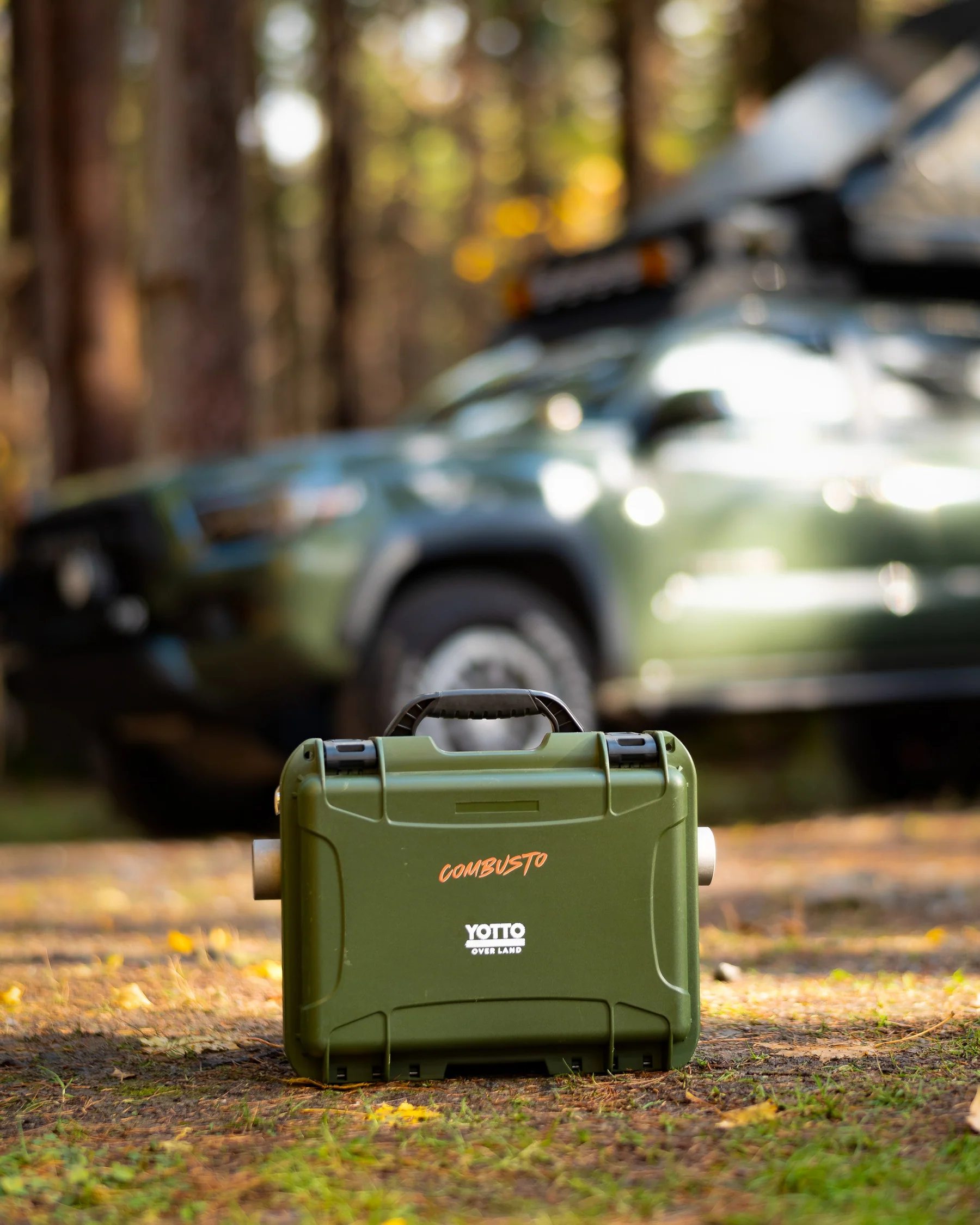
The Yotto Combusto Mini sits between the bargain VEVOR and the premium AUTOTERM. Its main advantage is not greater output but a more appropriate size for compact campers.
The 2kW Mini measures approximately 16 × 10 × 8 inches, carries a 4L tank, and weighs about 10 lb before fuel and accessories. Yotto quotes roughly 0.2 L/h fuel use, 8–15A during start-up, and 1–3A while running. A simple fuel-only calculation suggests around 20 hours from a full tank, but real runtime will vary and should not be treated as a guarantee.
The package includes a 110V power adapter, LCD controller, remote, ducting, exhaust pipe, and muffler. Yotto advertises operation up to 13,000 feet and provides U.S.-based support. The company warns users not to bolt the portable heater permanently to a rack or operate the vehicle with it fixed in place.
The instructions also call for adequate ventilation, unobstructed air vents, careful fuel and exhaust inspection, and a complete cool-down cycle. Yotto recommends keeping a carbon monoxide detector and fire extinguisher nearby. The heater should be positioned outside the occupied living area and warm air directed inside through suitable ducting.
The exact-model owner sample remains small. Available reports generally praise the quieter pump, rugged case, documentation, and support, although some buyers question whether the packaging and service justify the price over a budget Chinese heater. That is the central trade-off: you are paying for a compact 2kW package, refinement, and accessible support rather than a radically different heating principle.
The largest commercial concern is the six-month replacement-parts warranty, which is short for a product currently listed around $679. Sales and configuration terms can also change, so verify the included accessories and return conditions before purchasing.
| Bottom Line The Yotto Mini is the most camper-appropriate middle option here, but its compact design and support come at a substantial premium—and the short warranty deserves careful consideration. |
Best Premium Portable Diesel Heater
AUTOTERM Travel Box 2.0 — Around $1,585
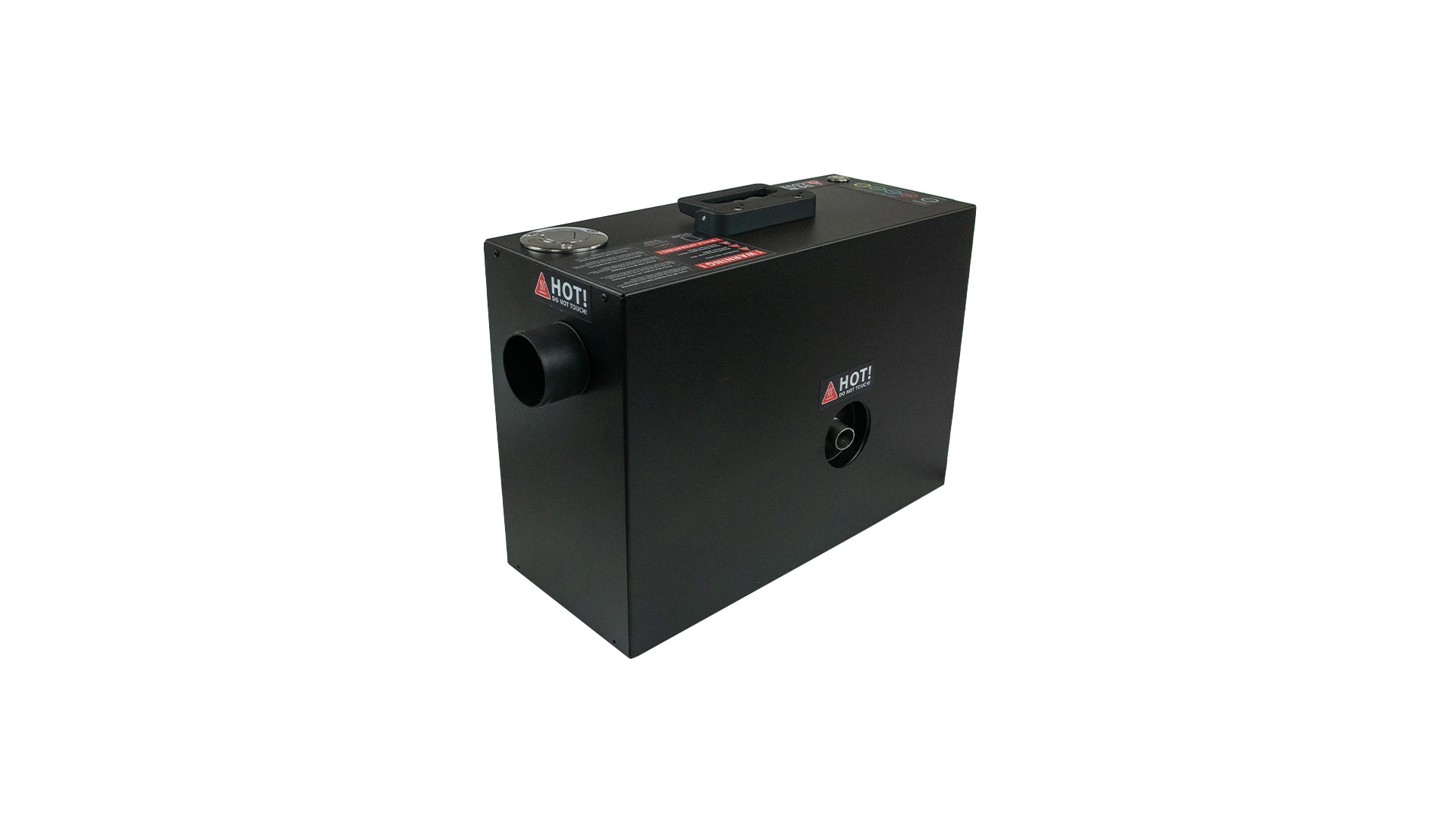
The AUTOTERM Travel Box costs roughly fourteen times as much as the VEVOR because it integrates the supporting equipment into one documented system. It combines a 1–2kW diesel heater with a 5L tank and Victron 22Ah AGM battery, plus an exhaust pipe, insulation, charger, and 12V supply cable.
Published figures include:
- Output: 1.0kW low and 2.0kW high
- Running consumption: 11W low and 29W high
- Fuel consumption: 0.14 L/h low and 0.24 L/h high
- Runtime: approximately 18 hours low or eight hours high with full fuel and battery
- Altitude rating: up to 3,000m (about 9,800 ft)
- Weight: about 49.6 lb with a full tank
- Dimensions: approximately 19.7 × 15.7 × 7.9 inches on the current U.S. page
AUTOTERM’s running consumption is broadly comparable to Yotto’s 1–3A at 12V, which converts to approximately 12–36W. The premium advantage is therefore integration, documentation, built-in power, and a two-year warranty—not dramatically lower electrical consumption.
The Travel Box is self-contained but not lightweight. At nearly 50 lb full, it is equipment you position carefully rather than carry casually around camp. More importantly, its manual describes it as an outdoor-use unit. The box stays outside, clear of openings and combustibles, while suitable warm-air ducting delivers heat into the van. No integrated CO alarm is listed, so a working detector remains essential inside the occupied space.
Independent exact-model evidence is limited, which prevents us from calling it the most reliable option. Its premium designation reflects the complete system and stronger documentation rather than proof that it will never fail. Buyers should also confirm the warranty’s registration, service, and operating-hour conditions with the U.S. dealer.
| Bottom Line The AUTOTERM is the most complete portable diesel package here, but its price and weight make sense mainly for frequent cold-weather travelers who value integration more than bargain performance. |
Best Portable Propane Heater for Camper Vans
Mr. Heater Portable Buddy MH9BX — Best Propane Overall
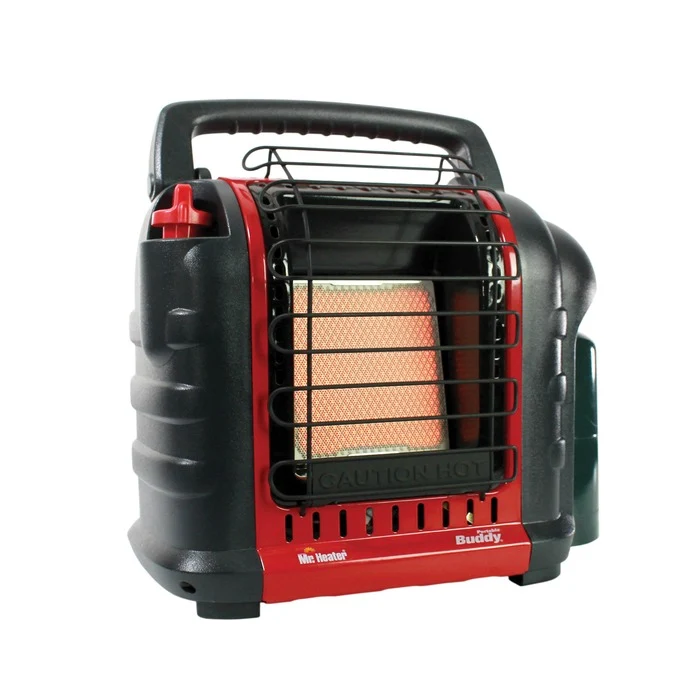
Propane avoids shore power, inverters, 12V wiring, and diesel-heater start-up demands. In exchange, it introduces unvented combustion, moisture, cylinder storage, and strict ventilation and clearance requirements.
The Portable Buddy provides 4,000 and 9,000 BTU/h settings and is manufacturer-rated for spaces up to 225 square feet. It weighs 10.6 lb, measures 14.25 × 9 × 15 inches, and has a maximum rated elevation of 7,000 feet. Current specifications indicate approximately six hours on low or three hours on high from a one-pound cylinder, although listings vary slightly.
Safety features include an Oxygen Depletion Sensor and accidental tip-over shut-off. The ODS is not a carbon monoxide detector, and neither feature makes a sealed van safe. A working independent CO alarm, ventilation, stable placement, and clearance from bedding and other combustibles remain essential.
Unvented propane combustion also releases water vapor into the cabin. Owner reports commonly describe condensation on windows and other cold surfaces, especially during longer use. Short heating sessions with ventilation create less moisture than trying to maintain cabin temperature for hours.
If using an external propane cylinder, follow Mr. Heater’s specified hose and filter arrangement. Some high-pressure hoses can introduce contaminants into the regulator and pilot system, while unauthorized accessories may void the warranty. The heater carries a one-year warranty and jurisdictional restrictions, including the U.S. listing’s Massachusetts and Canada notices.
Mr. Heater Little Buddy MH4B — Best for Small Spaces
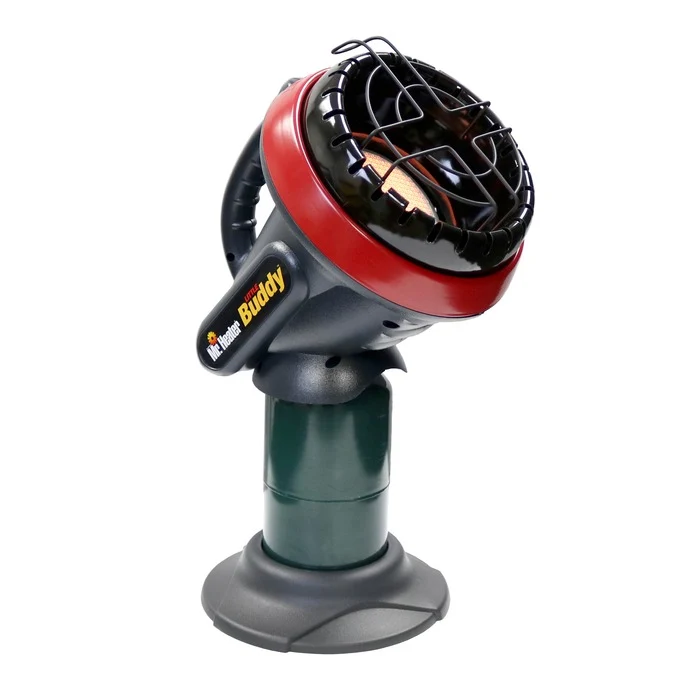
The Little Buddy uses the same basic unvented radiant approach in a smaller package. It provides a fixed 3,800 BTU/h output, connects directly to a one-pound cylinder, weighs 5.85 lb, and is rated for spaces up to 95 square feet. Manufacturer runtime is approximately 5.6 hours.
It includes ODS and tip-over shut-off but no thermostat, second output setting, or integrated CO detector. The radiant grille also remains hot after the fuel shuts off, so tip-over protection does not eliminate the risk of damaging bedding, flooring, or other materials.
Choose the Little Buddy only when storage space is the deciding factor. For most camper vans, the Portable Buddy’s two settings are more useful because low heat can maintain comfort while high heat warms a cold interior more quickly.
| Bottom Line The Portable Buddy is the more flexible propane option, while the Little Buddy saves space. Treat both as attended temporary heaters with real ventilation and a working CO alarm—not as overnight heating systems. |
Electric vs. Diesel vs. Propane
| Electric Resistance | Portable Diesel | Unvented Propane | |
| Best use | Attended heat at powered sites | Sustained off-grid heat | Short attended warm-ups |
| Power required | About 1,500W at full output | High start-up draw; modest running draw | None for basic operation |
| Fuel | None | Diesel, roughly 0.14–0.52 L/h here | One-pound cylinders or approved external supply |
| Combustion placement | None | Unit/exhaust positioned as the manual requires, generally outside the occupied area | Inside the occupied space |
| Cabin moisture | None from the heater | Minimal when correctly configured | Significant water vapor produced |
| Typical setup | Direct connection to a suitable outlet | Outdoor placement, power, fuel, ducting, and exhaust clearance | Attach cylinder, ventilate, maintain clearance |
| Price range here | ~$40–$75 | ~$115–$1,585 | ~$117–$155 |
Electric is the clearest choice when you have suitable shore power and need heat while awake. Diesel makes more sense for repeated off-grid winter camping because it provides sustained heat without open combustion in the living space. Propane is appealing when simplicity and low upfront cost matter more than runtime and moisture.
If dependable overnight heat is essential, consider a properly installed, vented RV heating system or an outdoor portable diesel setup explicitly configured for that use. Do not assume that every product sold as “indoor safe” or “portable” is suitable for unattended sleeping hours.
| Bottom Line Electric wins where there is a suitable plug, diesel wins for extended off-grid use, and propane works best for brief warm-ups. The manual for the exact heater always takes priority over general category advice. |
How to Choose the Best Portable Heater for a Camper Van
Available Power
A 1,500W electric heater is practical on a suitable hookup but demanding for a battery and inverter. Diesel reverses that equation: it needs a short surge for ignition but relatively little electricity once running. Size a diesel heater’s power source for start-up, not only its published operating draw.
Heater Size
For many insulated camper vans, 2kW is easier to regulate than 5kW. A larger heater warms the space faster, but it may spend long periods at its lowest setting, which can reduce comfort and potentially encourage carbon buildup if the unit rarely runs hot. Insulation, outside temperature, van volume, and air leakage matter more than floor-area claims alone.
Fuel and Runtime
Diesel is widely available, but these portable products use their own tanks unless configured otherwise. One-pound propane cylinders are convenient for occasional use but become expensive and create waste during extended trips. Manufacturer runtime estimates should be treated as planning ranges rather than promises.
Altitude
Combustion becomes harder as oxygen decreases. VEVOR advertises automatic adjustment up to 18,045 feet, Yotto claims operation to 13,000 feet, AUTOTERM rates the Travel Box to approximately 9,800 feet, and the Buddy models list 7,000 feet. These are manufacturer limits, not guarantees of flawless starting or clean combustion under every condition.
Noise
Electric heaters produce fan noise. Diesel systems add a fuel-pump tick that can be noticeable at night, although case design and pump mounting affect how intrusive it becomes. Propane radiant heaters are nearly silent.
Storage and Setup
Count the entire system, not only the heater. Diesel requires power cables, warm-air ducting, hot exhaust clearance, and fuel. Propane requires safe cylinder storage. The 5.85 lb Little Buddy is easy to stow, while the AUTOTERM approaches 50 lb with a full tank.
Warranty and Support
Vornado offers five years, AUTOTERM lists two years with conditions, VEVOR and the propane heaters offer one year, and Yotto provides six months of replacement-parts coverage. The Yotto warranty is notably short relative to its price. With budget diesel heaters, also consider whether you are comfortable diagnosing and replacing pumps, glow plugs, wiring, or fuel line components.
| Bottom Line Power, heater size, setup, and warranty matter more than advertised coverage. Before buying, picture where every cable, cylinder, duct, and hot exhaust component will go in your actual campsite arrangement. |
Essential Safety Before You Buy
Our complete camper van heater safety guide provides the detailed checklist, but these rules belong in any buying decision:
- Install working carbon monoxide and smoke alarms and test them before each trip. An ODS is not a CO detector.
- Follow the manual for the exact model and revision you own.
- Keep portable diesel units, fuel systems, and exhaust components outside the occupied area when the instructions require it. Direct exhaust away from doors, windows, vents, neighboring campsites, and dry vegetation.
- Inspect diesel fuel lines, exhaust connections, ducting, and electrical cables before every setup. Never interrupt the powered cool-down cycle.
- Ventilate whenever an unvented propane heater is running, and never use one while sleeping.
- Keep every portable heater on a stable surface with the required clearance from bedding, curtains, clothing, and other combustibles.
- Plug electric heaters directly into a suitable grounded outlet. Do not use an extension cord or power strip, and turn the heater off before sleeping or leaving the van.
- Turn fuel-burning heaters off and allow them to cool before refueling.
- Never use a stove, oven, grill, or other cooking appliance as a heater.
- Do not operate portable heaters while the vehicle is moving unless the manufacturer explicitly approves that installation and use.
| Bottom Line No sensor compensates for incorrect placement or ventilation. Choose a heater only after confirming that your van and campsite can accommodate its complete safe setup. |
Final Thoughts
The biggest mistake in this category is shopping by output alone. A 5kW diesel heater is not automatically better than a 2kW model in a small insulated van, and one 1,500W electric heater cannot produce dramatically more heat than another at the same input. A four-figure price also buys integration and documentation—not guaranteed reliability.
Start with the way you camp. Shore-power travelers need a different heater from people spending a week off-grid at elevation, while someone warming the van for twenty minutes in the morning has different priorities again. Once you define the job and the safe setup your van can support, the right category—and usually the right product—becomes much easier to identify.
FAQ
Technically yes, with a large enough battery bank and inverter, but it is rarely practical for sustained heat. At full output, the heater consumes 1.5 kWh per hour before inverter losses. It can drain a typical van electrical system quickly, so portable resistance heaters are best treated as shore-power appliances.
They are worthwhile for campers who regularly spend multiple nights off-grid in cold conditions. They provide sustained heat with relatively low running electrical demand while keeping combustion outside the living area when configured correctly. The trade-offs are start-up power, fuel and exhaust setup, maintenance, and widely varying build quality.
The U.S. Buddy listings describe the heaters as suitable for indoor use, subject to manufacturer instructions and jurisdictional restrictions. That does not mean they are safe in a sealed van. Both include ODS and tip-over protection, but neither lists an integrated CO detector. Use ventilation, maintain clearance, run a separate CO alarm, and keep the heater attended. We would not use an unvented propane heater while sleeping.
For most insulated camper vans, 2kW is the more manageable size. A 5kW model warms a cold space faster but may spend much of its time on its lowest setting. Larger vans, poor insulation, extreme temperatures, and frequent door opening can justify more capacity, so use the manufacturer’s sizing guidance alongside your actual conditions.
Portable electric and unvented propane heaters should be switched off before sleeping. An outdoor diesel heater may be suitable for extended or overnight operation only when its manufacturer permits it and the entire fuel, exhaust, power, ducting, alarm, and ventilation setup follows the manual. If overnight heat is a regular need, a professionally installed vented RV heater is generally the more permanent solution.