

There’s a particular kind of regret that sets in the morning after a great night by the fire: you wake up, roll over, and your pillow smells like a chimney. Getting campfire smoke out of clothes and hair is one of those small annoyances that can undercut an otherwise perfect trip, and almost every camper eventually runs into it. The good news is that smoke, for all its stubbornness, is no match for a few well-chosen household tricks.
Why Campfire Smoke Smell Clings
Wood smoke isn’t a single scent so much as a cocktail of hundreds of compounds: tiny particles, oils, and volatile organic molecules released as wood breaks down in the fire. Among them are polycyclic aromatic hydrocarbons, or PAHs, which form whenever wood, coal, or other organic material burns incompletely, as reported by the EPA. Some of these compounds cling to fabric fibers and natural oils, which is why the smoky smell can remain long after the fire is out.
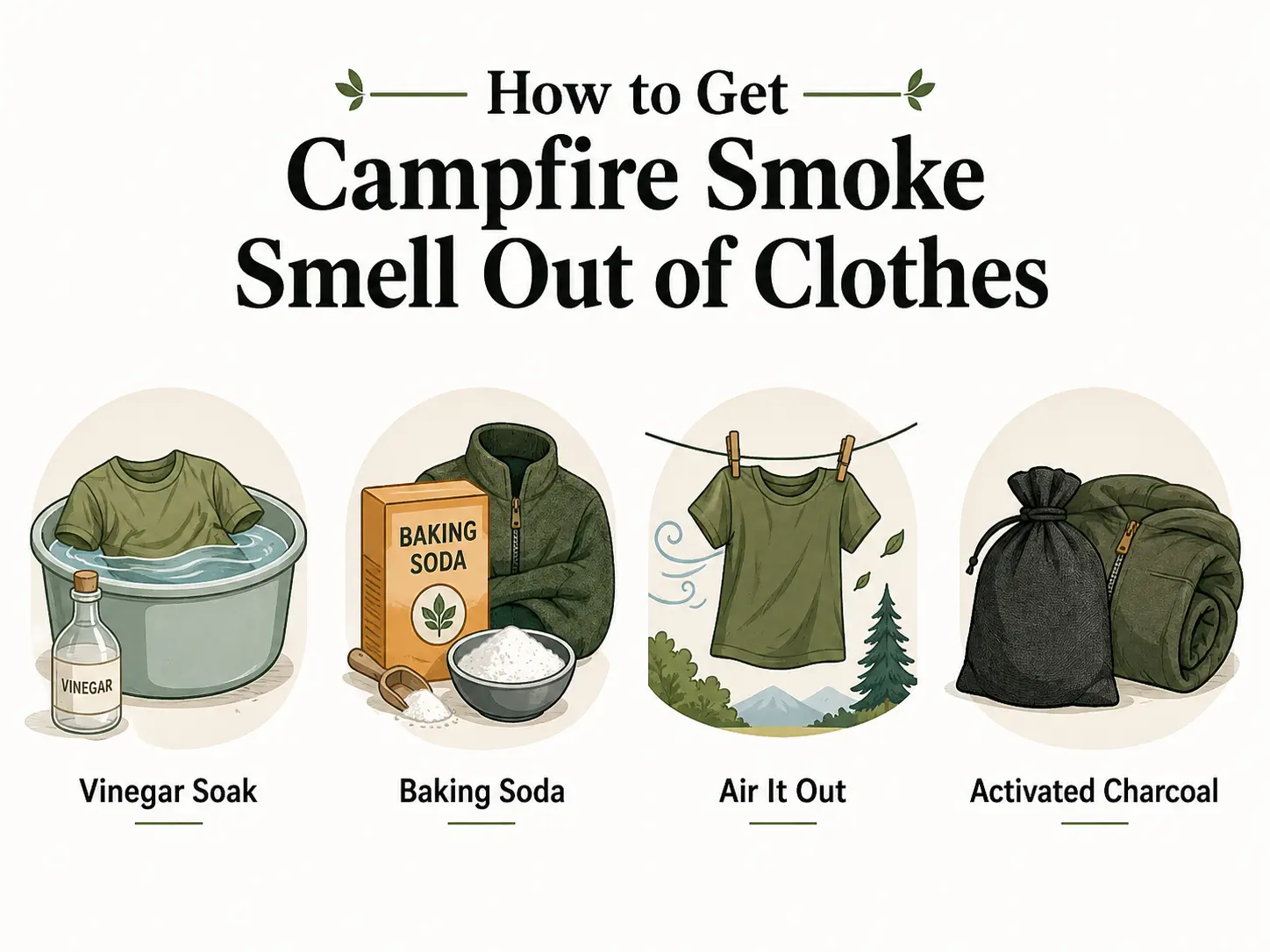
How to Get Campfire Smoke Smell Out of Clothes
The Vinegar Soak
Plain white vinegar is a popular laundry deodorizer that may help reduce lingering smoke odors. For washable clothing, you can dilute it in water for a short presoak before laundering according to the garment’s care label. Don’t worry about your clothes coming out smelling like a salad; the vinegar scent evaporates as everything dries.
Baking Soda for Fabric
Baking soda can help with odors in more than one way. It can neutralize some acidic odor compounds and can also help adsorb odors from the surrounding air. It won’t chemically neutralize every component of campfire smoke, but it can still be useful as part of the deodorizing process, as researched by Utah State University. It’s especially useful for jackets, sleeping bags, and other gear you can’t easily toss in a washing machine.
Sunlight and Fresh Air
Never underestimate fresh air. Hanging smoky clothing outside allows some volatile odor compounds to dissipate, and several hours of good airflow can noticeably reduce a mild lingering smell. Check the care label before leaving colored or delicate fabrics in prolonged direct sunlight.
Activated Charcoal
For gear that can’t be washed at all, packs, tents, sleeping bag liners- activated charcoal is worth keeping around. Its enormous surface area adsorbs odor molecules right out of the air. Tuck a bag of activated charcoal (the kind sold for shoe deodorizers works fine) inside a stuff sack or gear bin overnight. It may help reduce lingering odors, especially in enclosed spaces.
Quick Fixes When You Can’t Wash Right Away
Not every smoky garment can go straight into a washing machine, especially mid-trip. A fabric refresher spray like Febreze can genuinely help here, since it’s formulated to trap odor molecules rather than just perfume over them, though it works best as a stopgap, not a permanent fix. Tossing clothes in the dryer on a no-heat air-fluff cycle with a couple of dryer sheets for twenty minutes can also knock loose a surprising amount of smell.
How to Get Campfire Smoke Smell Out of Hair
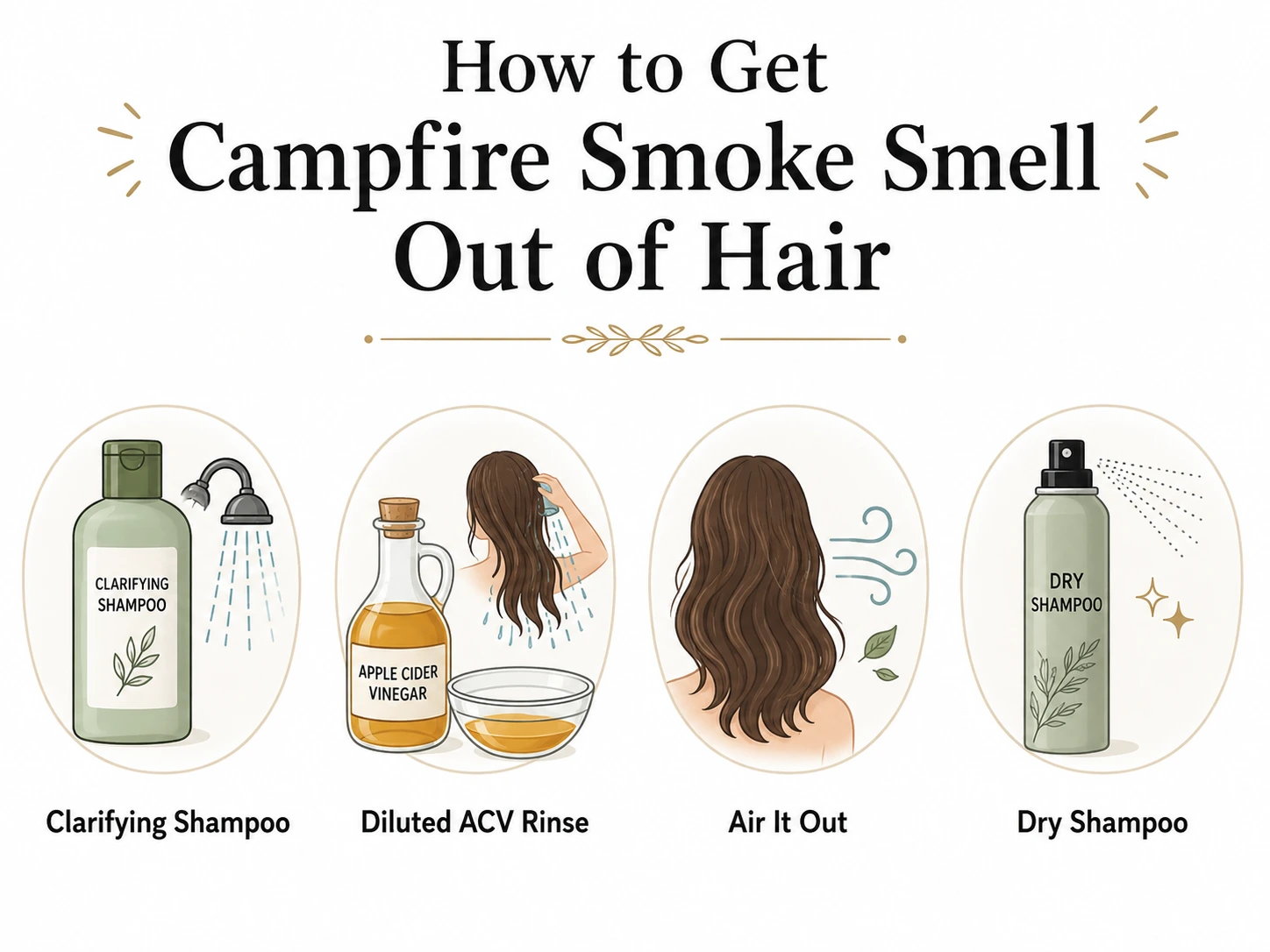
Reach for a Clarifying Shampoo
Regular shampoo is often too gentle to fully strip out embedded smoke odor. A clarifying shampoo, formulated with stronger surfactants to remove buildup, does a much better job of getting down to the hair shaft where smoke particles settle. Use it once, rather than making it a daily habit, since clarifying formulas can be drying with frequent use.
A Diluted Apple Cider Vinegar Rinse
Some people use diluted apple cider vinegar as a hair rinse to help remove buildup and lingering odors. Evidence specifically for campfire smoke odor is limited, however, and concentrated vinegar can irritate the scalp. If you use it, keep it well diluted and stop if you notice burning or irritation.
Let It Air Out Overnight
If you’re heading straight to sleep after a fire and can’t wash your hair, leaving it loose rather than braided or in a bun gives odor compounds more surface area to evaporate off of overnight. It’s a small thing, but it makes a real difference by morning.
How to Prevent Campfire Smoke Smell
If you’re already thinking ahead to your next trip, maybe pairing a fire with an evening of stargazing or planning out the camping food for the weekend, a couple of small adjustments at the fire itself go a long way.
Sitting upwind of the smoke, using dry, seasoned wood instead of green or damp logs, and tying back long hair before you settle in all cut down on how much odor you pick up in the first place. It won’t eliminate the smell (and honestly, would you really want a campfire that didn’t smell like anything?), but it keeps the cleanup afterward a lot more manageable.
Frequently Asked Questions
Mostly the latter. Dry shampoo is designed to absorb oil, and while it does soak up some odor along with it, the fragrance in most formulas is doing a lot of the work. It’s a fine short-term fix, not a real fix.
Often, yes, especially for lightly smoked items. Heavily smoked gear, a fleece worn all evening by the fire, for instance, sometimes needs a vinegar soak first and a second wash to fully clear.
Yes, just not at the exact same time in the same step. Soak with vinegar first, rinse, then wash as normal; baking soda works best as a separate dry treatment before laundering, not mixed directly with vinegar on fabric.