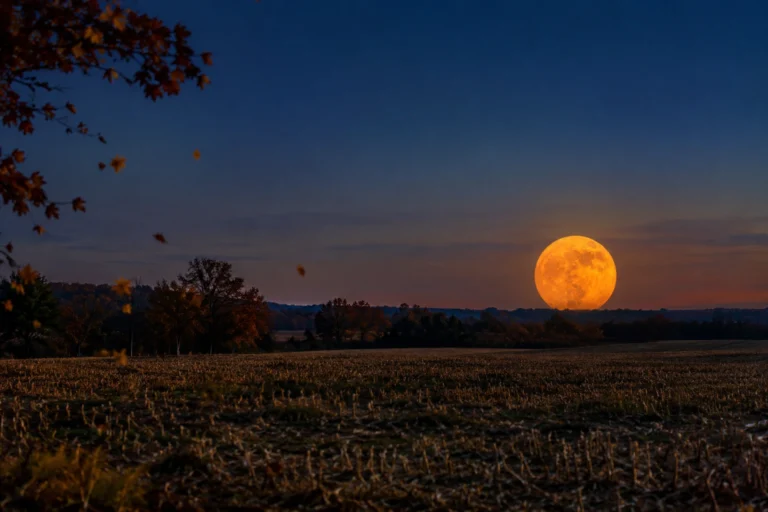


Grab a blanket and clear a spot by the window, because the Beaver Moon 2026 is shaping up to be one of the year’s best skywatching nights. November’s full moon peaks on Tuesday, November 24, and this time around it arrives as a supermoon; bigger, brighter, and worth stepping outside for. Here’s when to look and what makes November’s full Moon worth watching.
Beaver Moon 2026: Quick Facts
| Date | November 24, 2026 |
| Exact full Moon | About 14:53 UTC |
| Eastern Time | 9:53 a.m. EST |
| Central Time | 8:53 a.m. CST |
| Mountain Time | 7:53 a.m. MST |
| Pacific Time | 6:53 a.m. PST |
| Best viewing | Around local moonrise on November 24 |
| Special feature | Supermoon |
| Visible without equipment? | Yes |
When Is the Beaver Moon in 2026?
The exact instant of full Moon occurs at about 14:53 UTC on November 24, according to astronomical calculations, which works out to 9:53 a.m. Eastern Time, per The Old Farmer’s Almanac. Since the peak occurs after moonset across much of the contiguous U.S., most American readers won’t see the Moon at the exact instant it reaches full phase. Your best bet is to head outside around local moonrise on November 24, when it will still look essentially full.
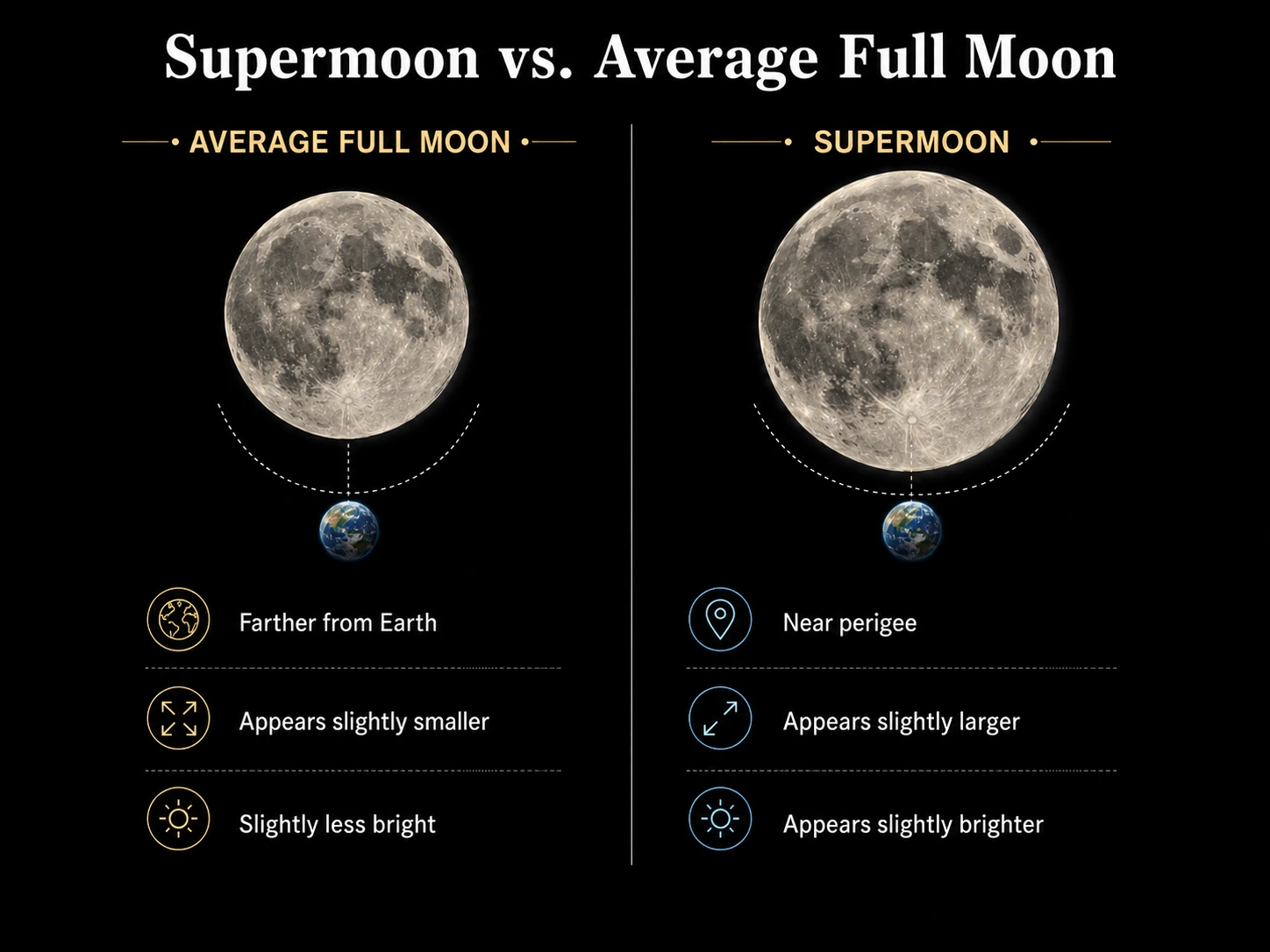
This year’s Beaver Moon also carries a little extra shine: NASA lists the November 24 full Moon as a supermoon, meaning it occurs relatively near perigee, the closest part of the Moon’s orbit to Earth. This can make a supermoon appear slightly larger and brighter than an average full Moon.
What Does the Beaver Moon Mean?
The name has nothing to do with the Moon’s appearance. One traditional explanation connects the Beaver Moon to the time of year when beavers prepare for winter by reinforcing dams, lodges, and food stores. Another interpretation links the name to the historic beaver-trapping season before ponds and waterways froze. Other November full-Moon names vary by culture and tradition and include Frost Moon, Freezing Moon, Deer Rutting Moon, and Whitefish Moon.
Best Time and Ways to See It
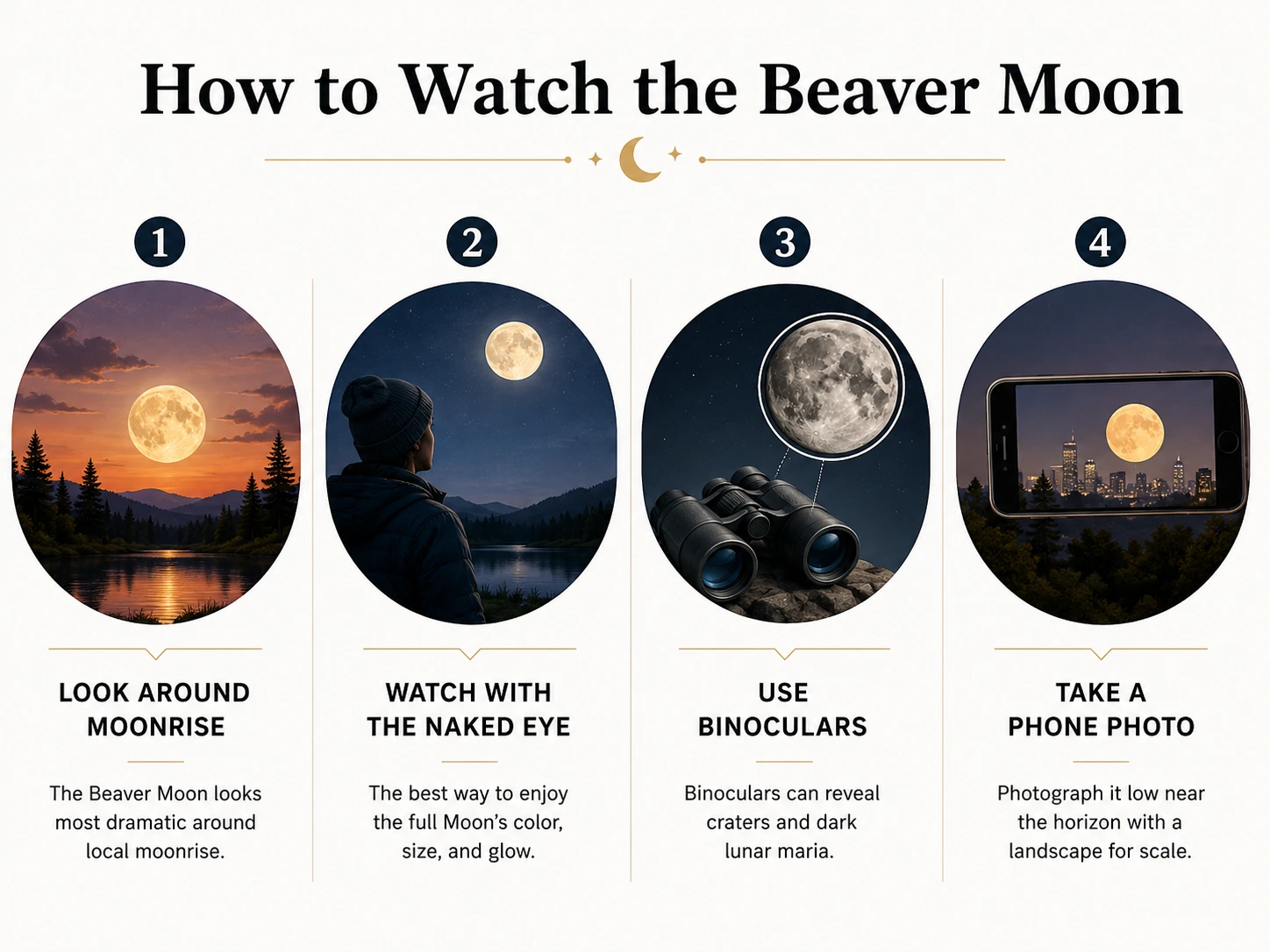
You don’t need a telescope for this one, just a clear view of the eastern horizon right around moonrise, when the “moon illusion” makes it look biggest and most dramatic against trees or a skyline. Moonrise varies by location, but according to Timeanddate, approximate moonrise times for a few major U.S. cities on November 24 are:
New York City: 4:15 p.m.
- Chicago: 4:07 p.m.
- Los Angeles: 4:42 p.m.
If your city isn’t listed, a quick search for “moonrise time” plus your location will get you an exact figure. And since the visible peak really spans two evenings this year, a cloudy November 24 still leaves you November 23 as a backup.
As for how to watch it, the good news is you don’t need any gear:
- Naked eye: By far the best way to take in a full moon rising, the size and color show up better than through any lens at this stage.
- Binoculars: Once the Moon has climbed higher, a basic pair can reveal lunar maria, bright crater rays, and other large-scale surface features.
- Phone camera: Avoid relying on heavy digital zoom, which often produces a soft, overexposed Moon. Instead, photograph it low against a skyline, treeline, or foreground subject for a stronger sense of scale. If you want to go further with night-sky shots on just your phone, our smartphone Milky Way photography guide covers settings and tricks that carry over well beyond just the moon.
A supermoon bonus: Another supermoon follows on December 24, giving skywatchers one more especially close full Moon before the year ends.
FAQ
Yes. NASA lists the November 24 full Moon as a supermoon, with the Moon relatively close to Earth in its orbit.
No. 2026’s lunar eclipses fall in March and August, so November’s full moon will be eclipse-free.
For the most dramatic view, look around local moonrise on November 24, when the nearly full Moon will rise low above the eastern horizon. If clouds interfere, November 23 is also an excellent backup because the Moon will already appear nearly full.
The name traces back to beavers finishing their winter dams and lodges in late autumn, plus the historical timing of the fur-trapping season — though other cultures have their own names for the same moon, from the Frost Moon to the Deer Rutting Moon.
What Else Is Happening in the Sky This November
The Beaver Moon isn’t the only reason to keep looking up this month. The Taurid meteor showers are most active earlier in the month, while the Leonids peak around November 16–17. By November 24, bright moonlight will make faint meteors harder to spot, although an occasional bright Taurid fireball may still cut through the glare, so if you’re already outside for the moon, it’s worth lingering a little longer on a clear night.
Once you’ve caught the Beaver Moon, keep the momentum going — our Stargazing for Beginners guide walks through the best conditions and gear-free tricks for stargazing well beyond full-moon nights.