

Every fall, the same question pops up in road trip group chats: why did peak fall foliage hit in early October last year, but this year the trees are still green on the same weekend? You picked the same date, drove to the same overlook, and got a different show. Peak fall foliage doesn’t run on a calendar. It runs on a tree’s internal clock plus a whole season’s worth of weather, and that combination is never quite the same twice.
What’s Actually Happening Inside a Leaf
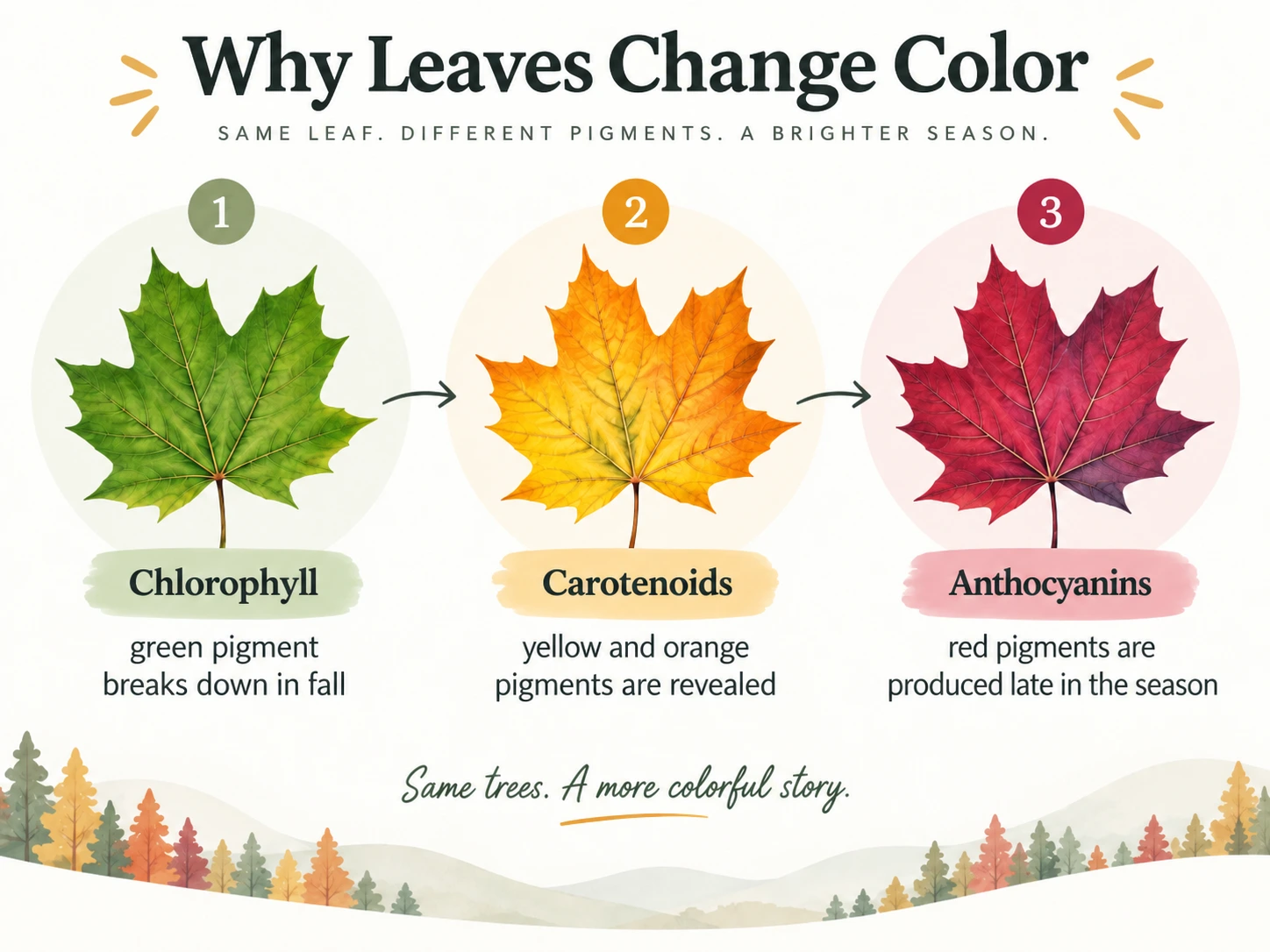
Leaves don’t grow new color in fall. They uncover one that was already there. Chlorophyll is the pigment that powers photosynthesis, and it’s what keeps leaves green all summer, since trees keep rebuilding it as fast as sunlight breaks it down. But green isn’t the only pigment in the leaf. Carotenoids, the same yellow-orange pigments in carrots and corn, have been sitting there the whole time, just covered up. According to the USDA’s own breakdown of leaf chemistry, once nights get longer, trees stop replacing chlorophyll, and it starts breaking down. Once it’s gone, those yellows and oranges are what’s left.
Red and purple work differently, and this is the part most people get wrong. Anthocyanins, the pigments behind the deepest reds, aren’t hiding under the green waiting to show up. Trees actually make them late in the season, when sugar builds up in the leaf faster than the tree can move it out. That’s a manufacturing process, not a reveal, and it’s why red is the color that varies most from one year to the next.
| Did you know? Yellow and gold are generally more consistent from year to year, because carotenoids are always sitting in the leaf no matter what. Red is the unstable one. Trees have to actively build it, and how much they build depends on that specific autumn’s sugar, sunlight, and warmth. |
The 4-Factor Foliage Framework
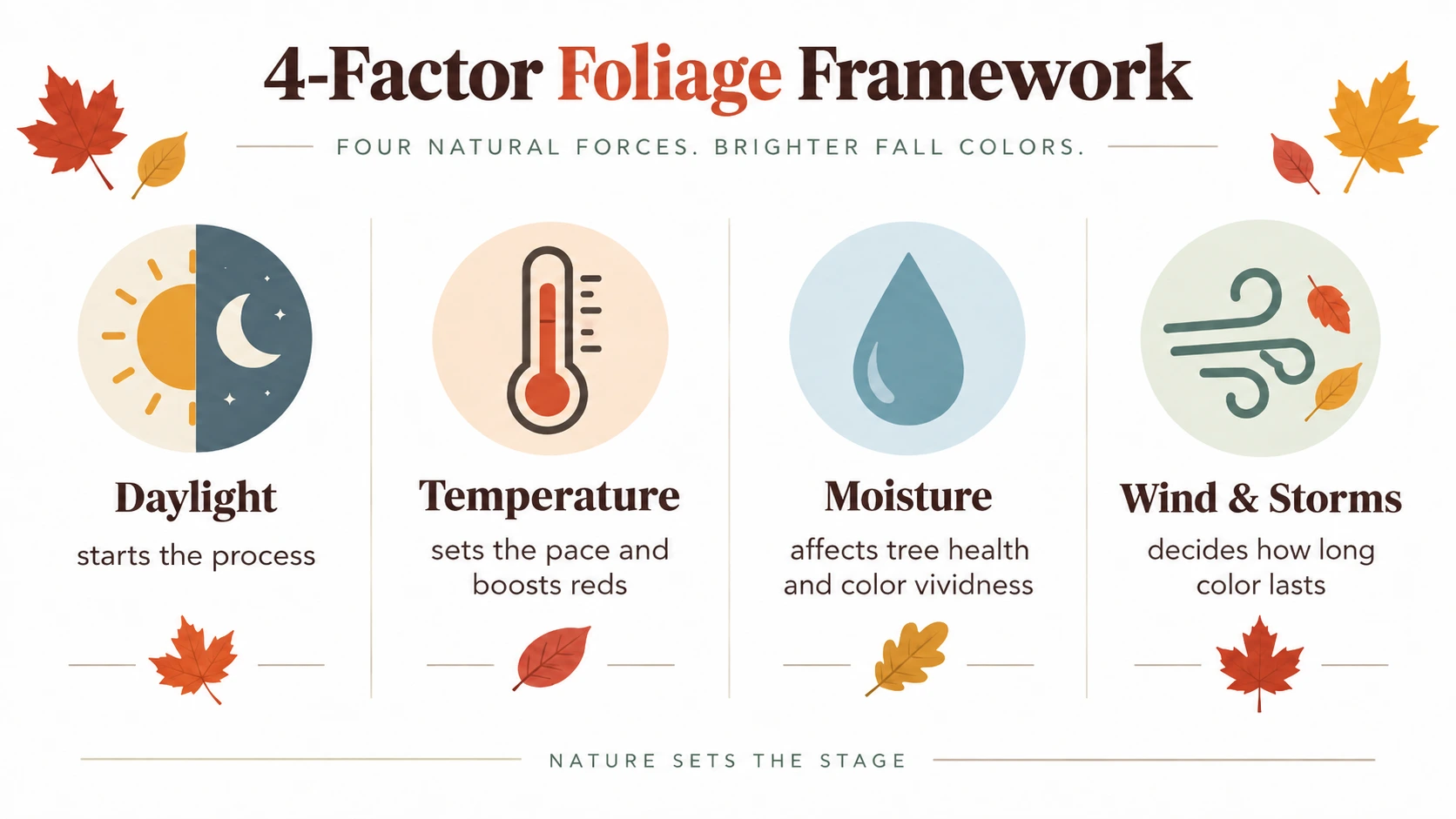
Four major environmental factors help determine when trees turn, how vivid the colors become, and how long the display lasts. One never changes. The other three are different every single year, which is really the whole answer to why peak week keeps moving.
1. Daylight: The One Thing That’s Always the Same
Shortening days are what start the whole process, and they’re the one trigger that doesn’t budge from year to year. The U.S. Forest Service points out that night length is the most reliable cue trees respond to, far steadier than temperature or rainfall, which swing wildly from one autumn to the next.
2. Temperature: Sets the Pace
Daylight flips the switch, but temperature decides how fast things happen and how much red pigment gets made. The sweet spot is warm, sunny days paired with cool nights; that combination traps sugar in the leaf, and trapped sugar is what fuels anthocyanin production. When nights stay too warm, the tree burns through that sugar instead of storing it, and the display leans more yellow and less red.
3. Moisture: Decides How Vivid It Gets
Rain, or the lack of it, can shape the whole season months before a single leaf turns. A dry summer can push a tree to drop leaves early just to save water, and a leaf that falls that way basically skips its color show. On the flip side, a wet spring followed by a drier fall tends to produce the best color, because the tree heads into autumn healthy instead of stressed.
4. Wind and Storms: Decides How Long It Lasts
A great color year can still get cut short. One strong storm front driven by the same pressure differences we walked through in what causes wind to blow can strip a canopy bare overnight. Wind doesn’t touch what color a leaf turns. It just decides whether you get two weeks to see it or two days.
Why Last Year Won’t Match This Year
Line those four things up and the yearly guessing game starts to make sense. Daylight shows up right on schedule every year, but temperature, rain, and wind never repeat the same combination twice. A warm, dry summer followed by a calm fall gives you a completely different display than a wet summer followed by an early cold snap and a blustery October — in the same exact forest. The USA National Phenology Network has found these effects don’t even move the same direction across the country: warmer temperatures are stretching the season out in parts of the eastern U.S., while drought is pushing leaf drop earlier across much of the West.
It’s a similar story, oddly enough, to the guessing game behind desert wildflower blooms. Our piece on when the next Death Valley superbloom might happen covers the same basic idea from the opposite end of the calendar — a rare, weather-triggered natural show that depends on rainfall lining up just right, with no fixed schedule to point to.
How to Actually Catch Peak Near You
Since the timing moves every year, picking one fixed date and hoping for the best doesn’t work well. A few things do:
- Check elevation and latitude first. Color moves north to south and high to low, so a state can be at peak in the mountains while the valleys are still green.
- Watch drought conditions in late summer. Prolonged drought can stress trees and lead to early leaf drop, but the weather period that matters most varies by region.
- Use a live tracking map, not a rule of thumb. The Old Farmer’s Almanac’s fall foliage map updates week by week and beats guessing “mid-October” every time.
- Give yourself a window, not a date. Wind and storms can end a peak early, so a few flexible days beat one fixed weekend.
Peak fall foliage isn’t broken when it doesn’t match last year — it’s just doing what it’s always done, replaying an entire year’s weather back at you in color. That’s part of why the chase is worth it. No two autumns look quite the same.
FAQ
Because three of the four things that control it — temperature, rainfall, and wind — change every year. Only daylight stays on a fixed schedule. Stack a different combination of weather on top of that same daylight trigger and you get a different display.
It usually helps, as long as it doesn’t carry into a soggy fall. A wet spring and summer followed by a drier autumn tends to produce some of the most vivid color, since the tree goes into fall healthy instead of drought-stressed.
Yes. A single strong wind event can strip a canopy in a matter of hours, regardless of how good the color was. Color and duration are controlled by different factors, so a great color year can still end abruptly.
Not with precision, but drought conditions in late summer and early fall temperature trends give a rough read. Live tracking maps that update through the season are far more reliable than picking a fixed date months ahead.
No. Carotenoids, which produce yellow and gold, are present in the leaf all year and just get uncovered. Anthocyanins, which produce red and purple, have to be actively built by the tree each fall, which is why red is the color that swings most from year to year.