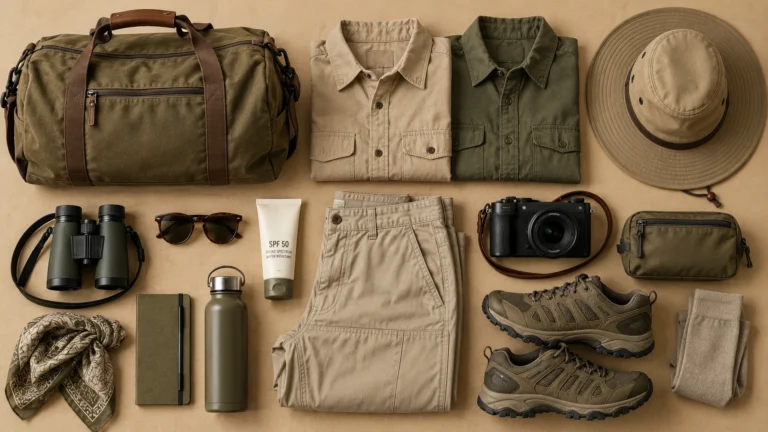


Nobody sets out on a 10-hour drive planning to stop at a gas station for an overpriced phone charger, but it is an easy mistake to make. A road trip packing list works best when it follows the way a trip actually unfolds instead of becoming one long inventory dump you skim once and forget by mile 50.
This guide separates the real essentials for long drives from the items that simply take up space. Everything is organized into four zones based on when you are most likely to need it.
Road Trip Packing List at a Glance
- Safety: driver documents, phone and car charger, first aid kit, flashlight, jumper cables, tire gauge, water, emergency food, medicines
- Comfort: travel pillow, light blanket, sunglasses, sunshades, tissues, comfortable layers, phone mount
- Sustenance: cooler, ice or frozen gel packs, cooler thermometer, water, easy snacks, separately packed perishables
- Downtime: downloaded entertainment, physical map, charged power bank, cards or books, small trash bags
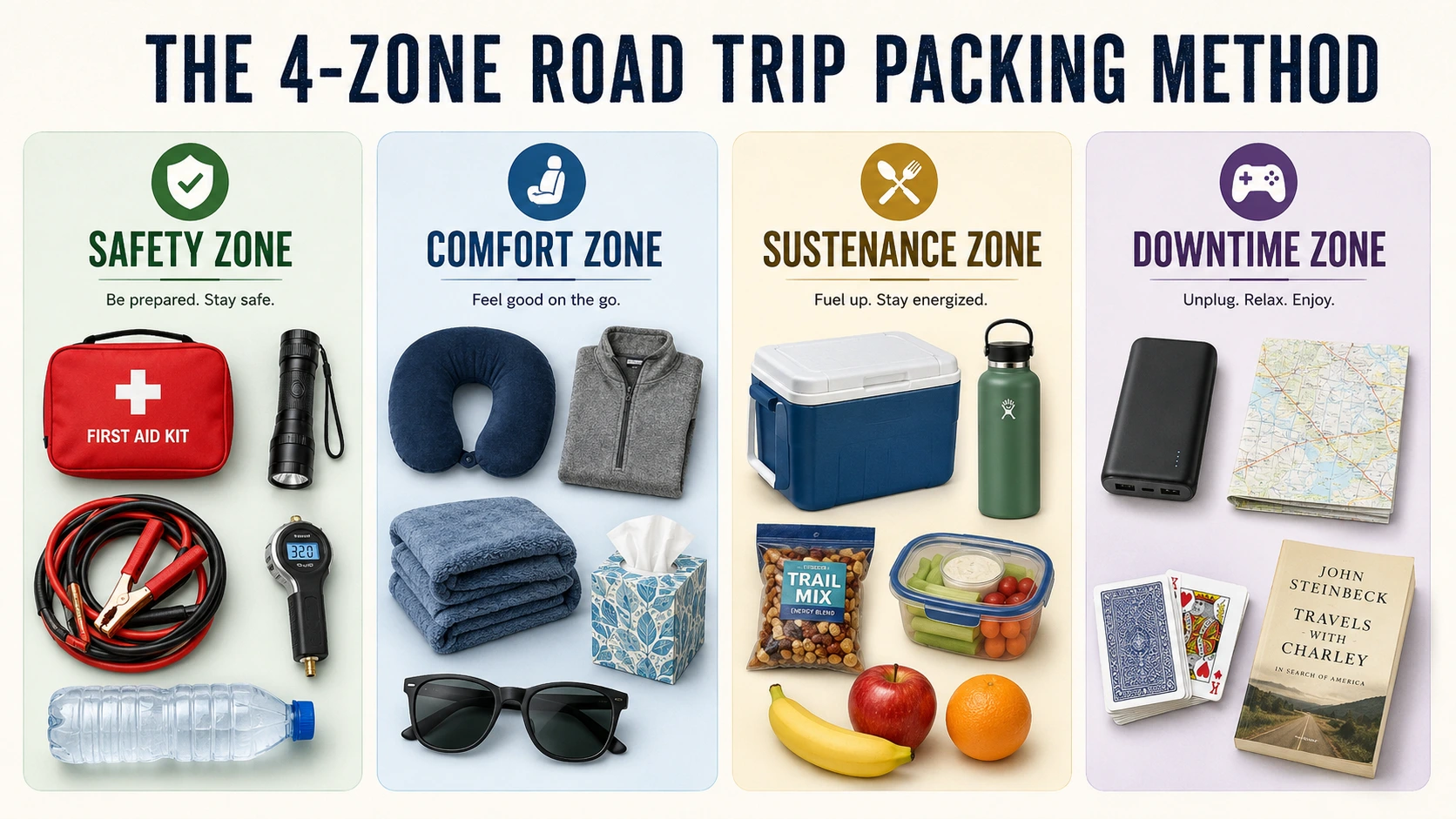
The 4-Zone Packing Method
Instead of one long list, split your packing into four zones that map to different parts of the drive:
1. The Safety Zone — what keeps you moving if something goes wrong
2. The Comfort Zone — what makes a long day in the car easier
3. The Sustenance Zone — food and drink that stay convenient and safe
4. The Downtime Zone — what you need when the car is parked
The key is not only what you pack, but where you put it. Emergency gear should stay easy to reach, while frequently used food, comfort items, and entertainment should be positioned for quick access.
Zone 1: The Safety Zone
This is the zone that is easiest to overlook because most of it stays untouched when everything goes well. Start with the car itself. NHTSA recommends checking the pressure of all tires, including the spare, at least monthly when the tires are cold. NHTSA defines “cold” as the vehicle not having been driven for at least three hours. It is also sensible to check tire condition and pressure before a long trip rather than discovering a slow leak on the highway. Use the recommended tire pressure listed on the driver’s door placard or in the owner’s manual, not the maximum pressure marked on the tire itself.
Do not rely only on the tire-pressure warning light. NHTSA notes that tire-pressure monitoring systems warn when a tire is significantly underinflated, so a manual pressure check is still worthwhile before a long drive.
Next, build one dedicated roadside bag. NHTSA’s road-trip guidance recommends carrying emergency supplies such as:
- Cell phone plus a car charger or adapter
- Driver’s license and the vehicle/insurance documents required for your route
- First aid kit and any essential medicines
- Flashlight with working batteries
- Jumper cables
- Tire pressure gauge and the correct jack/tools for your vehicle
- Work gloves, basic tools, and duct tape for temporary roadside fixes
- Medicines, drinking water and nonperishable emergency food
- A physical map or written route backup
Keep this bag in a fixed, easily accessible part of the trunk or cargo area where luggage will not bury it. Emergency equipment is much less useful if you have to unload half the car to reach it on the shoulder of a dark road.
Zone 2: The Comfort Zone
Comfort matters most after the novelty of the first few hours wears off. Comfort matters most after the novelty of the first few hours wears off. Keep these items within easy reach of passengers:
- Travel pillow and light blanket
- Sunglasses
- Tissues and wipes
- Comfortable layers
- Sunshades for back-seat passengers
- Secure phone mount for navigation
Install and test the phone mount before leaving rather than adjusting it while driving.
If You’re Sleeping in the Vehicle
Not every road trip ends at a motel. If part of your route involves sleeping in a car or camper van, comfort and safety start overlapping.
Heating is one area where the wrong equipment can become dangerous. The U.S. Consumer Product Safety Commission warns against using fuel-burning portable heaters or lanterns while sleeping in enclosed spaces such as tents, campers, and vehicles because of carbon monoxide risk.
If overnight vehicle heating is part of your trip, start with our guide to safe portable heaters for camper vans to understand the safety differences between heater types and setups. Always follow the heater manufacturer’s approved-use, installation, ventilation, and clearance instructions.
If your trip is strictly hotel-to-hotel, you can skip this subsection entirely.
Zone 3: The Sustenance Zone
Food on a road trip has two competing goals: convenience and safety. A snack that is easy to grab is useful, but perishable food also needs to stay at a safe temperature.
According to the FDA’s guidance for transporting food outdoors, cold food should be kept at 40°F (4°C) or below in a cooler with ice or frozen gel packs. Meat, poultry, and seafood can be packed while still frozen so they stay cold longer.
A simple cooler thermometer removes the guesswork. FoodSafety.gov also notes that a full cooler stays cold longer than a half-full one. If you do not have enough food to fill it, use extra ice or frozen cold sources to fill the empty space.
A few habits that make the biggest difference:
- Use two coolers on longer trips if practical. Keep drinks and frequently opened snacks in one, and perishables in another. This reduces how often the perishable cooler is opened.
- Keep raw foods separated. Seal raw meat, poultry, and seafood so juices cannot contaminate ready-to-eat food.
- Follow the two-hour rule. Perishable food should not remain in the 40°F–140°F danger zone for more than two hours, or more than one hour when outdoor temperatures are above 90°F.
- Check the temperature instead of guessing. A cooler is doing its job only if it keeps perishables at 40°F or below.
- Keep the cooler shaded and avoid unnecessary opening. If it rides in the vehicle, place it where it is protected from direct sun and easy to monitor.
If the trip includes a few days of camping rather than only driving, cooking may become part of the plan too. For sunny, off-grid stops, our DIY solar oven that actually works walkthrough is something you can build and test at home before the trip.
Zone 4: The Downtime Zone
This zone covers the moment the engine turns off—at a rest stop, scenic overlook, campsite, or hotel. Offline entertainment becomes more useful once cell service disappears, so download podcasts, playlists, maps, or audiobooks before leaving. Keep a physical map as backup and charge your power bank before the first mile.
If you are traveling with kids, pack the cabin for easy cleanup and quick access: small trash bags, wipes, sunshades, simple games, and snacks that do not require the cooler. Keeping those items in the cabin prevents every short stop from becoming a trunk-unpacking exercise.
FAQ
Check tire pressure and condition several days before departure so there is time to deal with a leak or damaged tire. For the most accurate pressure reading, check when the tires are cold—NHTSA says the vehicle should not have been driven for at least three hours. Include the spare.
Not always. One well-packed cooler can work if it stays at 40°F or below. Two coolers are useful on longer trips because drinks can be opened frequently without repeatedly warming the cooler that holds perishable food.
A car-compatible phone charger, essential medicines, vehicle documents, sunglasses, a physical route backup, and a charged power bank are all easy to miss because they are small or used every day at home.
Yes. FDA guidance says meat, poultry, and seafood may be packed while still frozen so they stay cold longer. Keep them sealed, separated from ready-to-eat foods, and at 40°F or below as they thaw.
A Simple Way to Use This List
Before loading the car, sort everything into four piles. Put the Safety Zone in a fixed, accessible location first. Comfort items can go where passengers can reach them. Place coolers close enough to access without unloading luggage, and keep Downtime Zone items in the cabin.
That order mirrors how you actually use the car: emergency gear stays ready, frequently used items stay reachable, and nothing important disappears underneath a week’s worth of luggage.