

Choosing among the best safari destinations in Africa often comes down to the same questions: Kruger or Serengeti? Kenya or Botswana? Self-drive or guided?
Some destinations have straightforward roads and established lodges; others require light-aircraft transfers, guided vehicles and more health planning.
To compare them, the First Safari Fit Ratings score wildlife, travel logistics, health ease, budget flexibility and infrastructure.
Quick Comparison: Best Safari Destinations in Africa
| Destination | Best for | Wildlife | Logistics | Health Ease | Budget | Infrastructure | Stay |
|---|---|---|---|---|---|---|---|
| Kruger | Easiest all-round first safari | 5 | 5 | 3 | 4 | 5 | 3 to 5 nights |
| Maasai Mara | Classic safari & migration | 5 | 4 | 3 | 3 | 4 | 3 to 4 nights |
| Serengeti | Migration & vast landscapes | 5 | 3 | 3 | 3 | 3 | 3 to 4 nights |
| Ngorongoro | Wildlife in a compact area | 5 | 3 | 3 | 2 | 3 | 1 to 2 nights |
| Chobe | Elephants & river safaris | 4 | 4 | 3 | 2 | 4 | 2 to 3 nights |
| Okavango Delta | Remote wilderness | 4 | 3 | 2 | 2 | 3 | 3+ nights |
| Etosha | Independent road trips | 4 | 4 | 3 | 3 | 5 | 3 to 4 nights |
All categories use a 1 to 5 scale, with 5 the most beginner-friendly. For Health Ease, a higher score means simpler health planning.
How the First Safari Fit Ratings Work
Each destination is rated from 1 to 5 in five categories:
- Wildlife Viewing: abundance and variety on a typical short safari
- Travel Logistics: connections, transfers and ease of planning
- Health Ease: amount of malaria and destination-specific health planning required
- Budget Flexibility: availability of options beyond high-end luxury lodges
- Infrastructure: roads, accommodation choice and beginner-friendliness
These ratings are planning guides, not guarantees. Visa, vaccination and malaria advice varies by traveler, itinerary and season, so confirm current requirements before departure.
1. Kruger National Park, South Africa
First Safari Fit Ratings: Wildlife 5 | Logistics 5 | Health 3 | Budget 4 | Infrastructure 5
Suggested stay: 3 to 5 nights
Kruger is one of the easiest places to start: self-driving is common, roads are well established, and accommodation ranges from rest camps to luxury lodges.
SANParks lists about 148 mammal species, including elephant, lion, leopard, buffalo and black and white rhino, giving first-timers excellent wildlife variety.
Independent travel is unusually practical here; SANParks notes that many visitors choose self-drive safaris.
Kruger is a malaria area, and CDC recommends prescription malaria prevention for travelers visiting the park.
| Best for: flexible budgets, simple logistics and self-drive freedom. |
2. Maasai Mara National Reserve, Kenya
First Safari Fit Ratings: Wildlife 5 | Logistics 4 | Health 3 | Budget 3 | Infrastructure 4
Suggested stay: 3 to 4 nights
For classic grasslands, big cats and migration scenes, the Maasai Mara is hard to beat.
Kenya’s official tourism site highlights Great Migration viewing, Big Five game drives and hot-air balloon safaris in the Mara.
Health planning still matters: CDC identifies Kenyan game parks below 2,500 metres as malaria-transmission areas and recommends prescription prevention.
| Best for: the classic East African safari, especially during migration season. |
3. Serengeti National Park, Tanzania
First Safari Fit Ratings: Wildlife 5 | Logistics 3 | Health 3 | Budget 3 | Infrastructure 3
Suggested stay: 3 to 4 nights
The Serengeti shares the migration ecosystem with the Maasai Mara but offers a much larger, more open landscape.
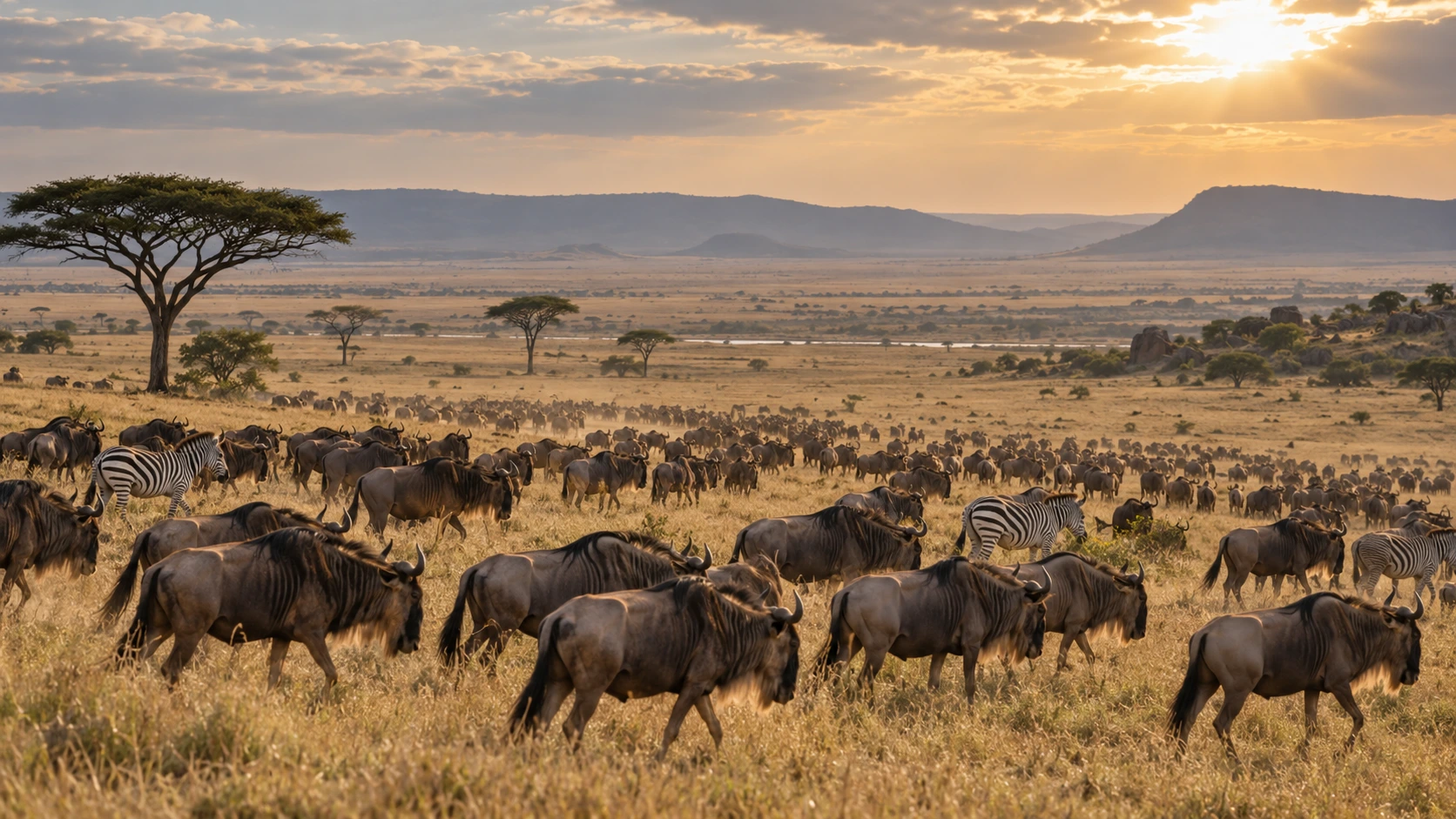
The UNESCO highlights the park’s annual wildebeest and zebra migration across the plains.
Most first-time visitors use guided safari vehicles and transfers via Arusha or regional airstrips, so logistics are less simple than in Kruger.
CDC recommends malaria prophylaxis for Tanzanian areas below 1,800 metres, including many typical safari areas.
| Best for: migration wildlife and vast landscapes over simple logistics. |
4. Ngorongoro Crater, Tanzania
First Safari Fit Ratings: Wildlife 5 | Logistics 3 | Health 3 | Budget 2 | Infrastructure 3
Suggested stay: 1 to 2 nights
Ngorongoro packs abundant wildlife into a compact volcanic caldera with grassland, wetland and woodland habitats.
The Ngorongoro Conservation Area Authority estimates roughly 26,000 to 28,000 animals in the crater, including elephant, buffalo, lion, leopard and black rhino.
The crater floor is around 1,700 metres. Because CDC recommends malaria prevention below 1,800 metres in Tanzania, travelers should not assume the crater or a wider northern Tanzania itinerary is malaria-free.
The main drawback is cost: crater fees and accommodation can be expensive, so many travelers combine it with the Serengeti.
| Best for: high wildlife density in a short visit. |
5. Chobe National Park, Botswana
First Safari Fit Ratings: Wildlife 4 | Logistics 4 | Health 3 | Budget 2 | Infrastructure 4
Suggested stay: 2 to 3 nights
Chobe is especially strong for elephants and river-based wildlife viewing.
Botswana Tourism reports that large elephant and Cape buffalo herds gather along the Chobe River in the dry winter months, with hundreds of elephants sometimes visible on an afternoon drive.
River cruises add a different perspective, with chances to see elephants, hippos, crocodiles and abundant birdlife.
Chobe is less budget-friendly than Kruger, and CDC recommends malaria prevention for Chobe National Park.
| Best for: elephant lovers who want both game drives and river safaris. |
6. Okavango Delta, Botswana
First Safari Fit Ratings: Wildlife 4 | Logistics 3 | Health 2 | Budget 2 | Infrastructure 3
Suggested stay: 3+ nights
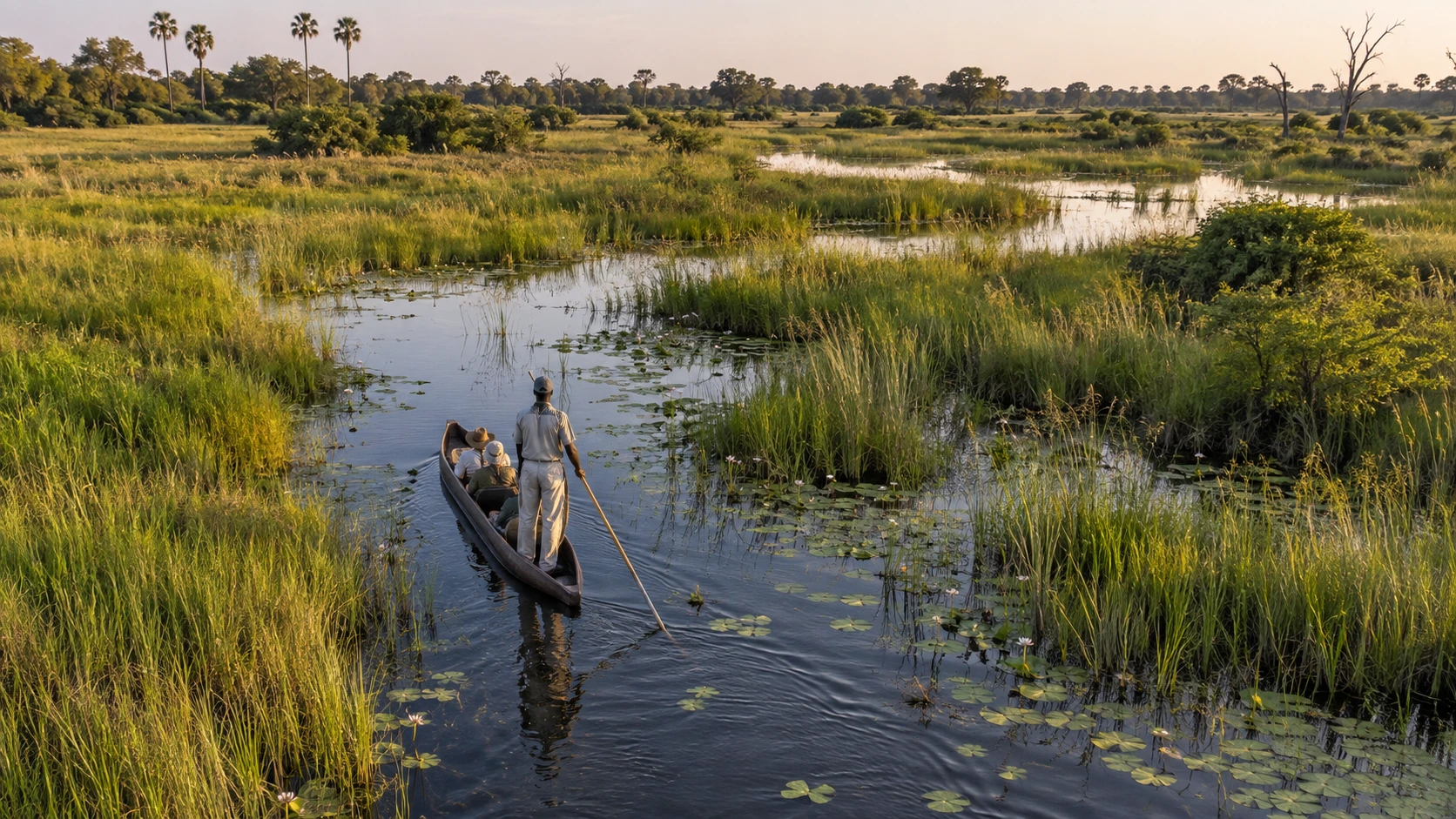
The Okavango Delta is a very different safari: Botswana Tourism describes it as the world’s largest intact inland delta, with waterways, islands, floodplains and drylands.
Its signature experience is a mokoro ride through shallow channels. Many remote camps are reached by light aircraft, which adds to both the wilderness feel and the cost.
The Delta suits travelers who value immersion over convenience; CDC recommends malaria prevention in the Okavango region.
| Best for: travelers willing to spend more for a remote, water-based safari. |
7. Etosha National Park, Namibia
First Safari Fit Ratings: Wildlife 4 | Logistics 4 | Health 3 | Budget 3 | Infrastructure 5
Suggested stay: 3 to 4 nights
Etosha is one of the better choices for travelers who enjoy independent road trips.
Its huge salt pan and waterholes concentrate wildlife, and Namibia’s Ministry of Environment and Tourism notes that Okaukuejo’s floodlit waterhole can attract black rhino, lion and elephant after dark.
Established camps and tourist roads make self-drive exploration relatively straightforward.
It is not universally malaria-free: CDC recommends prevention for several northern Namibian regions, so check your exact route.
| Best for: independent travelers combining safari with a Namibia road trip. |
Which African Safari Destination Is Best for Your First Trip?
For the easiest all-round start, Kruger is difficult to beat. Choose the Maasai Mara or Serengeti for the classic East African experience, and Ngorongoro for high wildlife density in a short visit.
Chobe is strongest for elephants and river safaris, the Okavango Delta for remote wilderness, and Etosha for independent road trips.
Tips for First-Time Safari Travelers
A few simple choices can make a first safari easier:
- Stay at least three nights in your main park; extra game drives improve your chances of good sightings.
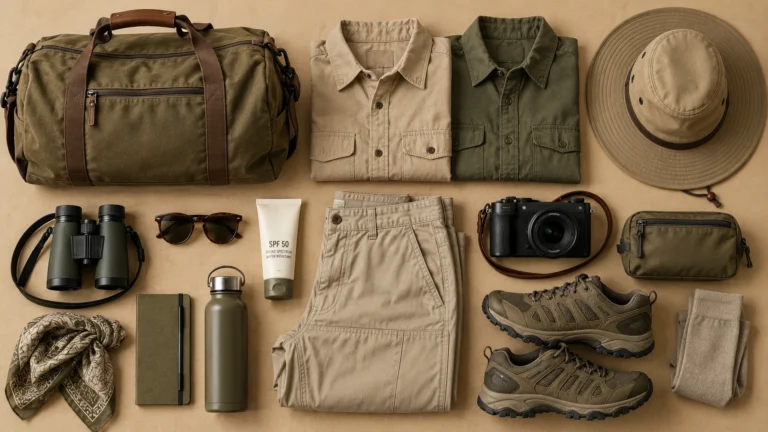
- Bring binoculars. Wildlife is often farther away than photographs suggest.
- Expect early mornings. Dawn is active for wildlife and game drives can be cold.
- Pack layers for cold mornings and warmer afternoons.
- Confirm malaria, vaccination and entry requirements before departure.
For a complete gear checklist, see Safari Packing List before deciding what clothing, footwear, camera equipment and other essentials to bring.
FAQ
Kruger is one of the easiest choices thanks to strong wildlife viewing, established roads, self-drive options and varied accommodation. For a classic East African safari, consider the Maasai Mara or Serengeti.
No. Risk varies by country, region and elevation. Several destinations in this guide do fall in areas where CDC recommends prescription prevention, so get advice for your exact itinerary.
Yes, especially in Kruger and Etosha. Guided safaris are generally more practical in the Serengeti, Maasai Mara and Okavango Delta.
The migration is a year-round cycle, but the most dramatic Maasai Mara river-crossing period is generally July to October. Exact timing varies with rainfall and grazing.
It depends on your destination and recent travel history. CDC’s country-by-country yellow fever guidance distinguishes medical recommendations from entry requirements, which can also depend on transit through risk countries.
For most first-timers, one or two safari areas are enough. Pairing nearby destinations such as Serengeti and Ngorongoro adds variety without excessive transfers.