

The Uzbekistan Silk Road cities have become substantially easier to visit in the last few years, and two changes in 2026 alone mean older guides will send you down the wrong route.
United States citizens no longer need a visa. Since 1 January 2026, US passport holders can enter visa-free for tourism stays of up to 30 days. Guides written before that will tell you to apply for an e-visa you no longer need.
Khiva now has a fast daytime train. The Afrosiyob, the high-speed service everyone recommends, does not actually run to Khiva. It connects Tashkent, Samarkand and Bukhara. Getting to Khiva historically meant an overnight train or a long road transfer. A new high-speed service, the Jaloliddin Manguberdi, began operating in May 2026 and provides a fast daytime Tashkent to Khiva connection.
The Uzbekistan Silk Road cities themselves have not changed in six centuries. The logistics around them have changed twice this year.
All entry rules, fares and admission prices below were checked in September 2026. Uzbek visa policy has moved repeatedly in recent years and admission prices are revised locally, so confirm before you travel.
Entry: check your own passport, not a general guide
The rules differ enough by nationality that a blanket statement would be wrong.
Visa-free entry applies to citizens of a long and growing list of countries. Since 1 January 2026 that includes the United States, for tourism stays up to 30 days. It has included Japan, Indonesia, Israel, South Korea, Malaysia, Singapore and Turkey since 2018, also for 30 days, along with most CIS countries on varying terms.
The e-visa covers citizens of more than 80 countries who are not visa-exempt. It is applied for online, typically issued within two to three business days, and costs in the region of $20 to $50. The visa is valid for 90 days from issue, within which the maximum stay is 30 days. You need a valid passport, a digital photograph, a passport scan and a card for payment.
| The practical instruction is simple: check the current requirement for your own nationality on an official source before you book anything, because this is the part of Uzbek travel that has changed most often. |
The Uzbekistan Silk Road cities, and why the order matters
The classic itinerary runs west from the capital, and doing it in that direction is easier than the reverse.
Tashkent is where you arrive. It is a large, modern, Soviet-planned city with an exceptional metro and relatively few Silk Road monuments. Most visitors give it a day at the start or the end.
Samarkand is the headline. Registan Square, the Shah-i-Zinda necropolis, the Gur-e-Amir mausoleum and the Bibi-Khanym mosque.
Bukhara is the one people are surprised by. Where Samarkand has monuments, Bukhara has an intact old city that is still lived in, with a working bazaar and a preserved centre you can walk end to end.
Khiva is the smallest and the most concentrated: a walled inner city, Ichan Kala, that functions as a single continuous monument.
| A sensible minimum is seven to eight days: a day in Tashkent, two in Samarkand, two in Bukhara, two in Khiva, plus the travel between them. Ten days is comfortable. |
Getting between the cities
Trains, and the detail that trips people up is which train goes where.
The Afrosiyob is the high-speed service and it connects Tashkent, Samarkand and Bukhara only. Tashkent to Samarkand takes roughly 2 hours 15 minutes to 2.5 hours. Tashkent to Bukhara takes about 3.5 to 4 hours. There are three classes: Economy, Business and VIP (see indicative fares in the summary table below).
For Khiva, the Jaloliddin Manguberdi high-speed service began in May 2026 and gives a fast daytime Tashkent to Khiva connection. This is the change that makes a four-city trip comfortable rather than a slog, and it is too recent to appear in most published itineraries.
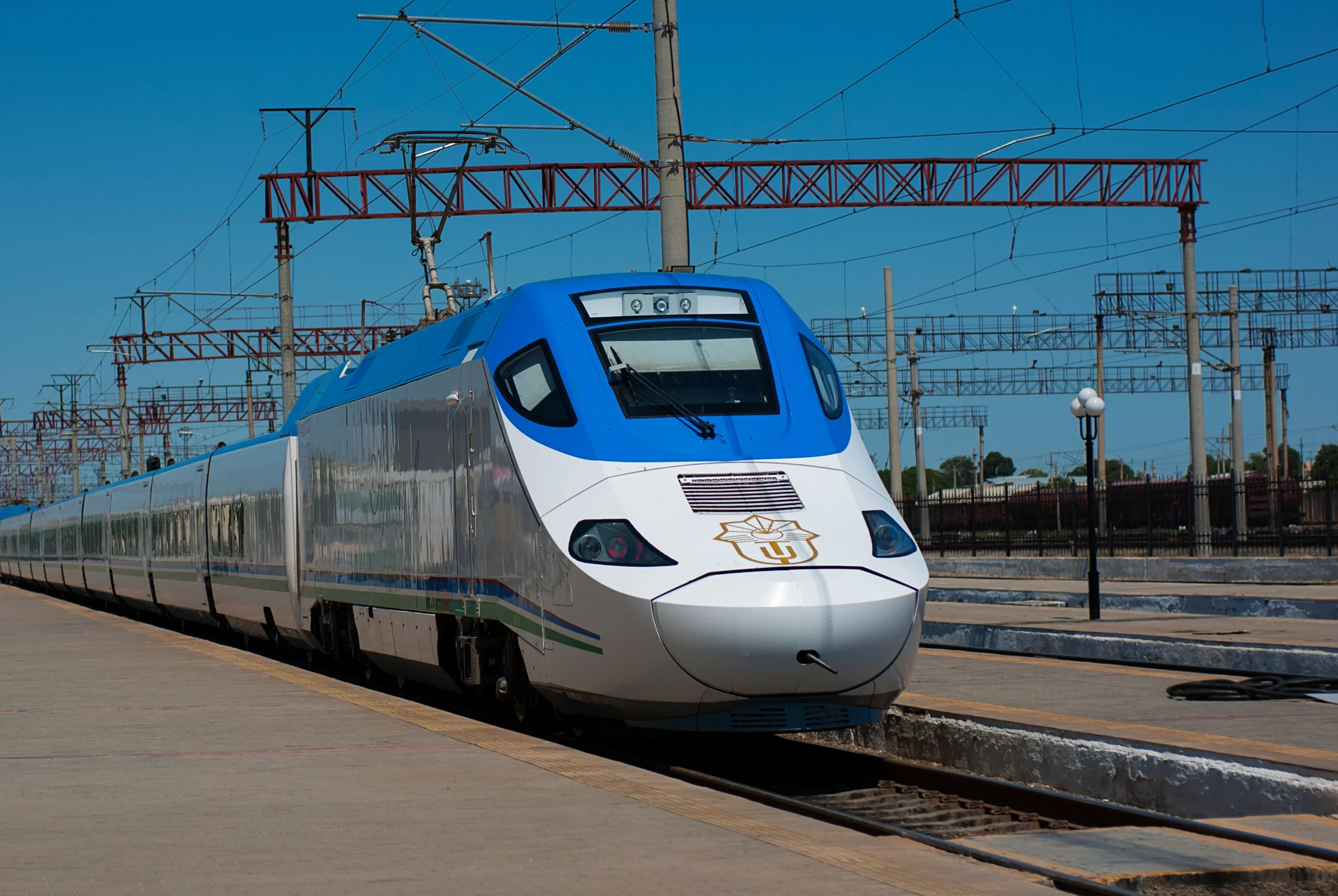
| Two practical points on tickets. Book early, because seats on the Afrosiyob sell out, especially in spring and autumn. And if you buy at a station, ticket counters at Tashkent, Samarkand and Bukhara-1 generally open from around 8:00 to 20:00, queues are shortest early, and you will need your passport and cash in som. |
Samarkand
Two days, and the first decision is when to go to the Registan.
The Registan is three madrasahs facing a public square, and it is the image of Uzbekistan. As of June 2026 a foreign adult ticket is 100,000 UZS, with under-18s at 50,000, and it covers all three madrasahs, the gold mosque and the museums inside. Go early or late; the light is better and the square is emptier at both ends of the day.
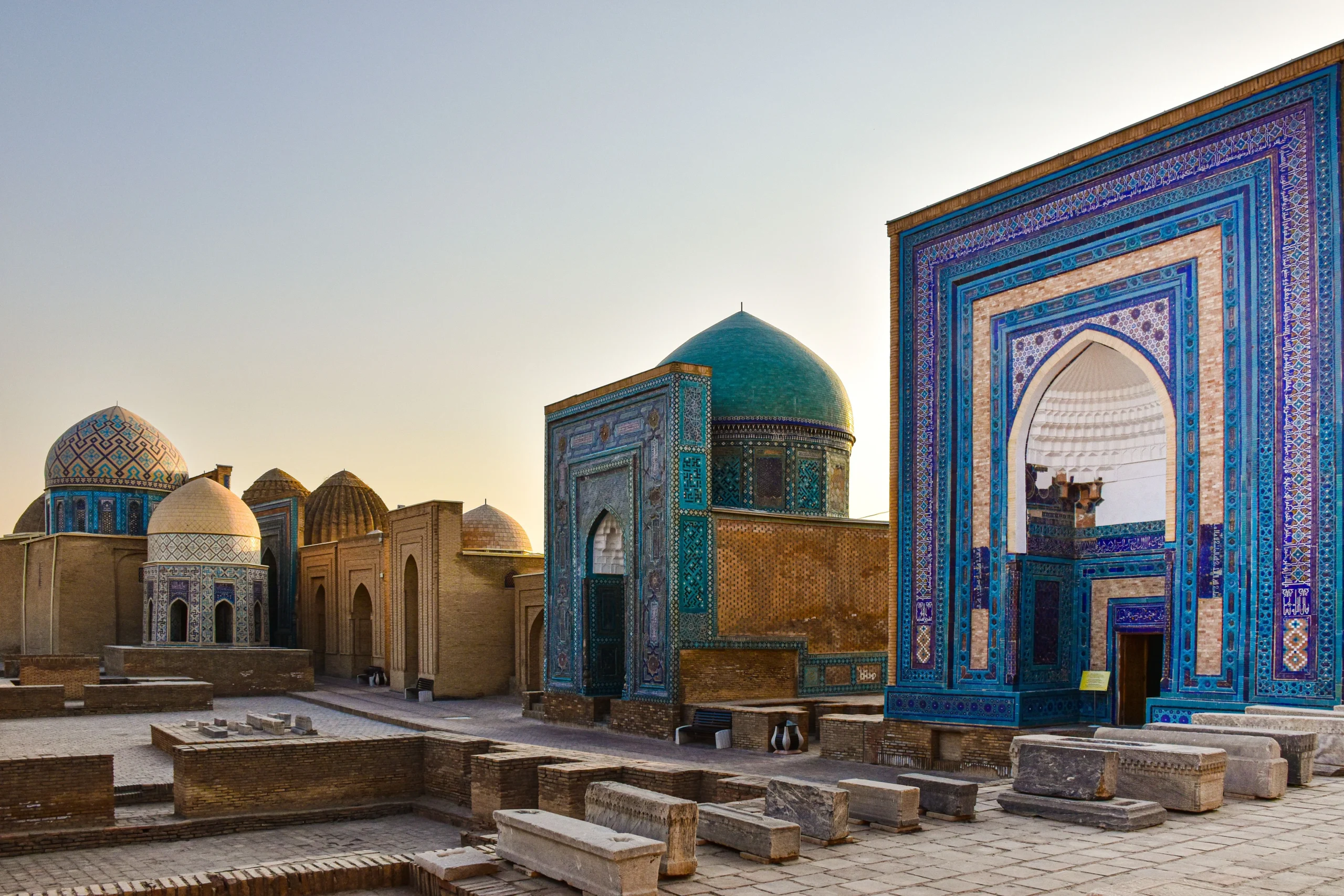
Shah-i-Zinda is an avenue of tiled mausoleums climbing a hillside, and for many visitors it is the more affecting of the two. Reported admission has varied between roughly 40,000 and 80,000 UZS in recent reporting, so check on the day. It opens daily, roughly 9am to 7pm.
Credit: AXP Photography / Pexels
It is also an active religious site containing the shrine of Kusam ibn Abbas. People come to pray, not only to photograph. Dress and behave accordingly, which is covered below.
Gur-e-Amir, the mausoleum of Timur, and the Bibi-Khanym mosque fill the rest of two days comfortably.
Bukhara
Bukhara rewards walking more than ticking off sites, and most of what you want is within one compact area.
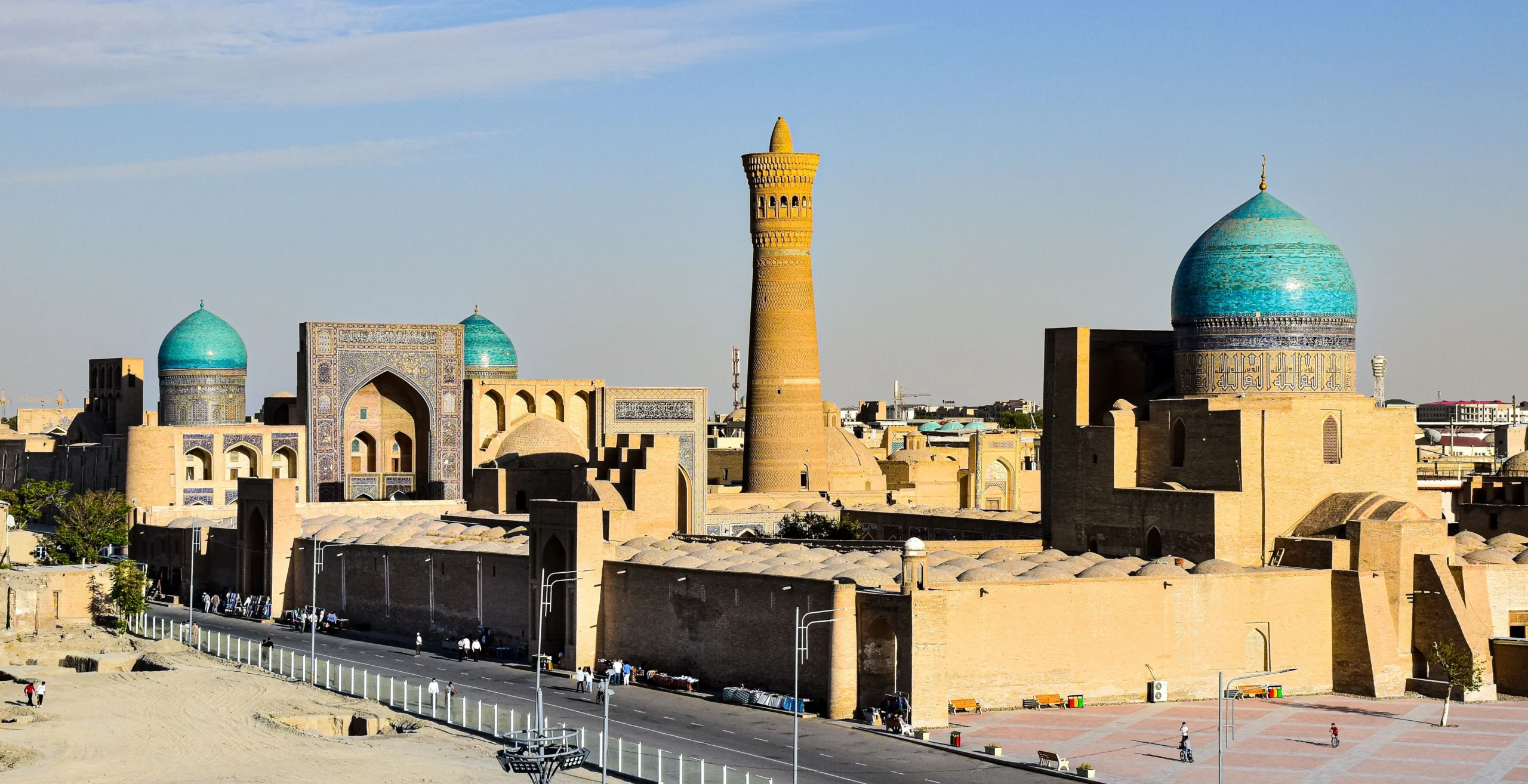
The Ark is the city’s ancient fortress, housing several historical exhibits within its massive earthen walls. Nearby, Po-i-Kalyan, the architectural ensemble of the Kalon minaret, mosque, and Mir-i-Arab madrasah, anchors the city visually and historically.
Credit: AXP Photography / Pexels
The reason to give Bukhara two days is not the monument count. It is that the old city is intact and inhabited, with trading domes still functioning as markets and a street plan that has not been redesigned around visitors. It is the closest any of the three comes to feeling like a working Silk Road city rather than a preserved one.
Khiva, and the two-day ticket
Khiva is the most compact of the three and the one where the ticketing genuinely shapes your plan.
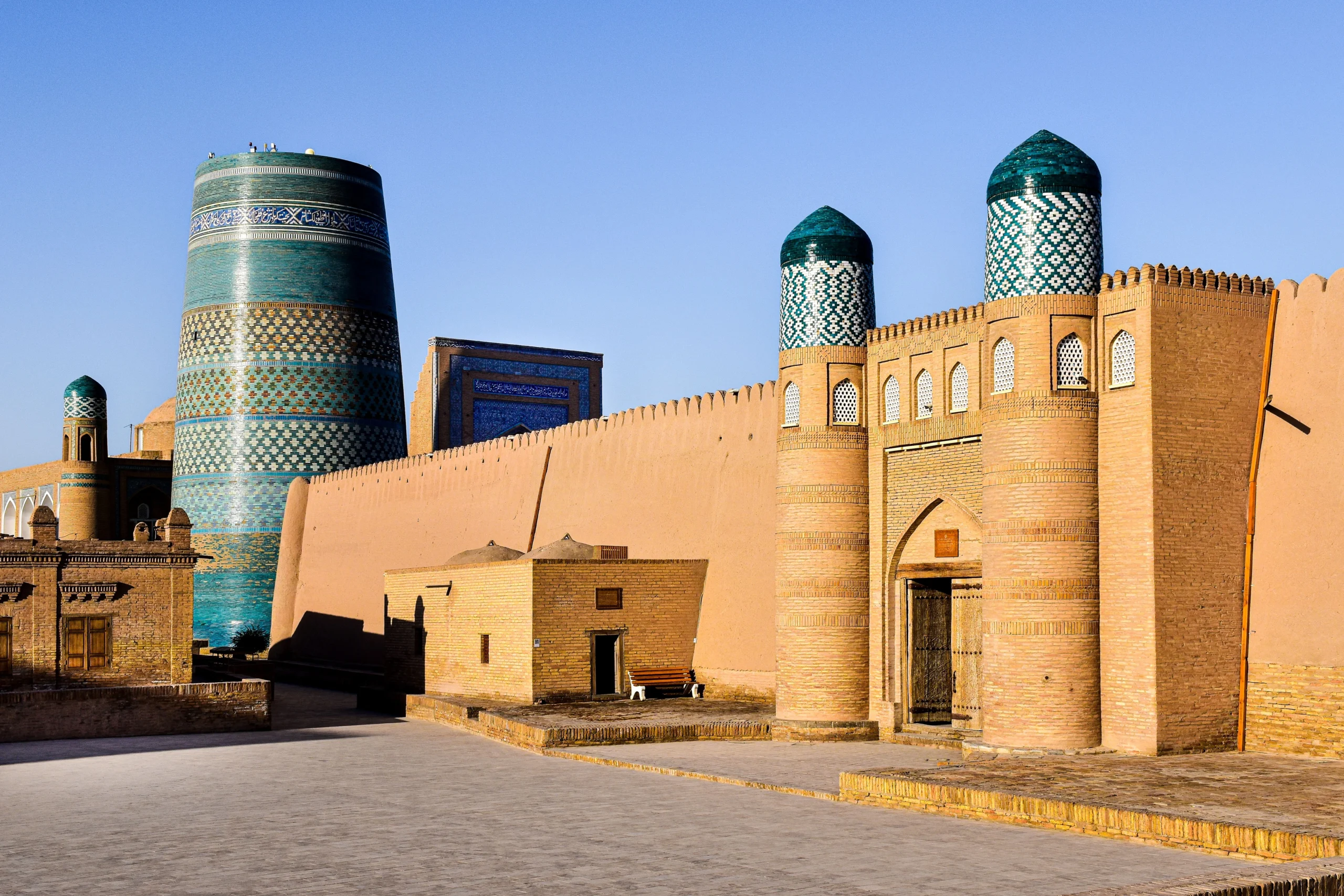
Ichan Kala, the walled inner city, is entered on a general pass valid for two consecutive days that covers entry to most museums and minarets inside. A few specific vantage points, such as the Ark watchtower and the Pakhlavan Makhmud mausoleum complex, require separate supplemental tickets.
Credit: AXP Photography / Pexels
The two-day validity is the useful part. It means the sensible plan is to stay a night inside or beside the walls rather than making Khiva a day trip. The inner city empties in the evening when the day visitors leave, and early morning and late afternoon inside the walls are the reason to be there at all.
Khiva is small enough to see thoroughly in two days and too small to sustain four.
Dress and behaviour
Published cultural guidance for Uzbekistan agrees on the practical points below.
This matters and is straightforward.
Cover shoulders and knees, men and women alike, at religious sites. This is the whole of the requirement in most places. Some sites will lend a covering if you arrive unprepared, but arriving prepared is better.
Women may want a scarf for entering shrines, including the Kusam ibn Abbas shrine at Shah-i-Zinda.
Keep your voice down and be careful with photography at active religious sites. Shah-i-Zinda in particular is a place of pilgrimage. The same restraint you would use in any working place of worship applies.
Outside religious sites, Uzbekistan is relaxed about dress and ordinary travel clothing is unremarkable in all three cities.
Practical notes
A few things worth knowing before you go.
Cash. The som is the currency and card acceptance, while improving, is not universal outside hotels and larger restaurants. Carry cash, including for train tickets bought at stations and for many admission fees.
Language. Uzbek and Russian are the working languages. English is common in the tourism industry in the three main cities and much less so elsewhere. A translation app is genuinely useful.
Season. Spring and autumn are the comfortable windows. Summer in Bukhara and Khiva is severely hot, and winter is cold. Spring and autumn are also when trains sell out, which is why booking early matters.
Admission prices change. Every figure in this article is reported for 2026 and set locally. Samarkand raised its entry fees recently, and other sites revise theirs independently. Budget with a margin.
Uzbekistan Silk Road: Rail Fares, Visas, and Entry Costs (2026)
| Category | Item or Route | Reported Cost | Details and Validity |
| Entry & Visas | Tourist E-Visa | $20 to $50 | Valid 90 days for stays up to 30 days; US citizens enter visa-free |
| Train Transport | Tashkent to Samarkand (Afrosiyob) | From ~€40 (Economy) | 2 hr 15 min to 2 hr 30 min; book well in advance |
| Train Transport | Tashkent to Bukhara (Afrosiyob) | From ~€60 (Economy) | 3.5 to 4 hr; Business and VIP classes available at higher fares |
| Train Transport | Tashkent to Khiva (Jaloliddin Manguberdi) | Fares set locally | Fast daytime service launched in May 2026 |
| Samarkand | Registan Square | 100,000 UZS (Adult) 50,000 UZS (Under 18) | Covers all three madrasahs, the gold mosque, and museums |
| Samarkand | Shah-i-Zinda Necropolis | ~40,000 to 80,000 UZS | Active religious shrine; open daily roughly 9:00 to 19:00 |
| Bukhara | The Ark Fortress | ~40,000 som | Preserved historic fortress and museum grounds |
| Bukhara | Po-i-Kalyan (Kalon Mosque) | ~10,000 to 15,000 som | Central architectural ensemble |
| Khiva | Ichan Kala General Pass | ~250,000 som | Valid for 2 consecutive days; covers most interior monuments |
| Khiva | Ark Tower | ~100,000 som | Supplemental ticket; not included in the standard general pass |
| Khiva | Pakhlavan Makhmud Complex | ~50,000 som | Supplemental ticket; not included in the standard general pass |
FAQ
No. Effective 1 January 2026, United States passport holders can enter Uzbekistan visa-free for tourism stays of up to 30 days. Travelers holding passports from countries not covered by visa-free agreements must obtain an electronic visa (e-visa) online before departure.
No. The Afrosiyob connects Tashkent, Samarkand, and Bukhara only. To reach Khiva by fast daytime rail from Tashkent, book the Jaloliddin Manguberdi high-speed service, which began operating in May 2026.
Reserve your seats as soon as your travel dates are finalized. High-speed rail tickets sell out weeks ahead of departure, particularly during the peak travel windows of spring (April to May) and autumn (September to October).
Cash in Uzbek som is essential for daily travel. While upscale hotels and some modern restaurants accept international cards, most monument ticket booths, bazaar stalls, train station counters, and taxis operate entirely on cash.
A practical minimum is seven to eight days: one day in Tashkent, two days in Samarkand, two days in Bukhara, and two days in Khiva, plus transit time between cities. A ten-day itinerary allows a far more comfortable pace without rushing.
Before you book
Four things, in order.
Check the current entry requirement for your own nationality on an official source. This has changed repeatedly and a 2024 guide may be wrong for your passport.
Book the trains as soon as your dates are fixed, especially in spring or autumn. Confirm which service actually reaches Khiva rather than assuming the Afrosiyob does.
Plan Khiva around the two-day pass, with at least one night inside or beside the walls.
Then allow more time in Bukhara than the monument list suggests. It is the city most people say they wished they had given another day to, and the one that rewards unstructured walking.