

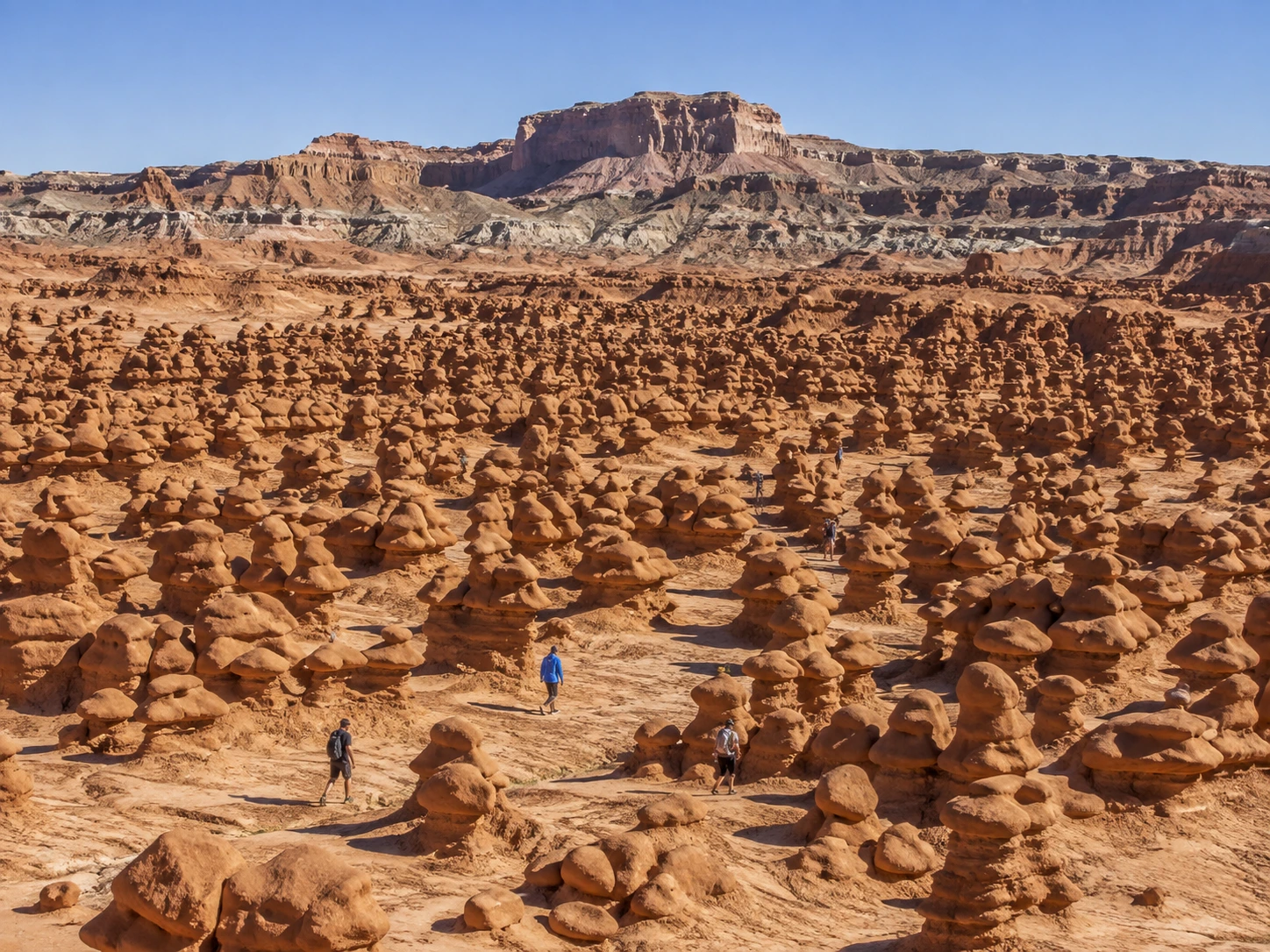
Goblin Valley camping comes down to one developed campground inside the state park: 24 campsites and two yurts, no hookups, $45 a night with park entry included, and reservations that open four months ahead. Most state parks fence off their signature attraction. Goblin Valley lets you walk straight into the middle of thousands of sandstone hoodoos and wander without a marked trail, because inside the valley itself, there really isn’t one.
That’s not an oversight. For tent camping in Goblin Valley, the appeal goes beyond the campground itself. The park was officially designated in 1964 to protect this pocket of eroded Entrada Sandstone on the edge of the San Rafael Swell, and visitors are still free to explore much of the valley at their own pace. You can spend an hour weaving among the goblins and barely retrace your steps, then walk back to your tent under a certified dark sky.
Where Goblin Valley Is, and Why It’s Worth the Detour
Goblin Valley sits about 50 miles southwest of Green River and roughly an hour and a half from both Capitol Reef and Moab. The park’s directions put the final approach at about 12 paved miles from Highway 24 at the Temple Mountain junction, about 20 miles north of Hanksville. That puts it close to some of Utah’s busiest destinations without feeling nearly as crowded.
The park itself covers less than 10,000 acres, even after it tripled in size through a 2022 land transfer from the Bureau of Land Management, but the landscape feels much larger once you step into the valley and start wandering between the hoodoos.
Its otherworldly scenery has also attracted filmmakers. Galaxy Quest used the goblin formations as an alien landscape, and it is easy to see why. Very little about the valley looks ordinary.
Goblin Valley Camping: 24 Sites, Two Yurts, No Hookups
Goblin Valley’s main campground has 24 sites and two yurts. Ten sites are walk-in tent sites, while fourteen are designed for RVs. There is also a group site that can accommodate up to 40 people and 10 vehicles.
Every individual site comes with a picnic table, a metal fire ring, and a shade shelter. That shelter matters more here than almost anywhere else, because the park’s own brochure describes the landscape as offering “little or no shade.”
Goblin Valley Campsites, Fees and Facilities at a Glance
| Campsite detail | Goblin Valley State Park (USD, checked Oct 26, 2026) |
|---|---|
| Individual campsites | 24 |
| Walk-in tent sites | 10 |
| RV sites | 14 |
| Yurts | 2 |
| Hookups | None |
| Drinking water | Available at campground spigots |
| Restrooms | Flush toilets |
| Showers | Available |
| Dump station | Available, with fill station |
| Campsite fee | $45/night, park entry included |
| Additional vehicle | $20/night |
| Campsite reservations | Open 4 months in advance, plus $8 reservation fee |
| Group site | Up to 40 people / 10 vehicles |
| Day-use entry (no camping) | $20 per private vehicle |
| Behind the Butte primitive sites | $15/night per site, first-come, first-served |
Goblin Valley camping means dry camping at the site itself, with no electrical, water, or sewer hookups. The campground still has centrally located flush toilets, showers, potable water, and a dump station, so it is more comfortable than the no-hookup setup suggests.
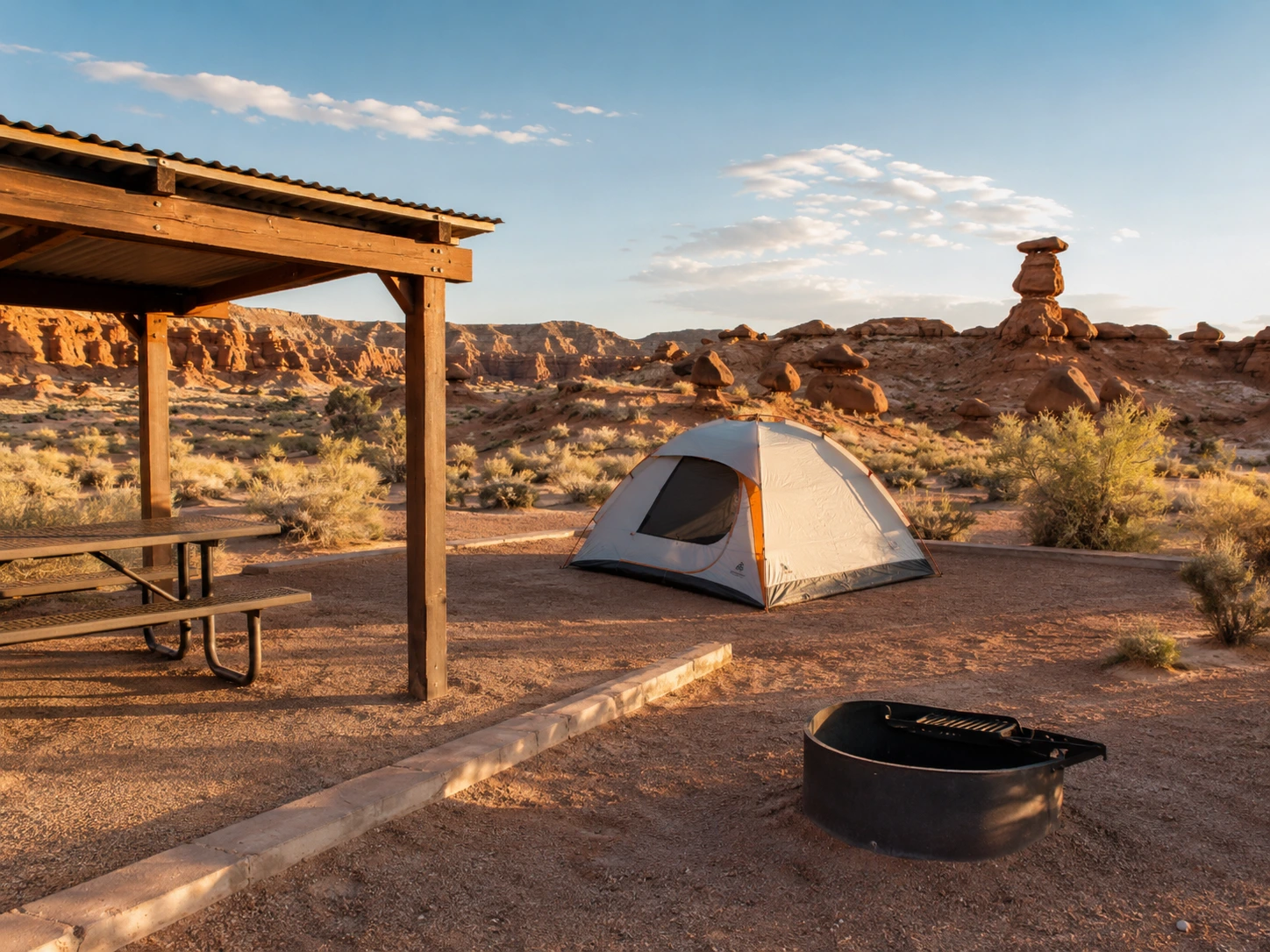
Camping costs $45 per night, with park entry included in the fee. An additional vehicle costs $20 per night. If you are only visiting for the day, the day-use fee is $20 per private vehicle. All prices are in US dollars and were checked on October 26, 2026.
Reservations open four months before your arrival date through ReserveAmerica or by phone, on the rolling window set out in the Utah State Parks reservation policy, and each booking carries an $8 reservation fee. Spring and fall weekends can fill quickly, so book Goblin Valley campsites as soon as your window opens.
Camping Near Goblin Valley When the Campground Is Full
If the main campground is full, the park also has primitive first-come, first-served camping in the Behind the Butte areas. These sites cost $15 per night and have vault toilets, but the fee does not cover the park’s day-use entry, and there are no showers or hookups. They make a useful backup for more flexible campers.
Just outside the park, the Bureau of Land Management runs Temple Mountain Townsite Campground, about 2 miles from the state park, where individual sites cost $15 per night with a 14-day stay limit.
Stargazing at an International Dark Sky Park
Goblin Valley became an International Dark Sky Park in 2016, following a multi-year certification process. The designation reflects not only the park’s naturally dark skies, but also its work to remove or shield unnecessary outdoor lighting and to run public astronomy programs.
For campers, the result is a remarkably dark night sky with very little nearby light pollution. On clear, moonless nights, the Milky Way can be easily visible to the naked eye straight from your campsite.
If this is your first dark-sky trip, our guide to stargazing for beginners covers night vision, essential gear, moonlight, and the basics of finding your way around the sky.
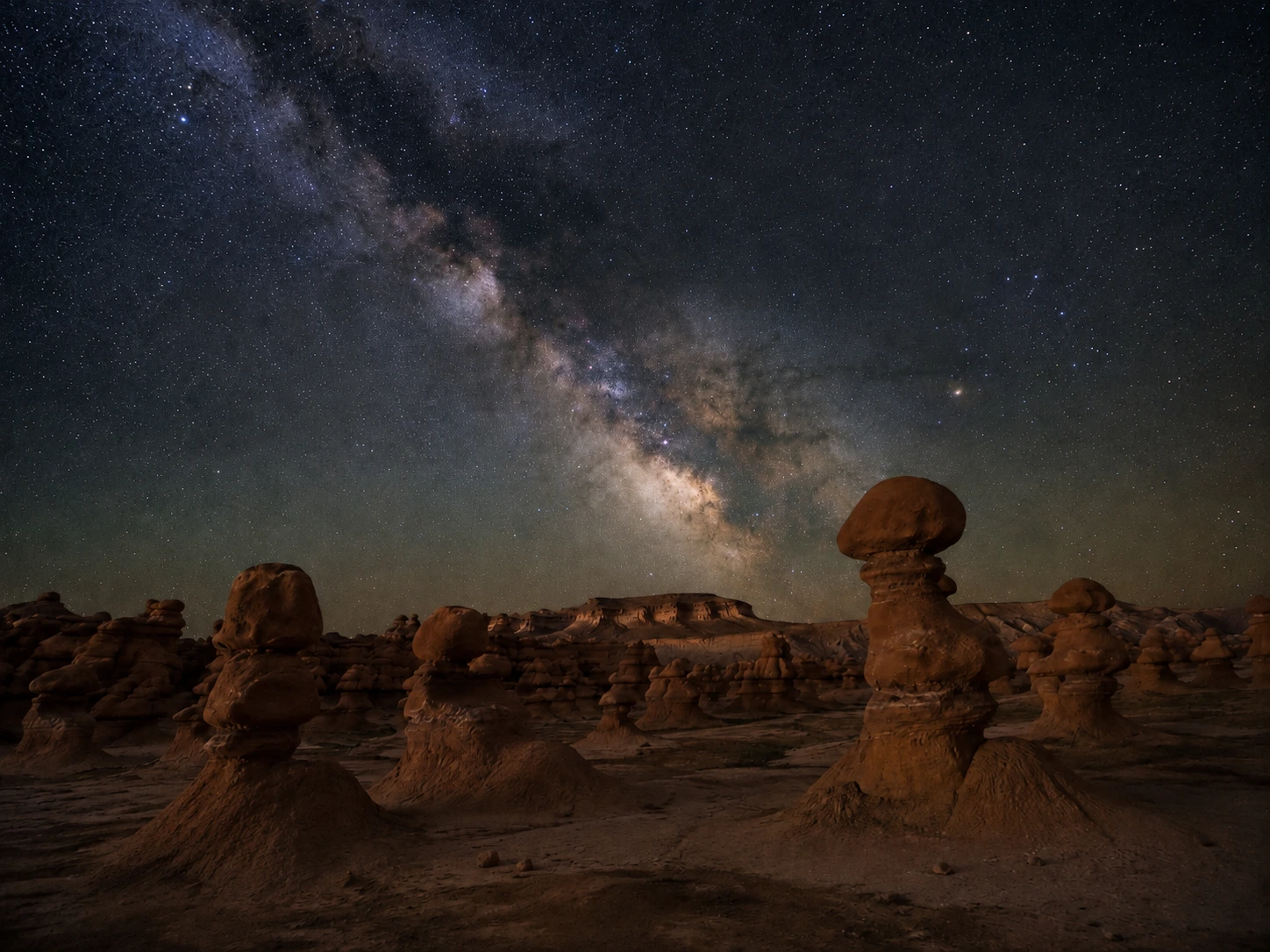
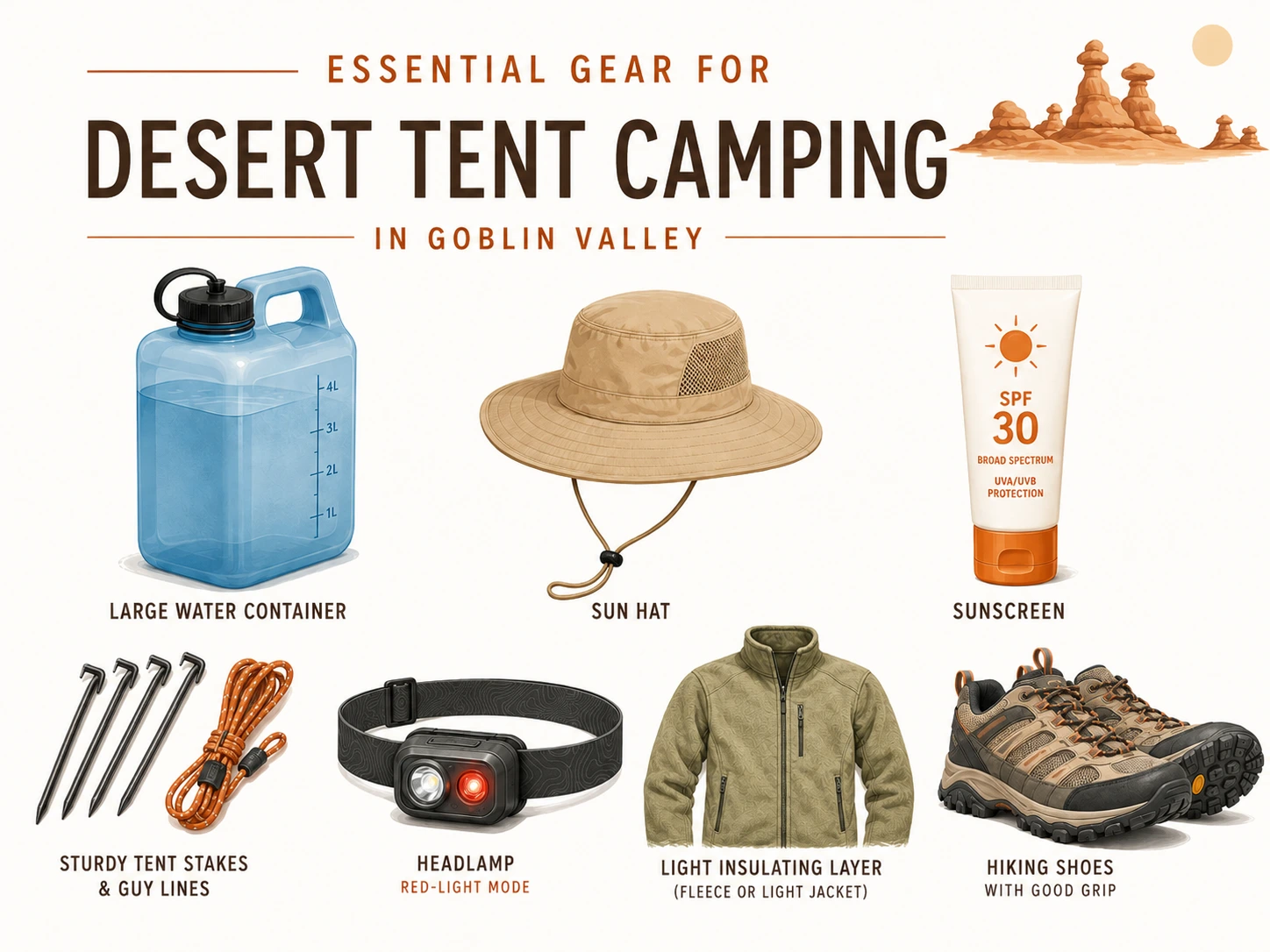
Bring a headlamp with a red-light mode if you have one. Red light helps preserve your night vision and is less disruptive to other campers who may be stargazing or photographing the sky nearby. If you want to capture the view, our guide to photographing the Milky Way with a smartphone explains how to get started without specialized camera equipment.
Pack a warmer layer than you expect to need, even in summer. Desert temperatures drop fast after sunset, and staying comfortable makes it much easier to spend enough time outside for your eyes to fully adjust to the darkness.
Gear for Tent Camping in Goblin Valley’s Desert
Standard tent stakes may not hold well in Goblin Valley’s mix of loose sand and hard-packed ground. Bring sturdy stakes suited to desert conditions, and guy out your tent before the afternoon wind picks up, not after.
Water matters even more than gear. The park brochure recommends carrying at least one gallon (about 4 liters) of water per person per day in summer, with extra for pets or longer hikes. There is no food service inside the park, so bring everything you expect to need during your stay.
Sun protection is essential because natural shade is limited outside the campground shelters. A wide-brimmed hat, sunscreen, and breathable clothing make a big difference during the hottest part of the day.
Wear shoes with good traction. Several routes involve scrambling over sandstone, and a dusting of loose sand turns otherwise solid rock surprisingly slippery.
Season shapes the whole trip. The park names spring and autumn as the best times to visit; summer highs can pass 100°F (38°C), and winter nights drop below freezing. During the late-summer monsoon season, keep an eye on the weather. Thunderstorms can bring lightning and flash-flood risk to exposed areas, washes, and narrow canyon sections. If thunder approaches, move to a vehicle or substantial building rather than sheltering beneath an open shade structure.
Best Short Hikes From the Campground
The Valley of the Goblins is less a traditional hike than an open invitation to explore. There is no marked trail through the main valley, so you can wander between the hoodoos at your own pace.
Three Sisters
The Three Sisters formation sits near the observation point road and can be reached with an easy walk of less than a mile round trip. It is one of the park’s most recognizable formations and one of the easiest stops to add to a short visit.
Curtis Bench Trail
Curtis Bench Trail is about 2.1 miles round trip and follows a relatively easy ridge above Entrada Canyon. From the trail, you get broad views across the valley toward the Henry Mountains.
Carmel Canyon Loop
The park lists Carmel Canyon as a 1.5-mile loop that connects to the Goblin’s Lair trail and the Three Sisters. Because those connections let you extend it, other guides place the full outing at up to about 3 miles.
The route includes some light scrambling and passes through a short, colorful slot-canyon section. On clear days, you may also get distant views toward the La Sal Mountains.
Entrada Canyon Trail
If you are staying at the campground, Entrada Canyon Trail is especially convenient. It runs about 1.5 miles one way from the group campsite to the valley overlook, giving campers the option to walk into the main valley rather than drive.
Goblin’s Lair
Goblin’s Lair is the better choice for visitors looking for something more adventurous. The route is roughly three miles out and back and ends at a large chamber-like slot canyon reached by scrambling down over boulders.
Visitors who want to rappel into Goblin’s Lair instead of approaching it by foot need a backcountry permit from the visitor center, issued on the day and first-come, first-served, at $4 per person on top of the entrance fee (checked October 26, 2026).
Dogs are allowed in the park and campground on a six-foot leash, including on trails. In summer, however, hot rock surfaces can become uncomfortable or dangerous for paws, so morning or evening walks are the safer choice.
Cell service is very limited inside the park. Download maps and any directions you need before leaving Green River or Hanksville.
Before You Book
Goblin Valley camping suits tent campers because the trip carries on well past the campsite. By day you can wander among the hoodoos and walk short desert trails straight from camp; after sunset, the same landscape turns into a remarkably quiet place to watch the night sky.
Set a reminder for the day your four-month window opens, pack water for the whole stay, and keep Behind the Butte or the BLM campground in mind as a fallback. Then leave some time after dark to step away from the lights. Once your eyes adjust, the strange sandstone landscape beneath a sky full of stars is what makes camping here memorable.